Introduction
The term whirl fire often sparks curiosity because it sounds dramatic and intense—and in many ways, it is. A whirl fire refers to a rare but striking fire behavior where flames begin to rotate in a circular motion, forming a spinning column of fire. People encountering this term online are usually looking to understand what it means, whether it is dangerous, and how it differs from ordinary fires. In recent years, images and videos shared online have made whirl fire a topic of growing interest, especially in discussions around wildfires, extreme heat, and unusual natural events.
At its core, a whirl fire is not a separate type of fire but a specific behavior that fire can exhibit under the right conditions. Understanding it helps explain why some fires suddenly become more intense and harder to control. This article explains the concept in simple terms, focusing on how whirl fire forms, what it looks like, and why it matters.
Defining Whirl Fire in Simple Terms
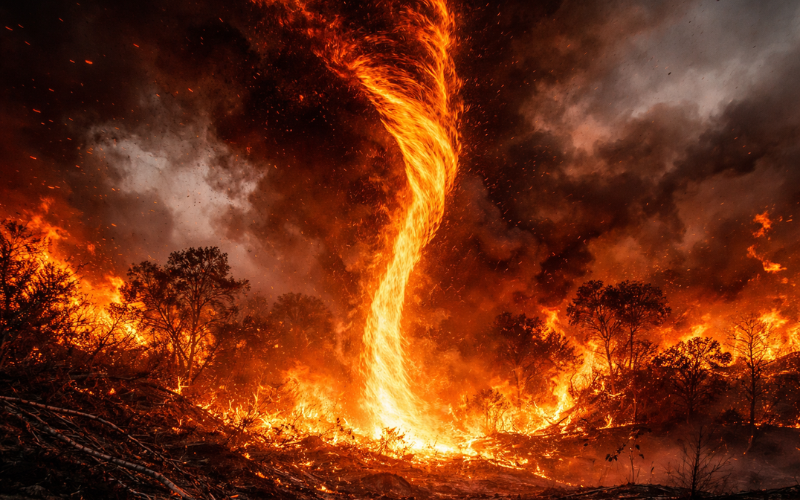
A whirl fire is a spinning fire that forms when rising heat and moving air combine in a specific way. As hot air rises quickly from a burning surface, cooler air rushes in to replace it. If the surrounding air begins to rotate, the flames can start spinning as well, creating a visible vortex of fire.
Many people compare a whirl fire to a small fire tornado, but it is important to understand that it is not a true tornado. It does not come from storm clouds or weather systems. Instead, it is created directly by the fire itself and the air movement around it. The size of a whirl fire can vary greatly, from a small, brief swirl of flames to a towering column that lasts several minutes.
In everyday language, whirl fire is often used to describe any rotating flame pattern, but in natural settings, it usually refers to intense fire activity seen during wildfires or large outdoor burns.
The Natural Forces That Create a Whirl Fire
A whirl fire forms when heat, air movement, and open flames come together at the same time. Fire produces intense heat, which causes air above it to rise rapidly. This upward movement creates a low-pressure area near the ground. Surrounding air then rushes inward to fill that space.
If the incoming air is uneven or already moving in a circular pattern due to terrain, wind direction, or obstacles, it can begin to rotate. Once rotation starts, the flames follow the airflow, creating a spinning column of fire. Dry conditions, strong heat, and open fuel sources such as grass, trees, or debris make this effect more likely.
Whirl fire is more common in outdoor environments because there is enough space for air to move freely. Enclosed spaces usually limit the airflow needed for this type of rotation to develop.
How a Whirl Fire Differs From Other Fire Phenomena
It is easy to confuse a whirl fire with other fire-related events, especially firestorms or fire tornadoes. The key difference lies in scale and origin. A whirl fire is usually smaller and shorter-lived than a firestorm, which involves massive fires creating their own weather patterns over a large area.
Unlike a tornado, a whirl fire does not form from storm clouds or rotating weather systems. Its motion is driven by heat and airflow close to the ground. In contrast, wind-driven fires spread mainly in one direction, pushed by strong winds, while a whirl fire spins around a central point.
Visual and Physical Characteristics of a Whirl Fire
A whirl fire is visually striking and often described as both fascinating and frightening. It usually appears as a vertical or slightly tilted column of flames rotating around a center. The flames may stretch upward, sometimes carrying burning debris, ash, and sparks into the air.
The color of a whirl fire can range from bright orange to deep red, depending on the fuel and temperature. The spinning motion can make the fire appear more intense than a regular flame, even if it is relatively small. Some whirl fires last only a few seconds, while others can persist long enough to cause serious damage.
Physically, whirl fires can generate strong heat and unpredictable movement. The rotating airflow can pull nearby flames inward, increasing the fire’s strength and making it harder to approach safely.
Real-World Situations Where Whirl Fire Occurs
Whirl fire is most commonly observed during wildfires, especially in dry regions with uneven terrain. Forests, grasslands, and areas with large amounts of dry vegetation provide the fuel needed for this phenomenon. It can also occur during controlled burns if conditions are not carefully managed.
In rare cases, whirl fire has been seen in urban or industrial settings when large fires break out in open areas. Piles of debris, strong heat sources, and surrounding structures can create airflow patterns that allow spinning flames to form.
Because whirl fire depends on very specific conditions, it is unpredictable. Firefighters and emergency responders are trained to recognize the warning signs, such as sudden changes in wind direction and rapidly rising heat.
Risks and Impact Associated With Whirl Fire
The primary danger of a whirl fire is its unpredictability. Unlike a steady-burning fire, a whirl fire can change direction quickly, spread flames in unexpected ways, and throw burning material into surrounding areas. This makes it especially hazardous during wildfires, where it can ignite new fires ahead of the main fire line.
Whirl fire can also increase the intensity of a fire, raising temperatures and making suppression efforts more difficult. For people caught nearby, the heat and sudden movement can pose serious safety risks.
Understanding whirl fire helps improve fire awareness and preparedness. Recognizing how and why it forms can support safer firefighting practices and better public understanding of wildfire behavior.
Why the Term Whirl Fire Has Gained More Attention
In recent years, the term whirl fire has gained visibility due to increased media coverage of extreme wildfires and the widespread sharing of dramatic fire footage online. Climate-related changes, such as longer dry seasons and higher temperatures, have also contributed to more intense fire behavior, making unusual phenomena like whirl fire more noticeable.
Search interest has grown as people encounter videos or news reports showing spinning flames and want to understand what they are seeing. Educational content and scientific discussions have further brought the term into public awareness, even among people with no background in fire science.
Common Misunderstandings About Whirl Fire
One common misunderstanding is that a whirl fire is always large and destructive. In reality, many whirl fires are small and short-lived. Another misconception is that whirl fire and fire tornado are the same thing. While they may look similar, their causes and scale are different.
Some people also assume whirl fire only happens in extreme disasters. While it is more common in large fires, it can occur in smaller outdoor burns under the right conditions. Clearing up these misunderstandings helps people better interpret what they see and hear in reports or online content.
Conclusion
A whirl fire is a powerful example of how fire and air can interact in surprising ways. Though it may look dramatic, it is a natural result of heat, airflow, and burning fuel coming together. By understanding what whirl fire is, how it forms, and why it behaves differently from other fires, readers gain a clearer picture of this striking phenomenon.
FAQs
1. Is a whirl fire the same as a fire tornado?
No, a whirl fire is smaller and formed by heat and airflow near the ground, while a fire tornado is larger and influenced by weather conditions.
2. Can whirl fire occur during controlled burns?
Yes, if conditions such as heat, wind, and fuel alignment are right, whirl fire can form even during planned fires.
3. How long does a whirl fire usually last?
Most whirl fires last only a few seconds to a few minutes, though larger ones can persist longer.
4. Are whirl fires becoming more common?
They are not necessarily more common, but increased wildfire activity and media coverage have made them more visible and widely discussed.
