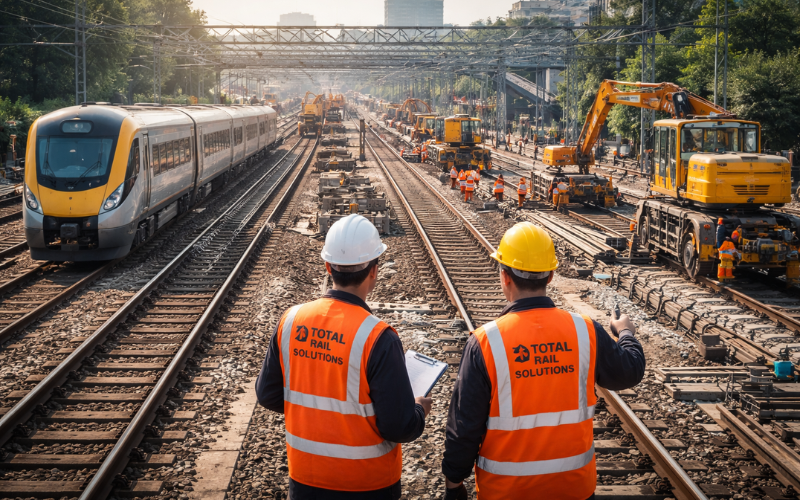
Introduction
Rail systems are more important than ever in today’s connected world. As cities grow, trade expands, and sustainability becomes a priority, rail networks must work efficiently from start to finish. This is where total rail solutions come into focus. The term refers to a complete, integrated approach to rail services that covers everything from early planning and design to daily operations and long-term maintenance. Instead of treating rail projects as separate pieces, total rail solutions bring all elements together under a unified strategy.
Across infrastructure development, logistics, and public transportation, total rail solutions help rail systems operate smoothly, safely, and reliably. They reduce gaps between services, improve coordination, and support smarter decision-making. Today, many governments, operators, and private organizations are turning to total rail solutions to meet modern transport demands while managing costs and complexity.
Understanding What Total Rail Solutions Really Means
At its core, total rail solutions is a broad concept rather than a single product or service. It describes an all-in-one approach to rail systems, where planning, construction, operations, technology, and maintenance are treated as connected parts of the same system. The goal is to create rail networks that function efficiently throughout their entire lifespan.
Rather than relying on multiple disconnected providers, total rail solutions focus on integration. This means aligning technical expertise, operational planning, and long-term performance goals from the beginning. The result is a rail system that is easier to manage, adapt, and improve over time.
The Core Components That Make Up Total Rail Solutions
Total rail solutions typically include a wide range of services and capabilities that support the full rail environment. These may involve route planning, infrastructure development, signaling systems, rolling stock support, and operational management. Maintenance planning, safety oversight, and performance monitoring are also key parts of the overall picture.
What makes total rail solutions unique is not any single component, but how these elements work together. When design decisions support future maintenance, and operations are aligned with infrastructure capabilities, rail systems become more efficient and resilient.
How Total Rail Solutions Support the Full Rail Lifecycle
One of the biggest strengths of total rail solutions is their ability to support the entire rail lifecycle. From the earliest planning stages, integrated thinking helps avoid costly redesigns and operational challenges later on. During development and construction, coordination between teams ensures that systems are built with long-term use in mind.
Once a rail network is operational, total rail solutions continue to add value through maintenance planning, performance analysis, and system upgrades. Over time, this lifecycle approach helps extend asset life, improve service reliability, and adapt to changing transportation needs without major disruption.
The Role of Total Rail Solutions in Modern Rail Infrastructure
Modern rail infrastructure is complex, involving safety systems, power supply, communication networks, and physical assets. Total rail solutions help bring structure to this complexity by ensuring that all parts of the infrastructure work toward shared performance goals.
Integrated rail solutions support safer operations by improving coordination between systems and reducing the risk of misalignment. They also enhance efficiency by streamlining workflows and improving asset usage. In large and busy rail networks, this level of coordination is essential for consistent performance.
Total Rail Solutions in Freight and Passenger Rail Networks
While freight and passenger rail serve different purposes, both benefit from a total rail solutions approach. In freight networks, integration supports better scheduling, improved asset utilization, and smoother connections between rail and other transport modes. This helps move goods more reliably across long distances.
In passenger rail systems, total rail solutions focus on service reliability, safety, and user experience. Coordinated operations and maintenance help reduce delays and improve comfort. Although the priorities differ, the underlying benefit remains the same: a rail system that works as a complete, connected whole.
Technology and Innovation Within Total Rail Solutions
Technology plays a growing role in total rail solutions, but it does not need to be complex to be effective. Digital monitoring tools, data-driven planning, and basic automation help rail operators understand how systems perform in real time. This information supports better decisions and faster responses to issues.
Innovation within total rail solutions also supports predictive maintenance and long-term planning. By using data to identify patterns and potential problems, rail systems can reduce downtime and avoid unexpected failures. Over time, this leads to more reliable and cost-effective rail operations.
Why Integrated Total Rail Solutions Are Replacing Fragmented Services
In the past, many rail projects relied on fragmented services, with different providers handling design, construction, and operations separately. While this approach worked in simpler systems, it often created coordination challenges and higher long-term costs. Total rail solutions address these issues by bringing services together under a unified framework.
Integrated solutions reduce duplication, improve communication, and align goals across teams. As rail systems become more complex and interconnected, this shift toward integration is becoming not just helpful, but necessary.
Operational and Economic Benefits of Total Rail Solutions
From an operational standpoint, total rail solutions improve consistency and reliability. Coordinated planning reduces delays, while integrated maintenance strategies help keep systems running smoothly. This leads to better service outcomes for both freight and passenger networks.
Economically, total rail solutions support long-term value. By considering costs across the full lifecycle of a rail system, organizations can make smarter investment decisions. Over time, this approach helps control expenses, improve asset performance, and support sustainable growth.
Challenges and Considerations When Implementing Total Rail Solutions
While the benefits are clear, implementing total rail solutions also comes with challenges. Integration requires careful planning, clear communication, and strong coordination between stakeholders. Organizations must align goals, timelines, and responsibilities to ensure success.
Change management is another important consideration. Moving from fragmented services to an integrated model often involves cultural and operational adjustments. With thoughtful planning and realistic expectations, these challenges can be managed effectively.
How Total Rail Solutions Are Evolving With Future Transport Needs
As transportation demands continue to change, total rail solutions are evolving alongside them. Urban growth, environmental concerns, and digital transformation are shaping the future of rail systems. Integrated rail solutions provide the flexibility needed to adapt to these trends.
Looking ahead, total rail solutions will likely place even greater emphasis on sustainability, data-driven decision-making, and system resilience. By supporting long-term adaptability, they help rail networks remain relevant and effective in a rapidly changing world.
Conclusion
Total rail solutions represent a modern, integrated approach to building and managing rail systems. By connecting planning, infrastructure, operations, and maintenance, they help rail networks operate more efficiently and reliably throughout their entire lifecycle. As rail transportation continues to play a critical role in global mobility and logistics, the importance of total rail solutions will only continue to grow.
FAQs
What are total rail solutions?
Total rail solutions refer to an integrated approach to rail services that combines planning, infrastructure, operations, maintenance, and long-term optimization into a single connected system.
Who benefits from total rail solutions?
Rail operators, infrastructure managers, governments, freight companies, and passengers all benefit from improved reliability, safety, and efficiency.
Are total rail solutions only for large rail networks?
No. While they are especially valuable for large systems, total rail solutions can also benefit smaller or regional rail projects by improving coordination and long-term performance.
Why are total rail solutions becoming more common today?
Growing system complexity, cost pressures, and the need for reliable, sustainable transportation are driving the shift toward integrated rail solutions.
