Introduction
The tesla china battery project renewable energy initiative has quickly become one of the most talked-about developments in the global clean energy space. At its center is Tesla’s large-scale investment in battery storage manufacturing and grid-level energy projects in China, designed to support renewable power, stabilize electricity supply, and reduce reliance on fossil fuels. As countries struggle to balance rapid renewable energy growth with reliable power delivery, this project stands out as a real-world solution that is already moving from planning into operation.
Tesla China Battery Project and Its Renewable Energy Focus
The tesla china battery project renewable energy strategy focuses on grid-scale energy storage rather than electric vehicles. While Tesla is widely known as an EV company, its energy division has become a major part of its long-term vision. In China, this vision centers on producing and deploying large battery systems that can store electricity from renewable sources such as solar and wind, then send it back to the grid during periods of high demand.
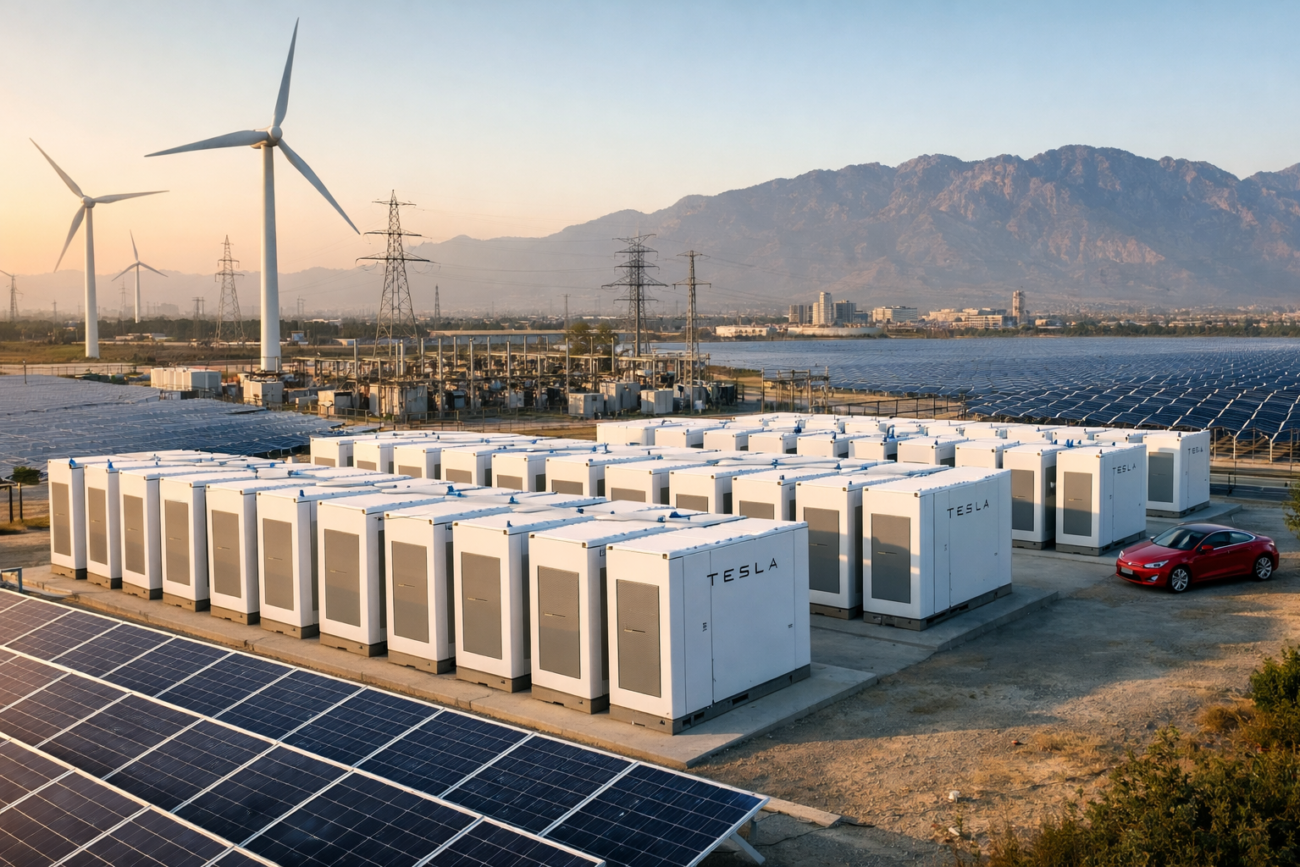
At the heart of the project are Tesla’s Megapack battery units. These are industrial-scale batteries designed specifically for utilities and power grid operators. Instead of powering cars or homes, Megapacks work behind the scenes, helping cities and regions keep their electricity supply stable even when renewable output changes throughout the day.
By focusing on energy storage rather than generation, Tesla’s China project complements existing renewable infrastructure instead of competing with it. This approach fits well with China’s broader energy goals and explains why the project has gained strong government and industry support.
Why China Became a Key Market for Tesla’s Renewable Energy Expansion
China is the world’s largest producer of solar and wind power, but it also faces serious challenges in managing that energy. Renewable sources do not produce electricity at a constant rate. Solar output drops at night, and wind power can vary by the hour. Without effective storage, much of this clean energy can be wasted or cause instability in the grid.
This reality makes China a natural fit for the tesla china battery project renewable energy effort. The country has ambitious targets for reducing carbon emissions while still supporting massive urban and industrial power needs. Grid-scale batteries provide a way to store excess energy when production is high and release it during peak demand, reducing blackouts and lowering dependence on coal-fired “peaker plants.”
China also offers strong manufacturing infrastructure, a skilled workforce, and a policy environment that supports clean energy investment. For Tesla, expanding its energy business in China allows it to scale faster while serving one of the most important energy markets in the world.
Inside Tesla’s Shanghai Megafactory and Battery Production Strategy
To support its renewable energy ambitions, Tesla built a dedicated energy storage manufacturing facility in Shanghai’s Lingang area. Often referred to as the Shanghai Megafactory, this site represents Tesla’s first energy-focused factory outside the United States.
Production at the facility began in early 2025, marking a major milestone for Tesla’s global energy business. Unlike Tesla’s vehicle plants, this factory is fully focused on producing Megapack units for large-scale energy projects. The decision to separate energy storage manufacturing from vehicle production reflects Tesla’s belief that batteries for the grid will become just as important as batteries for transportation.
The Shanghai Megafactory also serves as a global export hub. While it supports domestic Chinese projects, it also supplies Megapacks to markets in Asia-Pacific, Europe, and beyond. This dual role strengthens Tesla’s position in the global renewable energy supply chain.
What the Shanghai Megafactory Produces and Why It Matters
The Shanghai Megafactory is designed to produce up to 10,000 Megapack units per year, representing roughly 40 gigawatt-hours of energy storage capacity annually. This scale is significant because it matches the growing needs of modern power grids rather than small pilot projects.
Each Megapack is a self-contained battery system that includes cooling, safety controls, and grid connection features. For grid operators, this means faster deployment and easier integration with existing infrastructure. Instead of building custom storage systems from scratch, utilities can deploy standardized units that are already tested and optimized.
Within the tesla china battery project renewable energy framework, this production capacity enables rapid expansion of grid storage across urban and industrial areas. It also helps lower costs through economies of scale, making large batteries more accessible to energy providers.
The Role of Grid-Scale Batteries in China’s Renewable Energy Transition
Grid-scale batteries play a critical role in China’s renewable energy transition. As renewable generation grows, the grid must handle larger swings in power supply. Batteries act as a buffer, smoothing these swings and keeping voltage and frequency within safe limits.
In major cities, batteries also help reduce strain during peak demand hours. Instead of turning on fossil fuel plants when electricity use spikes, grid operators can release stored renewable energy. This reduces emissions, improves air quality, and lowers operating costs over time.
The tesla china battery project renewable energy initiative aligns closely with China’s national target to rapidly expand battery-powered electricity capacity. By contributing large, reliable storage systems, Tesla helps address one of the biggest barriers to a cleaner energy mix.
How Tesla’s Battery Project Supports Solar and Wind Energy Stability
Solar and wind power are central to China’s energy future, but their variability can cause problems for grid stability. Tesla’s battery systems are designed to respond in real time to these changes. When solar panels produce more electricity than needed during the day, the batteries store the excess. When demand rises in the evening, the stored energy is released.
Wind power benefits in a similar way. Wind output often peaks at night or during periods of low demand. Batteries capture that energy and make it usable later, turning irregular production into a steady supply.
In large cities, Tesla’s grid-side battery projects act as “smart regulators,” constantly adjusting charging and discharging based on grid conditions. This intelligent response is a key reason why the tesla china battery project renewable energy model is being closely watched by energy planners around the world.
Strategic Partnerships and Supply Chain Dynamics in China
Tesla’s success in China’s energy sector depends heavily on local partnerships. Major projects involve cooperation with Chinese leasing firms, grid operators, and municipal governments. These partnerships help align Tesla’s technology with local regulations and grid requirements.
The supply chain also reflects a blend of global and local expertise. While Tesla designs the overall battery systems, key components are sourced from Chinese manufacturers. This approach reduces costs, shortens supply lines, and supports domestic industry.
By working within China’s established energy ecosystem, Tesla positions itself as a long-term partner rather than an outside supplier. This strategy strengthens the foundation of the tesla china battery project renewable energy initiative.
Battery Technology Choices and Local Collaboration
The Megapacks produced in Shanghai primarily use lithium iron phosphate battery chemistry. This type of battery is well-suited for stationary energy storage because it offers strong safety performance and long service life.
Local collaboration plays a major role in this technology choice. Chinese battery manufacturers have deep experience with lithium iron phosphate cells, making it easier to source reliable components at scale. The result is a system that balances performance, safety, and cost, which is essential for large grid projects.
This focus on proven technology reinforces trust among grid operators and regulators, helping accelerate adoption of Tesla’s energy storage systems across China.
Economic and Energy Market Impact of the Tesla China Battery Project
The economic impact of the tesla china battery project renewable energy effort extends beyond Tesla itself. Large battery projects create jobs in manufacturing, installation, and maintenance. They also stimulate demand for supporting industries such as power electronics and grid software.
From an energy market perspective, widespread battery storage changes how electricity is priced and delivered. By reducing peak demand pressures, batteries can help stabilize energy prices and lower overall system costs. Over time, this makes renewable energy more competitive compared to fossil fuels.
Globally, Tesla’s expansion in China strengthens its energy business and sets a precedent for similar projects in other regions. As more countries adopt grid-scale storage, the lessons learned in China will influence future energy strategies worldwide.
Conclusion
The tesla china battery project renewable energy initiative represents a major step forward in how modern power systems manage clean energy at scale. By combining large-scale battery manufacturing with real-world grid projects, Tesla is helping China address one of renewable energy’s biggest challenges: reliable storage. The Shanghai Megafactory, strategic partnerships, and focus on proven battery technology all contribute to a model that balances environmental goals with practical energy needs. As renewable energy continues to expand worldwide, the impact of this project is likely to extend far beyond China, shaping the future of grid-scale energy storage.
FAQs
1. What is the main goal of the Tesla China battery project for renewable energy?
The main goal is to support renewable energy growth by providing large-scale battery storage that stabilizes the power grid and reduces reliance on fossil fuel power plants.
2. How does Tesla’s battery technology help stabilize China’s power grid?
Tesla’s batteries store excess renewable energy and release it during peak demand, helping balance supply and demand in real time and improving grid reliability.
3. Why is large-scale energy storage critical for renewable energy in China?
Because solar and wind power are variable, large-scale storage ensures that clean energy is available when needed, preventing waste and reducing power shortages.
4. Does the Tesla China battery project affect global energy markets?
Yes, it strengthens Tesla’s global energy business and demonstrates how grid-scale batteries can support renewable energy systems in other countries.
