Introduction
In Dungeons & Dragons 5th Edition, armor choice can shape how a character survives in combat. For heroes who rely on speed, stealth, and agility instead of brute strength, studded leather armor 5e is often the best defensive option available. It belongs to the light armor category and is designed to provide protection without slowing the wearer down.
This armor is commonly used by characters who value Dexterity, such as rogues, bards, and certain fighters or warlocks. Because it allows the full Dexterity bonus to be added to Armor Class, it can offer strong protection while still supporting sneaky or mobile playstyles.
What Studded Leather Armor Is in D&D 5e
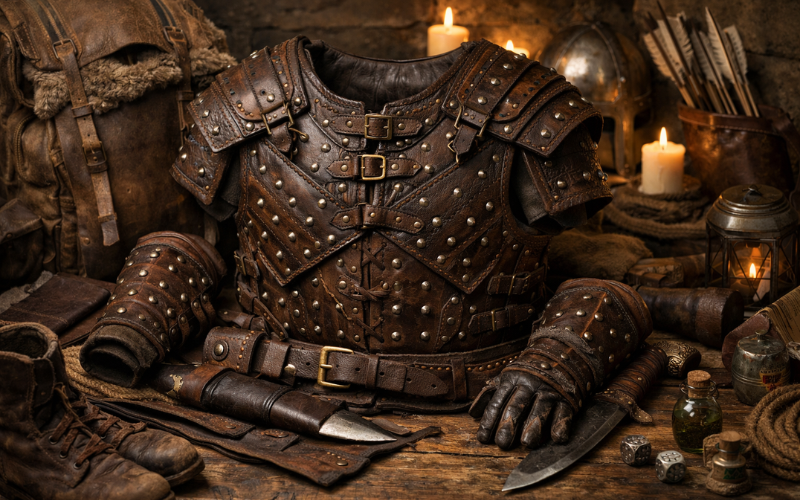
In D&D 5e, studded leather armor is described as leather reinforced with closely set metal rivets or studs. These small metal pieces add durability while keeping the armor flexible. The design allows the wearer to move easily, which makes it suitable for characters who fight with speed rather than heavy protection.
It sits at the top of the Light Armor category. Light armor is meant for characters who prefer mobility, stealth, and fast reactions. Unlike medium or heavy armor, it does not limit Dexterity bonuses or impose penalties on movement or stealth.
Because of this balance between flexibility and defense, studded leather armor is generally considered the strongest base option among light armors. It provides more protection than basic leather armor while keeping all the advantages of light gear.
Studded Leather Armor Stats and Core Mechanics
The main reason players choose studded leather armor 5e is its Armor Class formula. The armor provides a base AC of 12, and the wearer adds their full Dexterity modifier to that number. This means characters with high Dexterity can reach very solid defensive scores without wearing heavier gear.
The armor costs 45 gold pieces and weighs 13 pounds. It requires proficiency in light armor, which many classes already have at level one. Because it is light armor, it does not impose disadvantage on Stealth checks. This makes it ideal for sneaky characters or anyone who needs to stay quiet during exploration or combat.
It also does not slow movement or affect spellcasting. Characters can fight, cast spells, or perform acrobatic actions without restrictions, which is a key reason it fits so well into fast-paced builds.
Why Dexterity-Based Characters Prefer Studded Leather
Dexterity is one of the most important ability scores in D&D 5e. It affects Armor Class, initiative, ranged attacks, and many skill checks. When a character invests heavily in Dexterity, they naturally benefit more from armor that allows them to use that stat fully.
Studded leather armor works perfectly with this design. Since there is no cap on the Dexterity bonus, a character with high Dexterity can achieve strong defenses without sacrificing speed or stealth. A rogue with 20 Dexterity, for example, can reach an AC of 17 with this armor alone, which is competitive with many heavier options.
Classes that benefit most include rogues, bards, rangers, monks who multiclass into armor use, and some fighters or warlocks who focus on finesse weapons. For these characters, survival often depends on avoiding hits rather than absorbing damage, and studded leather supports that approach well.
Magical Versions and Upgrades of Studded Leather Armor
Like many items in D&D, studded leather armor can also appear in magical form. The most common enchanted versions simply increase the Armor Class bonus. A +1 or +2 version can noticeably improve survivability, especially for characters who already rely on high Dexterity.
Some magical variants offer additional features. Glamoured studded leather, for example, can magically change its appearance to look like normal clothing or another outfit. This can be useful for characters who want to hide their armor in social situations or blend into a crowd.
Magical upgrades make studded leather even more attractive because they enhance an already flexible armor type. Since many Dexterity builds cannot easily switch to heavier armor without losing mobility, improving their existing gear is often the best long-term strategy.
Studded Leather vs Other Light and Medium Armor Options
When comparing armor choices, studded leather stands out among light armors. Basic leather armor only provides a base AC of 11, which makes it clearly weaker for anyone with moderate or high Dexterity. Upgrading to studded leather is usually a simple and effective improvement once a character can afford it.
Medium armor can sometimes provide a higher base AC, but it usually limits the Dexterity bonus that can be added. This means characters with very high Dexterity may actually lose defensive potential by switching to medium armor. Medium armor can also impose disadvantage on Stealth checks, which is a major drawback for sneaky builds.
However, there are situations where medium armor might be better. Characters with low Dexterity or those who expect to take direct hits may benefit from the higher base protection of certain medium options. In those cases, mobility matters less than raw defense.
The Historical Myth Behind Studded Leather Armor
Interestingly, the concept of studded leather armor is mostly fictional. Historians generally agree that armor made of leather covered in metal studs was not widely used in real combat.
The confusion likely comes from brigandine armor, which was made from small metal plates riveted under cloth or leather. From the outside, only the rivet heads were visible, giving the appearance of a studded surface.
Despite this historical mix-up, the term “studded leather” has remained popular in fantasy games for decades. It conveys the idea of reinforced light armor in a way that players immediately understand, which is why D&D continues to use the name.
When Players Should Choose Studded Leather Armor
Studded leather armor is often the best choice once a Dexterity-focused character can afford it. Early in a campaign, characters may start with basic leather armor or even no armor at all. Upgrading to studded leather is usually one of the first meaningful improvements they can make.
It shines in campaigns that involve stealth missions, exploration, or frequent mobility in combat. Characters who rely on positioning, ranged attacks, or surprise tactics will get the most benefit from it.
From a budget perspective, the cost is moderate and reachable at low levels. Because it remains useful throughout an entire campaign, it offers excellent long-term value. Many players keep using studded leather armor until they find a magical version rather than switching to heavier gear.
Conclusion
In D&D 5e, armor choice reflects how a character approaches danger. For agile heroes who depend on speed, precision, and stealth, studded leather armor 5e offers an ideal balance between protection and freedom of movement. It provides the strongest base defense among light armors, scales well with Dexterity, and stays relevant even at higher levels when magical upgrades appear.
Whether you’re building a rogue who strikes from the shadows or a bard who needs protection without losing flexibility, studded leather armor remains one of the most reliable options in the game. Its combination of mobility, stealth compatibility, and scaling defense makes it a dependable choice from early adventures to late-game encounters.
FAQs
1. Is studded leather armor the best light armor in D&D 5e?
Yes, it is generally considered the best non-magical light armor because it offers the highest base Armor Class while allowing the full Dexterity bonus.
2. Who should wear studded leather armor in 5e?
Characters who rely on Dexterity, such as rogues, bards, rangers, and finesse-focused fighters, benefit the most from it.
3. Does studded leather armor give disadvantage on Stealth checks?
No, it does not impose disadvantage on Stealth, which is one of its biggest advantages for sneaky characters.
4. Can studded leather armor be magical in D&D 5e?
Yes, it can appear as enchanted gear like +1 or +2 armor, or as special items such as Glamoured Studded Leather, which provides extra features beyond basic defense.
