Introduction
Sea glass is one of nature’s most charming treasures, formed from ordinary glass that has been smoothed and frosted by the ocean over time. These colorful pieces are not only beautiful to collect, but they also hold stories of the past, from old bottles to shipwrecks. Whether you are a beachcomber, an artist, or simply someone who appreciates nature’s art, understanding sea glass can enhance your experience. In this guide, we’ll explore how sea glass forms, how to identify authentic pieces, the different colors and types, where to find it, and creative ways to enjoy and preserve these ocean treasures.
What Is Sea Glass and How Is It Formed?
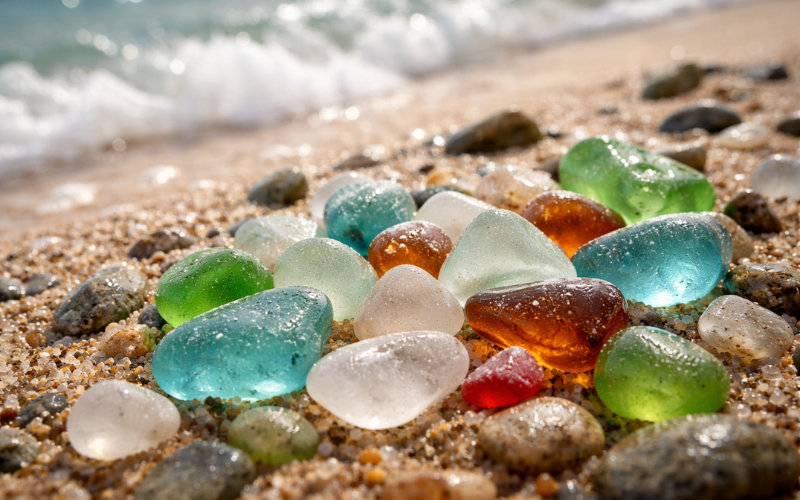
Sea glass begins its journey as broken shards of glass from bottles, jars, and even windows that find their way into rivers or oceans. Over time, the ocean’s waves, sand, and salt smooth the sharp edges and create the frosted appearance that collectors admire. This natural tumbling process can take decades, turning ordinary glass into small, polished pieces that resemble gemstones scattered along the shoreline.
The Difference Between Natural and Tumbled Sea Glass
Natural sea glass develops over many years in real ocean conditions. Its edges are smooth but irregular, and its surface has a soft, frosted texture caused by constant exposure to saltwater and sand. In contrast, tumbled or artificially smoothed glass is created using machines that simulate ocean-like erosion. While tumbled glass can look appealing, experienced collectors can often distinguish it by its overly uniform shape, smoother edges, and sometimes brighter colors that are not typical of naturally weathered sea glass. Understanding this difference is crucial for authentic collecting and appreciating the true beauty of sea glass.
The Different Colors and Types of Sea Glass
Sea glass comes in a wide variety of colors, each with its own story. Common colors include shades of green, brown, and white, often originating from bottles, jars, or tableware. These pieces are widely available and easily found on beaches.
Rare colors, such as cobalt blue, deep red, and purple, are much harder to come by. These pieces may have originated from antique glass, old medicines, or decorative bottles, making them highly sought after by collectors. The shape, size, and texture of the glass can also define its type, with some pieces appearing nearly opaque while others are translucent, adding to their unique charm.
Why Color Affects Value
The value of sea glass is strongly influenced by its color. While common shades like green and brown are abundant, rare colors like red, orange, and cobalt blue are more difficult to find. Collectors prize these rare pieces, and they often command higher prices in the market. Additionally, historical significance or unusual shapes can further increase a piece’s desirability. Understanding the role of color helps collectors and artists alike appreciate both the aesthetic and historical importance of sea glass.
How to Identify Authentic Sea Glass
Identifying genuine sea glass requires careful observation. Authentic pieces have a naturally frosted surface, smooth edges, and slight irregularities in shape. They feel worn to the touch and may have small pitted textures from long exposure to sand and saltwater.
It is also essential to be aware of fake or mass-produced sea glass. Modern tumbled glass can appear similar but often lacks the depth, texture, and subtle imperfections of naturally aged pieces. Being able to discern authentic sea glass ensures a collection that is both meaningful and valuable.
Best Places to Find Sea Glass
Sea glass can be found on beaches all over the world, but some locations are more abundant than others. Popular beaches in the United States include those along the coasts of California, Oregon, and New England. Internationally, beaches in the United Kingdom, Australia, and Japan are also renowned for their sea glass.
Seasonal and Tidal Considerations
Timing can greatly affect your sea glass hunting success. After storms or high tides, new pieces may wash ashore. Early mornings are often ideal for collecting, as fewer visitors disturb the shoreline. Observing tides and visiting less crowded beaches can increase your chances of finding rare and beautiful pieces.
Caring for and Storing Sea Glass Collections
Once you’ve gathered your collection, proper care will ensure it remains beautiful for years. Rinsing sea glass in fresh water and gently scrubbing with a soft brush can remove sand and salt deposits without damaging the surface. Avoid harsh chemicals that can dull the frosted appearance.
For storage, consider clear glass jars, display cases, or shadow boxes that allow you to admire the colors and textures. Arranging pieces by color, size, or origin can make your collection visually appealing and easier to manage.
Creative Ways to Use Sea Glass
Sea glass is not only a collector’s item but also a versatile material for art and crafts. It can be used to create unique jewelry, decorative mosaics, or even incorporated into home décor such as candle holders and picture frames. Combining sea glass with driftwood, shells, or natural stones can result in stunning natural arrangements. These projects celebrate the beauty of the ocean while giving new life to discarded glass.
Understanding the Value of Sea Glass
Several factors determine the value of sea glass. Rarity of color, size, shape, and the history behind the glass all contribute. While common colors are abundant and inexpensive, rare or historically significant pieces may be worth collecting or selling.
Collectors should also consider authenticity, provenance, and condition when buying, selling, or trading sea glass. Responsible trading ensures the preservation of both the beach environment and the enjoyment of future collectors.
Conclusion
Sea glass is a remarkable blend of natural beauty and human history. By understanding how it forms, recognizing authentic pieces, and knowing where to find it, collectors and enthusiasts can fully enjoy this ocean treasure. Whether admired for its aesthetic charm, used creatively in art, or cherished in a personal collection, sea glass offers a tangible connection to the past while celebrating the enduring beauty of nature.
FAQs
1. How long does it take for glass to become sea glass?
It can take decades for glass to transform naturally into sea glass, depending on environmental conditions like waves, sand, and saltwater exposure.
2. Can sea glass be found everywhere or only in specific locations?
While sea glass can appear on many beaches, areas near historic coastal settlements, shipwrecks, or old dumping sites are usually more abundant.
3. How can I tell if my sea glass is real or fake?
Look for a frosted surface, smooth but slightly irregular edges, and minor pitting. Machine-tumbled glass often looks too perfect and uniform.
4. What is the most valuable color of sea glass?
Rare colors such as red, cobalt blue, and purple are highly prized due to their scarcity and often historical origin.
