Introduction
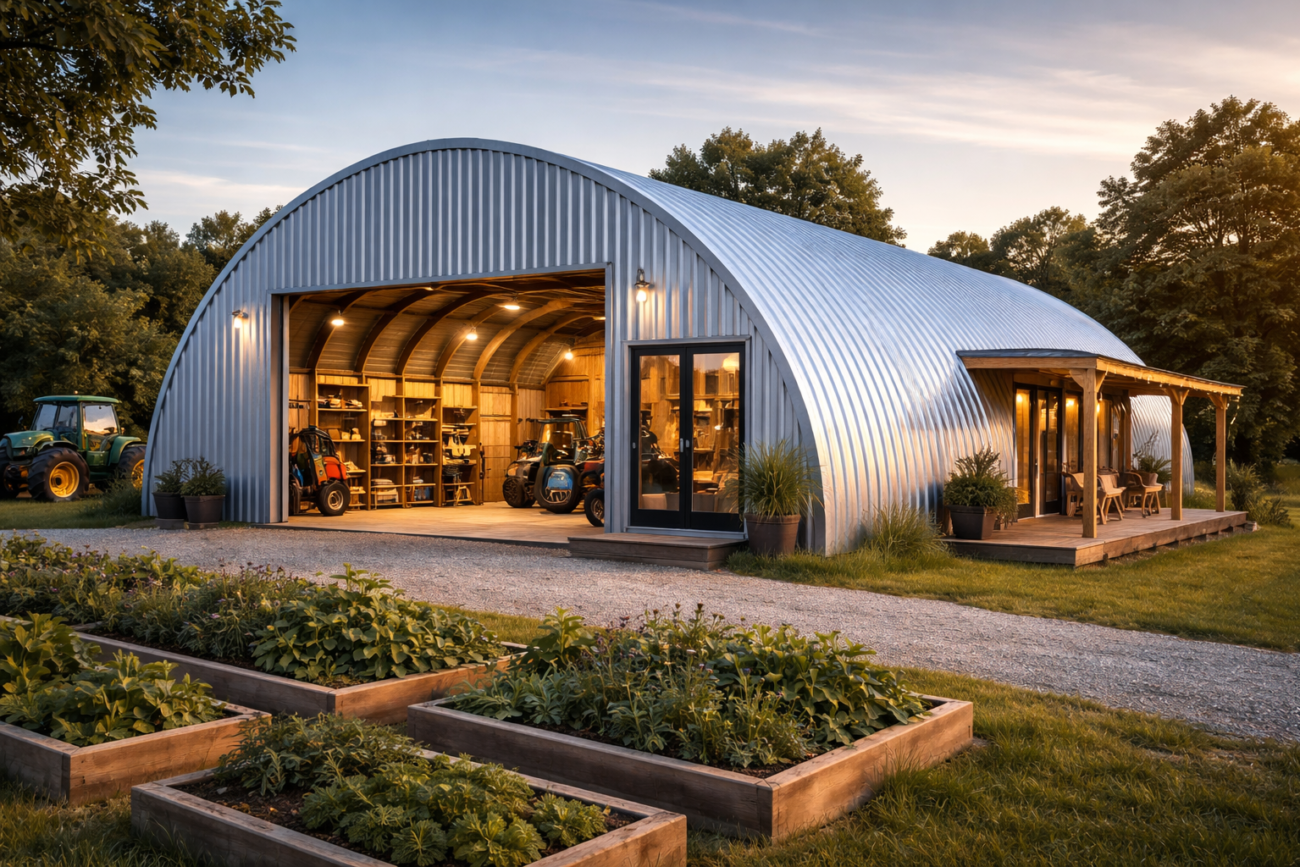
A quonset hut is a simple, curved building made from steel panels, known for its half-cylinder shape. It was first developed during World War II as a quick and affordable shelter for military use. The design allowed soldiers to assemble these structures easily using basic tools, making them highly practical in remote locations.
Today, the quonset hut is no longer limited to military purposes. It has evolved into a versatile building option used for homes, farms, and commercial spaces. Its strength, affordability, and open interior design make it appealing for people looking for flexible and durable structures.
The Evolution of the Quonset Hut: From Military Use to Modern Spaces
The quonset hut was introduced in 1941 for the U.S. Navy. It was inspired by the earlier British Nissen hut, but improved for faster production and easier assembly. Thousands of these structures were produced during World War II and used as barracks, storage units, and medical facilities.
After the war ended, many of these huts were sold to civilians at low prices. People began repurposing them into homes, workshops, and small businesses. This marked the beginning of the quonset hut’s transition into everyday use.
Over time, manufacturers improved the design by using better materials and offering more customization options. Today’s quonset huts are stronger, more energy-efficient, and more visually appealing, making them suitable for both residential and commercial applications.
Understanding the Design: What Makes a Quonset Hut Structurally Unique
One of the most distinctive features of a quonset hut is its curved, arch-like shape. This design allows weight to be distributed evenly across the structure. Because of this, quonset huts can handle heavy snow, strong winds, and even seismic activity without the need for internal support columns.
Another important aspect is the clear-span interior. Since the structure supports itself, there are no beams or pillars inside. This creates a fully open space that can be used in any way the owner prefers.
Modern quonset huts are typically made from Galvalume steel, a combination of aluminum and zinc. This material is resistant to rust, fire, and pests, which increases the building’s durability and lifespan.
Different Types of Quonset Hut Designs and Their Practical Uses
The Q-Model is the traditional design with a full semi-circular shape. It is commonly used for storage, warehouses, and aircraft hangars because it provides maximum strength and simplicity.
The S-Model features straight sidewalls with a curved roof. This design offers more vertical wall space, making it easier to install doors, windows, and interior features. It is often used for homes, workshops, and barns.
The P-Model has straight sides and a peaked roof, giving it a more conventional building appearance. This makes it a popular choice for garages and residential spaces where a traditional look is preferred.
Key Benefits of Choosing a Quonset Hut Today
A major reason people choose a quonset hut is its durability. The steel construction makes it resistant to harsh weather conditions, including heavy rain, snow, and strong winds.
Cost is another important factor. Compared to traditional buildings, quonset huts are often more affordable because they require fewer materials and less labor. Their prefabricated nature means they can be assembled quickly, saving both time and money.
The ease of assembly also makes them attractive for DIY projects. Many kits come with pre-cut and pre-drilled parts, allowing people with basic skills to build their own structure.
In addition, quonset huts require very little maintenance. The materials used are designed to resist rust, pests, and fire, which reduces long-term upkeep.
What to Consider Before Building a Quonset Hut
Before building a quonset hut, it is important to consider local land and zoning regulations. Some areas may have restrictions on building types or require permits.
The foundation is another key factor. Depending on the use, you may choose a concrete slab or another type of base to support the structure.
Insulation and ventilation should also be planned carefully. Steel buildings can become hot or cold depending on the climate, so proper insulation is necessary for comfort.
Finally, think about how you want to customize the interior. Since the space is open, you have flexibility in designing rooms, storage areas, or workspaces.
Cost Breakdown: What Influences the Price of a Quonset Hut
The cost of a quonset hut can vary depending on several factors. Size is one of the biggest influences, as larger structures require more materials.
The type of model you choose also affects the price. More complex designs with straight walls or peaked roofs may cost more than traditional curved models.
Material quality plays a role as well. Higher-grade steel and additional coatings for weather resistance can increase the overall cost.
Installation and labor costs should also be considered, especially if you are not assembling the structure yourself. Additional features like insulation, doors, windows, and interior finishes will further impact the final price.
Quonset Hut vs Traditional Buildings: A Practical Comparison
In terms of space efficiency, quonset huts offer a clear-span interior, which allows for maximum usable space. Traditional buildings often require support columns that limit layout options.
Construction time is usually shorter for quonset huts because they come as prefabricated kits. Traditional buildings take longer due to more complex construction processes.
Durability is another advantage. Steel structures are less likely to suffer damage from pests, fire, or extreme weather compared to wood-based buildings.
Maintenance and Longevity: How Long a Quonset Hut Can Last
Maintenance is generally simple. Regular inspections for dirt buildup, minor rust spots, or loose bolts can help keep the structure in good condition.
The materials used in modern quonset huts are designed to resist corrosion, pests, and fire. This makes them a reliable choice for long-term use.
Conclusion
The quonset hut has come a long way from its military origins. What started as a simple, temporary shelter has become a reliable and versatile building solution for modern needs.
Its unique design, durability, and cost-effectiveness make it suitable for a wide range of applications, from homes to farms and commercial spaces. As construction trends continue to focus on efficiency and sustainability, the quonset hut remains a practical choice for many people.
FAQs
1. What is a quonset hut made of?
A quonset hut is typically made from galvanized or Galvalume steel, which is strong, rust-resistant, and long-lasting.
2. Can a quonset hut be used as a home?
Yes, many people use quonset huts as homes. They can be customized with insulation, plumbing, and interior walls to create comfortable living spaces.
3. How long does it take to build a quonset hut?
Depending on the size and complexity, a quonset hut can be assembled in a few days to a few weeks, especially if using a prefabricated kit.
4. Are quonset huts energy-efficient?
They can be energy-efficient when properly insulated and ventilated. Modern designs often include options for improved temperature control.
5. Do quonset huts require a lot of maintenance?
No, they require minimal maintenance. Occasional inspections and basic cleaning are usually enough to keep them in good condition.
