Introduction
Plum Island Southold NY 11957 is one of the most talked-about and misunderstood places on Long Island. Located just off the eastern tip of New York, the island has long attracted public curiosity because of its restricted access, federal research facility, and rich natural environment. Over the years, it has become known not only for science and security, but also for history, wildlife, and popular culture. This article explains where Plum Island Southold NY 11957 is located, why it became a high-security site, what exists there today, and what the future may hold.
Where Plum Island Southold NY 11957 Is Located
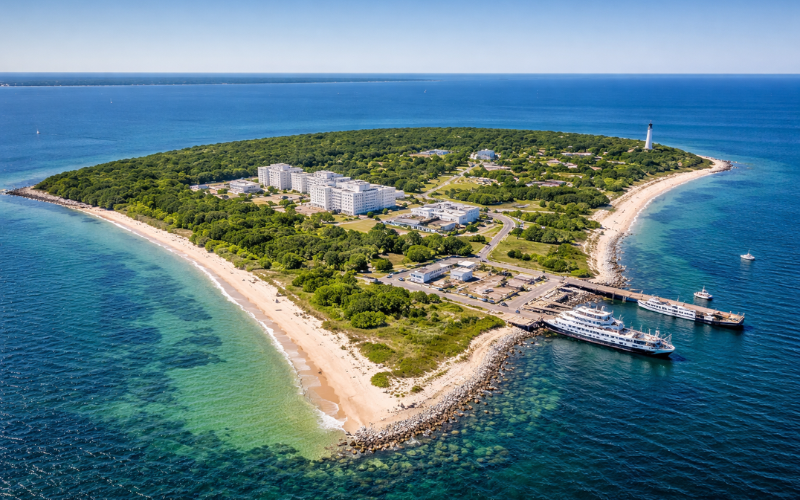
Plum Island Southold NY 11957 sits just offshore from the North Fork of Long Island, near the hamlet of Orient Point. The island lies between Long Island Sound and Block Island Sound, in a narrow and fast-moving channel known as Plum Gut. Although Plum Island is physically separate from Long Island, it is officially part of the Town of Southold in Suffolk County, New York.
The island’s proximity to Orient Point is one reason it is often associated with the 11957 ZIP code. While Plum Island itself does not have residential addresses or mail delivery, online searches frequently connect it to Southold NY 11957 because that is the closest populated area. Travelers using the Orient Point ferry terminal often pass near the island, further reinforcing this connection.
Plum Island’s location has always been strategic. Its position at the eastern entrance to Long Island Sound made it important for defense, navigation, and later, scientific research. This same location also explains why access to the island has remained tightly controlled for decades.
Why Plum Island Became a High-Security Federal Site
Plum Island Southold NY 11957 became a federal site in the mid-20th century due to national security concerns related to agriculture and animal health. In 1954, the U.S. government selected the island as the location for a specialized research center focused on dangerous animal diseases. The surrounding water provided a natural barrier, helping reduce the risk of accidental spread.
The federal presence on Plum Island meant strict rules, security patrols, and limited public knowledge about daily operations. Over time, this secrecy shaped how people viewed the island. Many residents of nearby communities knew it was important but did not fully understand what happened there, which led to rumors and speculation.
Because the work conducted on Plum Island Southold NY 11957 involved serious national interests, the island remained closed to the public. This long-term restriction has become a defining feature of its identity and continues to influence how it is discussed today.
Plum Island Animal Disease Center and Its Purpose
The Plum Island Animal Disease Center is the main reason the island gained national importance. The facility was created to study highly contagious animal diseases that could threaten the U.S. food supply. These include illnesses that affect livestock such as cattle, pigs, and sheep.
Scientists at the center worked to understand how these diseases spread and how they could be controlled or prevented. This research played a key role in protecting American agriculture and supporting global animal health efforts. Because of the nature of the work, the center required advanced safety measures and strict isolation.
Plum Island Southold NY 11957 was chosen precisely because it could operate in isolation. Being surrounded by water reduced risks and allowed research to continue without endangering nearby communities. This isolation, while effective, also reinforced the island’s mysterious reputation.
Historic Landmarks That Shaped Plum Island’s Identity
Long before scientific research arrived, Plum Island had already played a role in American history. In the late 1800s, Fort Terry was built on the island as part of a coastal defense system. Its mission was to protect New York Harbor and Long Island Sound from potential naval threats.
During World War II, Fort Terry was used for anti-submarine operations and military training. Although the base was eventually closed, many structures still remain, serving as reminders of the island’s military past.
Another key landmark is the Plum Island Lighthouse. Originally constructed in the early 19th century and later rebuilt, the lighthouse helped guide ships through the dangerous Plum Gut channel. While it is no longer active, it remains an important historical symbol and a visible feature from nearby shores.
These landmarks continue to shape how people understand Plum Island Southold NY 11957, blending military, maritime, and scientific history into a single location.
Environmental Importance of Plum Island Southold NY 11957
Beyond its human history, Plum Island Southold NY 11957 is widely recognized for its environmental value. Because public access has been limited for so long, much of the island’s natural landscape has remained undisturbed. This has allowed wildlife to thrive.
The island supports a wide variety of bird species, making it an important stop along migration routes. Bird watchers and conservation experts consider it one of the most valuable habitats in the region. In addition to birds, Plum Island hosts seals, deer, and other wildlife that depend on quiet, protected environments.
Environmental groups view Plum Island as a rare ecological asset in a heavily developed region. The combination of forests, wetlands, and shoreline creates a diverse ecosystem that would be difficult to replace if disturbed. This ecological importance is one of the main reasons conservation efforts have gained strong public support.
Public Access Rules and What Visitors Should Know
Plum Island Southold NY 11957 remains closed to the public. Access is restricted due to federal ownership, security requirements, and safety concerns related to past research activities. Unauthorized entry is not permitted, and the island is monitored to prevent trespassing.
A common misconception is that Plum Island can be visited like a park or historic site. In reality, there are no public tours, ferries, or visitor facilities. Any activity on the island is limited to authorized personnel.
Understanding these rules helps prevent confusion and unrealistic expectations. While curiosity about Plum Island is natural, respecting legal boundaries is essential for safety and preservation.
Nearby Areas People Can Visit Instead
Although Plum Island itself is off-limits, nearby areas offer opportunities to explore the region and view the island from a distance. Orient Point, located within Southold NY 11957, provides shoreline access and scenic views across the water toward Plum Island.
Visitors can enjoy beaches, walking areas, and ferry terminals that offer a clear look at the island’s landscape. The surrounding North Fork region is also known for its natural beauty, small towns, and maritime heritage.
These nearby locations allow people to appreciate Plum Island Southold NY 11957 without violating access restrictions, making them a popular alternative for curious visitors.
What’s Changing: Closure Plans and Future Protection
In recent years, plans have been set in motion to close the Plum Island Animal Disease Center and move operations to a new facility in Manhattan, Kansas. This transition reflects modern research needs and updated infrastructure requirements. The closure process is expected to continue through the late 2020s.
Originally, federal law required that Plum Island be sold after the facility closed. However, public advocacy led to a major change. In 2020, legislation was passed to prevent the sale and protect the island from private development.
Today, conservation groups are working to have Plum Island Southold NY 11957 designated as a national monument or protected area. These efforts aim to preserve both the island’s natural environment and its historical sites for future generations.
Pop Culture and Public Curiosity Around Plum Island
Plum Island has appeared in books, films, and television shows, often portrayed as a secretive or mysterious place. Fictional stories have exaggerated its role, sometimes linking it to dramatic or unrealistic scenarios. While these portrayals are entertaining, they often blur the line between fact and fiction.
This pop culture exposure has increased online searches for Plum Island Southold NY 11957. Many people want to know what is real and what is imagined. In reality, the island’s story is less sensational but far more meaningful, rooted in science, history, and conservation.
Conclusion
Plum Island Southold NY 11957 is far more than a restricted island off the coast of Long Island. Its unique location, federal research role, military history, and environmental importance make it a rare and valuable place. As research operations wind down and conservation efforts move forward, the future of Plum Island appears focused on preservation rather than development. Understanding its real story helps replace myths with facts and highlights why this island continues to matter at both local and national levels.
FAQs
1. Where exactly is Plum Island Southold NY 11957 located?
Plum Island is located just off the eastern tip of Long Island, near Orient Point, and is part of the Town of Southold in Suffolk County, New York.
2. Can the public visit Plum Island today?
No, Plum Island is closed to the public. Access is restricted due to federal ownership and security regulations.
3. Why is Plum Island so heavily guarded?
The island hosted a federal animal disease research facility for decades, requiring strict security and controlled access.
4. What will happen to Plum Island after the facility closes?
Current plans focus on conservation and long-term protection, with efforts underway to preserve the island as a natural and historical site.
