Introduction
An outdoor TV mount is a specially designed bracket that allows you to securely attach your television to an exterior wall, post, or ceiling. Unlike indoor mounts, outdoor TV mounts are built to withstand weather conditions such as rain, wind, and sunlight. Using a proper mount ensures your TV stays stable and safe while providing the best viewing experience outdoors.
Investing in an outdoor TV mount comes with several advantages. First, it helps protect your television from accidental falls or damage caused by strong winds or uneven surfaces. Second, it provides optimal viewing angles, making it easier to enjoy movies, sports, or shows with family and friends in your backyard or patio. Finally, a durable mount ensures your TV remains securely in place, giving you peace of mind while entertaining outdoors.
In this guide, you will learn about different types of outdoor TV mounts, the key features to consider, safe installation practices, and tips to maintain your mount for long-lasting use.
Understanding Outdoor TV Mounts
Outdoor TV mounts come in several varieties, each designed to suit different needs and environments. A fixed mount keeps your TV flat against the wall, offering a sleek and stable setup. Tilting mounts allow you to adjust the screen vertically, which is useful if the TV is mounted slightly higher than eye level. Full-motion mounts, also called articulating mounts, provide the most flexibility, letting you swivel, tilt, or extend your TV to achieve the perfect angle.
The material and build quality of an outdoor TV mount are critical for durability. Most mounts are made from rust-resistant steel or aluminum, often coated with weatherproof finishes. These materials help the mount withstand moisture, heat, and UV rays over time. When choosing a mount, it’s important to consider where it will be installed. Patios, backyards, and outdoor kitchens are common locations, and each environment may require a slightly different mount type to handle exposure and accessibility.
Key Features to Look for in an Outdoor TV Mount
When selecting an outdoor TV mount, several features can significantly improve your experience. First, weather resistance is essential. Look for mounts made of rust-proof materials with protective coatings to withstand outdoor conditions.
Weight capacity and size compatibility are equally important. Make sure the mount can safely support the weight of your television and fits the screen’s dimensions. A mount that is too small or weak could cause the TV to fall, leading to damage or injury.
Ease of installation is another key factor. Some mounts are simple to attach, while others require more advanced setup and tools. Adjustable viewing angles enhance comfort, allowing you to tilt or swivel your TV to reduce glare or optimize visibility for different seating areas.
Additional features, such as built-in cable management, help keep wires organized and safe from moisture or accidental tugs. Some mounts also include locking mechanisms that prevent unauthorized removal or accidental dislodging.
How to Install an Outdoor TV Mount Safely
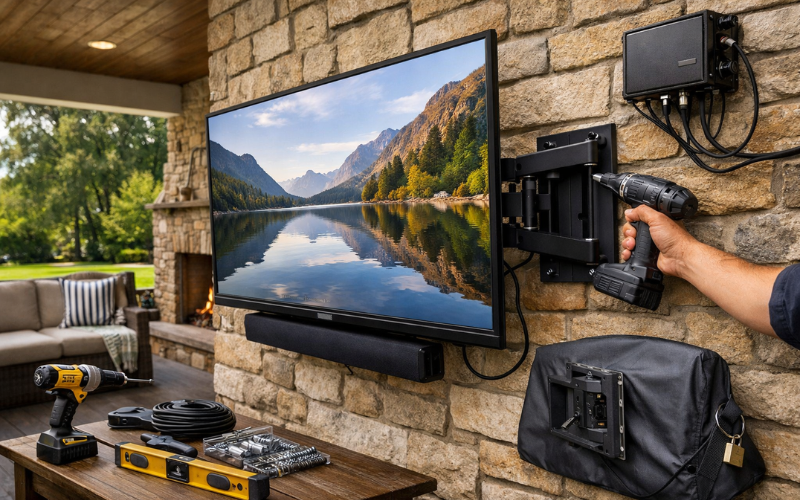
Installing an outdoor TV mount requires careful preparation to ensure safety and stability. Start by choosing a strong, stable surface such as a reinforced wall, post, or ceiling beam. Avoid surfaces that may weaken over time, like thin siding or unreinforced wood panels.
Gather the necessary tools and hardware, including screws, anchors, a drill, a level, and a measuring tape. Always follow the manufacturer’s instructions for the specific mount model you are using.
Installation generally involves marking the mounting points, securing the bracket to the wall or support, and then carefully attaching the TV. Make sure the mount is level and all screws are tightened properly.
Safety is a priority during installation. Avoid mounting in areas exposed to extreme weather without proper protection. Wear protective equipment when drilling or handling heavy TVs, and consider having a second person assist to reduce the risk of accidents.
Maintaining and Protecting Your Outdoor TV Mount
Regular maintenance helps prolong the life of your outdoor TV mount. Inspect the mount periodically for rust, loose screws, or wear and tear. Cleaning the mount and TV surface with mild solutions prevents buildup of dirt or debris.
Protecting against weather is crucial. If possible, use covers or awnings to shield your TV and mount from direct rain, snow, or harsh sunlight. Extreme heat or prolonged sun exposure can damage both the mount and television over time.
Be aware of signs that it’s time to replace or upgrade your mount. Bent brackets, rust spots, or difficulty adjusting the TV are indicators that maintenance is no longer sufficient, and a replacement may be needed to ensure safety.
Common Mistakes to Avoid
One common mistake is mounting the TV in direct sunlight or an area prone to harsh weather. Sun exposure can fade the screen and damage the mount, while heavy rain or wind may compromise stability.
Ignoring weight limits or using an incorrect bracket type is another frequent error. Always ensure the mount matches your TV’s size and weight specifications. Overloading a mount can result in falls or damage.
Poor cable management is also a concern. Exposed cables are more susceptible to weather damage and can create tripping hazards. Use cable channels or protective conduits to keep wires safe and organized.
Conclusion
An outdoor TV mount is more than just a bracket—it’s a crucial investment to protect your television and ensure an enjoyable viewing experience outdoors. By understanding the types of mounts, identifying key features, installing them safely, and maintaining them properly, you can create a secure and comfortable outdoor entertainment setup.
Careful planning and attention to detail help prevent common mistakes and extend the life of both your TV and mount. With the right setup, your outdoor space can become a favorite spot for entertainment, gatherings, and relaxation.
FAQs
1. Can I use a regular indoor TV mount outdoors?
No, indoor mounts are not designed to handle weather conditions. Outdoor TV mounts are made with weather-resistant materials to prevent rust, corrosion, and damage from sun or moisture.
2. How high should I mount my outdoor TV?
The ideal height depends on your seating area and viewing angle. Generally, the center of the screen should be at eye level when seated, but tilting mounts can provide flexibility for higher placements.
3. Do outdoor TV mounts require professional installation?
While many mounts can be installed by someone with basic DIY skills, professional installation ensures proper support, safety, and alignment, especially for heavy TVs or complex mounting surfaces.
4. How do I protect my TV and mount from extreme weather?
Use covers, awnings, or enclosures to shield the TV from rain, snow, and direct sunlight. Regular inspections and maintenance will also help prevent long-term damage
