Introduction
Japanese peanuts are a unique snack that many people recognize instantly by their crunchy coating and bold flavor, yet few know the story behind them. Despite the name, japanese peanuts are not a traditional Japanese food in the way sushi or ramen is. Instead, they represent a fascinating mix of culture, migration, and food innovation. Today, japanese peanuts are enjoyed worldwide as a casual snack, a bar companion, and even a cooking ingredient. Understanding what they are and why they remain popular helps explain their lasting appeal.
What Japanese Peanuts Really Are
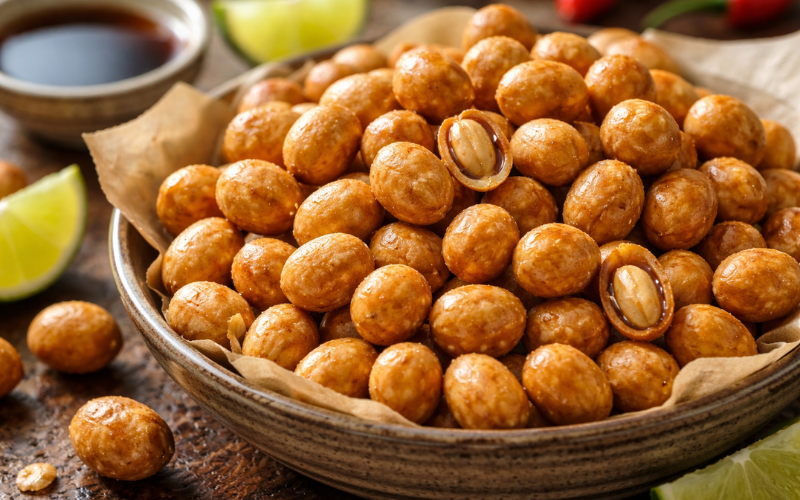
At their core, japanese peanuts are whole peanuts covered in a crisp outer shell made from wheat flour dough. This coating is lightly seasoned, often with soy sauce, sugar, and salt, then roasted or fried until it becomes firm and crunchy. The result is a snack that delivers a layered eating experience. You first notice the hard, savory shell, followed by the rich and nutty taste of the peanut inside.
What makes japanese peanuts different from ordinary roasted peanuts is not just the coating itself, but how it changes the overall texture and flavor balance. The shell adds crunch, slightly sweet notes, and a mild umami taste that makes the peanuts more satisfying and harder to eat just one handful of. This combination is why japanese peanuts feel more like a crafted snack rather than a simple nut.
The Surprising Origin of Japanese Peanuts
The story behind japanese peanuts begins not in Japan, but in Mexico during the mid-20th century. A Japanese immigrant named Yoshihei Nakatani settled in Mexico and began experimenting with ways to adapt familiar flavors using local ingredients. Peanuts were widely available, affordable, and already popular in Mexican street snacks, making them a natural choice.
Nakatani developed a method of coating peanuts with a wheat-based batter and seasoning them with soy sauce, blending Japanese flavor influences with Mexican snack culture. This innovation quickly gained attention. Locals enjoyed the crunchy texture and savory taste, and the snack spread through markets and small shops. Over time, japanese peanuts became firmly established in Mexican food culture, even earning the local name “cacahuates japoneses.”
How Japanese Peanuts Became Popular Outside Japan
Although japanese peanuts were invented in Mexico, their popularity eventually crossed borders. As Mexican snack brands grew and expanded distribution, the peanuts began appearing in other parts of Latin America, the United States, and beyond. Their long shelf life, bold flavor, and snack-friendly size made them easy to export and sell internationally.
Interestingly, japanese peanuts also gained recognition in Japan itself, where similar coated peanut snacks already existed. However, the Mexican-style version stood out due to its thicker shell and stronger seasoning. Over time, global consumers came to associate japanese peanuts not with a single country, but with a specific style of crunchy, flavored peanut snack.
What Makes Japanese Peanuts Different From Regular Peanuts
The biggest difference between japanese peanuts and regular peanuts lies in the coating and the eating experience it creates. Regular peanuts are usually roasted, salted, or sometimes flavored, but they remain soft or lightly crunchy. Japanese peanuts, on the other hand, offer a firm outer shell that cracks as you bite into it.
This shell does more than add crunch. It protects the peanut inside, helping it stay fresher for longer. It also spreads the seasoning evenly, so every bite tastes balanced rather than overly salty or oily. Because of this, japanese peanuts feel less greasy and more structured than many other peanut snacks.
Flavor Profiles and Common Variations of Japanese Peanuts
Traditional japanese peanuts are known for their savory-sweet flavor, with soy sauce playing a central role. This creates a gentle umami taste that complements the natural richness of peanuts. Some versions lean slightly sweet, while others focus more on saltiness, depending on the brand and region.
As the snack gained popularity, new flavors emerged to meet changing tastes. Today, japanese peanuts can be found in spicy versions, chili-lime styles, and even wasabi-flavored options. These variations build on the original concept while offering something new for different audiences. Despite the added flavors, the core identity of japanese peanuts remains the same: a crunchy shell with a flavorful peanut center.
How Japanese Peanuts Are Commonly Enjoyed
Japanese peanuts are most often eaten as a casual snack. They are commonly paired with beer, soda, or tea, making them a popular choice at social gatherings. Their firm texture holds up well in warm weather, which is one reason they are frequently sold by street vendors and small shops.
In some regions, people enjoy japanese peanuts with extra lime juice or hot sauce, adding acidity and heat to the existing flavor. Others prefer them plain, appreciating the balance already built into the snack. Because they are dry and sturdy, japanese peanuts are also easy to carry, making them a convenient option for travel or work breaks.
Nutritional Value and Things to Keep in Mind
From a nutritional point of view, japanese peanuts offer both benefits and limitations. Peanuts themselves are a good source of protein, healthy fats, and fiber. The coating adds carbohydrates and flavor but also introduces extra sodium and, in some cases, sugar.
This means japanese peanuts can fit into a balanced diet when eaten in moderation. They are filling and satisfying, which can help prevent overeating, but large portions may increase sodium intake. Paying attention to serving size is important, especially for people watching their salt consumption.
Because most versions contain wheat and soy, japanese peanuts may not be suitable for individuals with certain food allergies. Checking packaging labels is always recommended.
Using Japanese Peanuts Beyond Simple Snacking
While japanese peanuts are best known as a snack, they can also be used in simple home cooking. Crushed japanese peanuts can add texture to salads, noodle dishes, or rice bowls. Their seasoned coating brings extra flavor without the need for additional spices.
Some cooks use them as a topping for stir-fried vegetables or as a crunchy element in fusion recipes. Because the coating stays crisp longer than plain peanuts, japanese peanuts work well in dishes where texture matters. These uses show that the snack can be more versatile than it first appears, without losing its identity.
Final Thoughts
Japanese peanuts are more than just a crunchy snack. They represent a blend of cultures, flavors, and creativity that has stood the test of time. With their distinctive coating, balanced taste, and global popularity, japanese peanuts continue to attract new fans while remaining familiar to long-time snack lovers. Whether enjoyed straight from the bag or used in simple dishes, they remain a unique example of how food traditions can travel, adapt, and thrive.
FAQs
1. Are japanese peanuts actually from Japan?
No, japanese peanuts were invented in Mexico by a Japanese immigrant. The name reflects the flavor influence rather than the place of origin.
2. What gives japanese peanuts their crunchy coating?
The crunch comes from a wheat flour-based dough that is seasoned and then roasted or fried until firm.
3. Are japanese peanuts healthy to eat regularly?
They provide protein and healthy fats but also contain added sodium. They are best enjoyed in moderation as part of a balanced diet.
4. Do japanese peanuts contain soy or wheat?
Most traditional versions contain both soy sauce and wheat flour, which may be important for people with allergies.
