Introduction
If you have ever walked into a gym and loaded plates onto a barbell, you may have asked yourself, how much does the bar weigh before adding any weight. This simple question matters more than many people think. Knowing the exact bar weight helps you train safely, track your progress accurately, and avoid mistakes that can slow down your results or lead to injury.
Whether you are a beginner learning basic lifts or someone returning to strength training after a break, understanding barbell weight is one of the first building blocks of smart training. In this guide, you will learn how much the bar weighs in most gyms, how different bars compare, and how to make sure you are counting your total weight correctly every time you lift.
Why Knowing How Much the Bar Weighs Actually Matters
When people ask, how much does the bar weigh, they are usually trying to calculate the total weight they are lifting. But the answer is not just about numbers. It directly affects your performance, safety, and long-term progress.
For beginners, the bar alone can already feel heavy. Many new lifters assume they are starting with “zero weight” when no plates are added. In reality, a standard barbell already has significant weight. If someone struggles with form during a squat or bench press, it may simply be because the bar itself is heavier than expected.
Accurate progress tracking is another key reason this question matters. Strength training is built on gradual improvement. If you do not know how much the bar weighs, you cannot correctly calculate your total load. For example, lifting two 20-kilogram plates on each side is not 80 kilograms total. You must also add the bar weight. Over weeks and months, small miscalculations can make it hard to measure real progress.
Preventing lifting mistakes is equally important. Assuming all bars weigh the same can lead to loading too much or too little weight. This can affect your form, increase injury risk, or make your workout less effective. Knowing the exact weight of the bar allows you to train with confidence and consistency.
How Much Does the Bar Weigh at Most Gyms?
In most commercial gyms, the standard barbell is an Olympic bar. When people ask, how much does the bar weigh at the gym, they are usually referring to this type.
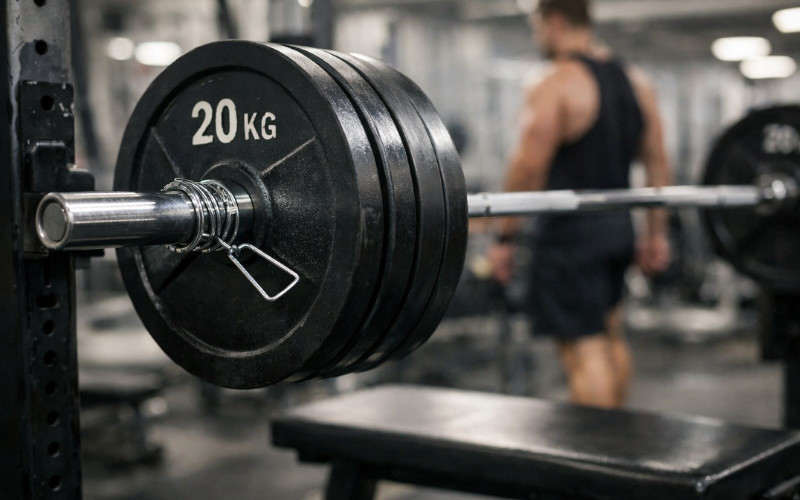
A standard men’s Olympic barbell weighs 45 pounds, which is about 20 kilograms. This is the most common bar you will see for exercises like bench press, squats, deadlifts, and overhead presses. Because it is widely used in strength training and competitions, many gyms use this as their default bar.
In countries that use the metric system, the bar is often labeled as 20 kilograms. In places that use pounds, it is typically labeled as 45 pounds. The slight difference comes from conversion, but both refer to the same standard Olympic bar.
This bar is the default in many fitness centers because it is strong, durable, and designed to handle heavy loads. It also has rotating sleeves, which help during dynamic lifts. For most people, when they ask, how much does the bar weigh, the answer is 45 pounds or 20 kilograms — but that is not always the full story.
Different Types of Barbells and How Much Each One Weighs
Not every bar in the gym weighs the same. If you want a complete and accurate answer to the question, how much does the bar weigh, you need to understand the different types available.
Olympic Barbell
The Olympic barbell is the most common type used in gyms. The standard men’s Olympic bar weighs 45 pounds (20 kilograms). It is about 7 feet long and built to handle heavy loads.
There is also a women’s Olympic barbell. This version usually weighs 35 pounds, or about 15 kilograms. It is slightly shorter and thinner, making it easier to grip. Many gyms carry both, but they are not always clearly labeled.
Standard (Non-Olympic) Barbell
Standard barbells are often found in home gyms or smaller fitness centers. These bars typically weigh between 15 and 25 pounds. They are usually thinner and shorter than Olympic bars.
Because they vary more in weight, it is especially important to check the exact number. If you are training at home and asking, how much does the bar weigh, do not assume it matches the 45-pound Olympic standard.
EZ Curl Bar
The EZ curl bar is commonly used for bicep curls and tricep exercises. It has a curved shape that reduces strain on the wrists.
An EZ curl bar usually weighs between 15 and 30 pounds, depending on the design and material. Some heavier commercial versions may weigh more, but they are generally lighter than a full Olympic barbell.
Smith Machine Bar
The Smith machine bar often causes confusion. Many people ask, how much does the bar weigh on a Smith machine, because it feels lighter than a regular bar.
In most cases, a Smith machine bar weighs between 15 and 25 pounds. However, the design includes rails and sometimes a counterbalance system. This can make the bar feel even lighter than its actual weight.
The exact weight depends on the brand and model of the machine. Unlike free barbells, there is no universal standard. Always check the label on the machine or ask gym staff for clarification.
How to Tell How Much the Bar Weighs in Your Gym
Even though many bars follow common standards, you should never rely on guesses. If you want to know exactly how much the bar weighs, there are a few simple ways to find out.
First, check the ends of the bar. Many barbells have markings stamped into the metal near the sleeves. These often show the weight in pounds or kilograms.
Second, look for manufacturer labels. Some bars have branding or weight information printed directly on them. If the marking is worn out, the gym staff may know the specifications.
Third, do not hesitate to ask a trainer or gym employee. It is better to confirm than to risk incorrect calculations. This small step supports safer lifting and more accurate tracking.
Does the Bar Weight Change With Attachments or Modifications?
Clips and collars, which secure weight plates, usually add a small amount of extra weight. While each collar may only weigh a few ounces, competitive collars can weigh more. In casual training, this difference is minor, but in powerlifting or detailed tracking, it may matter.
Specialty bars also change the equation. A trap bar, also called a hex bar, often weighs around 45 to 60 pounds, depending on the design. A safety squat bar can weigh anywhere from 50 to 70 pounds because of extra padding and structure.
Machine-assisted bars, such as those in plate-loaded machines, may feel lighter due to mechanical support. However, the listed weight may not reflect how much force you are actually moving.
If your goal is precise progress tracking, especially for programs that depend on exact percentages of your one-rep maximum, always account for the specific bar you are using.
Common Confusion About Bar Weight (And How to Avoid It)
One of the most common mistakes is mistaking plate weight for total weight. For example, someone may load two 45-pound plates on each side of a 45-pound bar and assume they are lifting 180 pounds. In reality, the total is 225 pounds because the bar itself adds 45 pounds.
Another common assumption is that all bars weigh 45 pounds. As explained earlier, this is not true. Women’s bars, standard bars, EZ curl bars, and specialty bars all have different weights.
Some beginners make the opposite mistake and forget to count the bar at all. This leads to inaccurate tracking and confusion when comparing progress with others.
To avoid these issues, always confirm how much the bar weighs before starting your workout. Make it a habit. Over time, this simple awareness improves your training accuracy and confidence.
Conclusion
So, how much does the bar weigh? In most gyms, the standard Olympic bar weighs 45 pounds or 20 kilograms. However, this is not the only type of bar available. Women’s bars, EZ curl bars, standard home gym bars, Smith machine bars, and specialty bars all have different weights.
Understanding these differences is an important part of smart strength training. It helps you calculate your total lifting weight correctly, track progress accurately, and reduce the risk of injury. Before each workout, take a moment to confirm the bar you are using. That small step can make a big difference in your results over time.
FAQs
1. How much does the bar weigh without plates?
In most gyms, a standard men’s Olympic bar weighs 45 pounds (20 kilograms) without any plates added. A women’s Olympic bar typically weighs 35 pounds (15 kilograms). Other bars may vary.
2. How much does the Smith machine bar weigh?
A Smith machine bar usually weighs between 15 and 25 pounds. However, the exact weight depends on the brand and whether the machine uses a counterbalance system.
3. Is every bar at the gym 45 pounds?
No. While many free-weight Olympic bars are 45 pounds, other bars such as EZ curl bars, standard bars, and specialty bars can weigh significantly less or more.
4. How much does a women’s Olympic bar weigh?
A women’s Olympic bar normally weighs 35 pounds, which is about 15 kilograms. It is also slightly shorter and thinner than a men’s bar.
