Introduction
A wheel alignment is a routine maintenance service that adjusts the angles of your car’s wheels so they sit correctly on the road. When the wheels are properly aligned, your vehicle drives straight, tires wear evenly, and steering feels stable. Over time, normal driving, potholes, curbs, or worn suspension parts can push the wheels out of position, which is why mechanics recommend checking alignment periodically or whenever you notice steering issues.
Many drivers wonder how long does a wheel alignment take before they schedule the service. Under ideal conditions, the actual adjustment may only take about an hour. However, the total time you spend at the shop can vary depending on your vehicle, its condition, and the type of alignment required. Modern cars with advanced technology or worn parts may need extra inspection or repairs first, which can extend the visit. Understanding these factors helps set realistic expectations before you arrive at the service center.
The Average Time a Wheel Alignment Takes
For most vehicles, the typical wheel alignment takes between 30 and 60 minutes once the car is on the rack and the technician begins work. This is the adjustment time itself, assuming the suspension components are in good condition and no complications appear during the inspection.
The total time at the shop is often longer than the service time. Waiting for an available technician, completing the inspection, and printing final measurements can add extra minutes. In busy garages, the full visit may last closer to one and a half or two hours even though the actual alignment work takes less time. This difference between hands-on service and total visit time is important to keep in mind when planning your day.
Alignment Types and How They Affect Service Duration
The type of alignment your vehicle needs plays a major role in how long the process will take. Older vehicles or some trucks with solid rear axles may only need a front-end alignment. This two-wheel adjustment usually finishes quickly because only the front suspension angles are corrected.
Most modern vehicles, however, require a four-wheel alignment. This process checks and adjusts both the front and rear wheels so the vehicle tracks properly. Because more angles must be measured and adjusted, this service generally takes longer than a simple front-end alignment.
A thrust angle alignment focuses on ensuring the front wheels line up with the direction of the rear axle. This type of alignment is often used when the rear suspension influences how the car moves down the road. While similar in length to a four-wheel alignment, the time varies depending on how much correction is needed.
Why Some Wheel Alignments Take Longer Than Expected
Even when an alignment is scheduled as a simple maintenance task, unexpected issues can extend the process. Worn suspension parts such as tie rods, ball joints, or control arm bushings may prevent accurate adjustments. If these components are loose or damaged, the technician must repair or replace them first.
Rust or seized hardware can also slow things down. In regions where vehicles are exposed to moisture, dirt, or road salt, adjustment bolts may become difficult to move. Technicians sometimes need extra time to loosen or replace these parts safely.
Vehicle design can also influence service time. Some models have suspension components that are harder to access, which means more labor is required just to reach the adjustment points. When these factors combine, what seemed like a one-hour job can stretch into a much longer repair visit.
Modern Vehicles, Sensors, and Calibration Time
Today’s vehicles include more technology than ever before, and this can affect how long a wheel alignment takes. Many cars are equipped with advanced driver assistance systems, often called ADAS, which rely on cameras and sensors to monitor the road. When wheel angles change, these systems sometimes need recalibration to maintain accurate readings.
Electronic steering systems also require careful checks during alignment. Because steering inputs are linked to sensors and control modules, technicians may run diagnostic procedures to ensure everything responds correctly after adjustments are made.
Electric vehicles and high-end luxury cars often include complex suspension designs or digital steering components. While the alignment itself may be similar to other vehicles, the additional system checks and calibrations can add extra time to the service process.
Modifications and Vehicle Condition That Impact Alignment Time
Aftermarket modifications can significantly influence alignment duration. Vehicles with lift kits, lowered suspensions, or oversized tires often need custom settings rather than factory specifications. Technicians may spend extra time measuring and adjusting these vehicles to achieve proper handling.
Heavy cargo or uneven weight distribution inside the vehicle can also affect alignment readings. Removing excess load may be necessary before the service begins, which adds a few minutes but improves accuracy.
Cars that have been used off-road or involved in minor accidents may also require additional inspection. Bent components or frame misalignment must be identified before adjustments are made, and this extra evaluation increases service time.
How to Reduce Waiting Time at the Alignment Shop
Although you cannot control every factor, there are simple ways to shorten your visit. Scheduling an appointment rather than walking in helps ensure a technician is ready for your vehicle when you arrive. This reduces idle waiting time before the service begins.
Preparing your car in advance also helps. Removing unnecessary cargo, ensuring tire pressure is correct, and informing the shop about any steering issues can speed up the inspection process.
Choosing a service center experienced with your vehicle type can make a noticeable difference as well. Technicians who regularly work on similar models are more familiar with adjustment points and calibration procedures, which helps them complete the job efficiently.
Signs Your Car May Need More Than Just an Alignment
Sometimes drivers assume their vehicle only needs a wheel alignment when the issue may be deeper. Uneven tire wear is often the first sign that alignment angles are off, but it can also indicate suspension problems.
If the steering wheel pulls to one side or vibrates while driving, the cause may involve worn steering components rather than alignment alone. Noises from the suspension, such as clunking or knocking, often signal parts that need replacement before adjustments can be made.
When these problems appear, the technician must inspect and repair the underlying issue before performing the alignment. This additional work explains why some alignment visits take much longer than expected.
What Happens During a Wheel Alignment Service
When your vehicle enters the shop, the technician begins with a visual inspection of the tires and suspension. They check for worn parts, damaged components, or anything that might affect alignment accuracy.
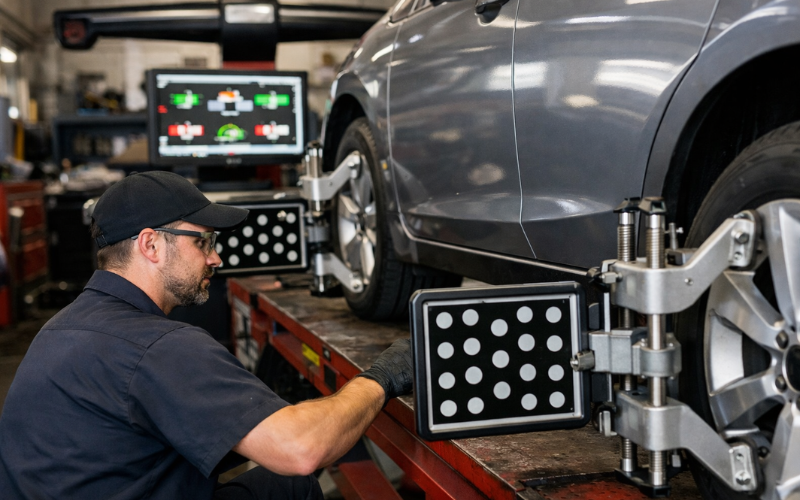
Next, the vehicle is placed on a specialized alignment rack equipped with sensors or cameras that measure wheel angles. The technician adjusts the suspension components to bring these angles back to manufacturer specifications.
After adjustments are complete, final measurements are recorded and verified. Most shops provide a printout showing the before-and-after readings, confirming that the wheels now meet the correct alignment settings.
Conclusion
So, how long does a wheel alignment take? In most cases, the adjustment itself requires less than an hour, but the full visit may take longer depending on your vehicle and its condition. Modern technology, worn parts, or suspension modifications can all extend service time. Planning ahead, maintaining your vehicle, and choosing an experienced service center can help keep the process smooth and efficient. Regular alignments not only improve handling but also extend tire life and support safer driving, making the time spent at the shop well worth it.
FAQs
1. Can a wheel alignment really be done in under an hour?
Yes, if the suspension is in good condition and no parts need replacement, many alignments finish within 30 to 60 minutes.
2. Why did my alignment take two hours?
The extra time may have been spent on inspection, waiting in line, or addressing worn suspension components that needed attention before adjustments.
3. Do new cars still need wheel alignments?
Yes. Even new vehicles can lose alignment due to potholes, curbs, or normal wear, so periodic checks are still recommended.
4. How often should I get a wheel alignment?
Most mechanics suggest checking alignment every 10,000 to 15,000 kilometers or whenever you notice steering problems or uneven tire wear.
