Introduction
Himalayan salt has become a familiar name in kitchens, wellness spaces, and even home décor. Known for its soft pink color and natural look, this type of salt is often seen as a more “natural” alternative to regular table salt. But what exactly is Himalayan salt, and why has it gained so much attention in recent years?
This unique salt comes from ancient salt deposits deep within the mountains of the Punjab region, near the Himalayas. Unlike common table salt, which is heavily processed, Himalayan salt is usually less refined and keeps many of its natural elements. Its appearance, texture, and origin all contribute to its growing popularity.
From cooking and seasoning to bath products and decorative lamps, Himalayan salt has found its way into many parts of daily life. In this article, we’ll explore what Himalayan salt really is, how it compares to regular salt, its uses, benefits, and whether it truly deserves the hype.
What Himalayan Salt Is and Where It Comes From
Himalayan salt is a type of rock salt that formed millions of years ago when ancient seas evaporated and left behind large salt deposits. Over time, these deposits were buried under layers of earth and rock, protecting them from pollution and modern environmental changes.
Most Himalayan salt is mined in the Khewra Salt Mine in Pakistan, one of the oldest and largest salt mines in the world. Workers extract the salt by hand or with minimal machinery to preserve its natural structure.
One of the most noticeable features of Himalayan salt is its pink color. This color comes from trace minerals such as iron, magnesium, and potassium. While these minerals are present in small amounts, they give the salt its distinct look and slightly different taste compared to regular salt.
How Himalayan Salt Differs from Regular Table Salt
The main difference between Himalayan salt and regular table salt lies in how they are processed. Table salt is usually heavily refined to remove impurities and often contains added substances like anti-caking agents to prevent clumping. In many countries, iodine is also added to table salt to support thyroid health.
Himalayan salt, on the other hand, is typically less processed. It is often washed, crushed, and packaged without many added chemicals. Because of this, it is often described as more “natural.”
In terms of texture, Himalayan salt is available in different grain sizes, from fine powder to large crystals. It also has a slightly milder and less sharp taste than table salt, which some people prefer.
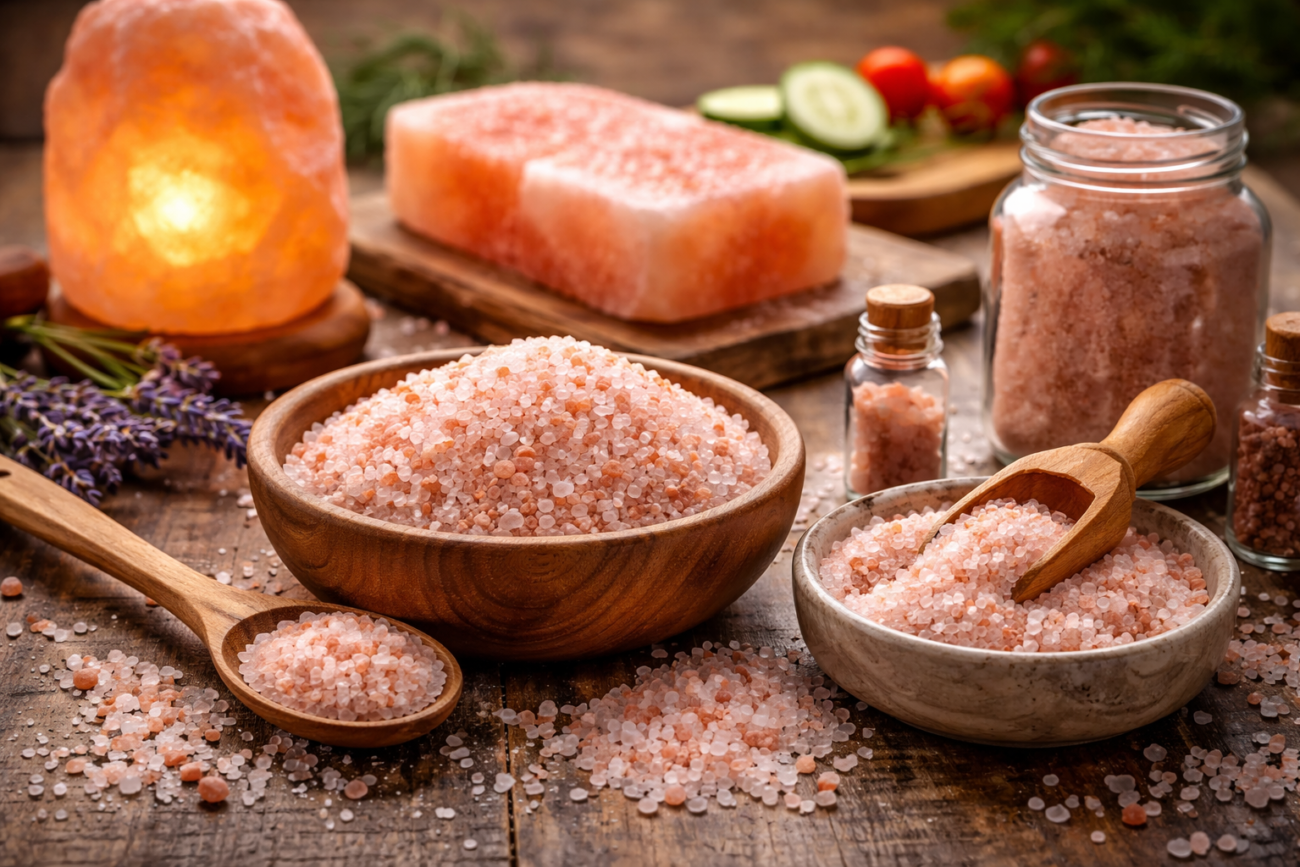
Visually, the difference is clear. While table salt is bright white and uniform, Himalayan salt has a pink or reddish hue and a more natural, uneven appearance.
Common Types and Forms of Himalayan Salt
Himalayan salt is available in several forms, depending on how it is intended to be used. In the kitchen, it is commonly sold as fine or coarse grains. Fine salt is ideal for everyday cooking, while coarse salt works well as a finishing touch on dishes.
Beyond cooking, Himalayan salt is also shaped into blocks that can be used for grilling or serving food. These salt blocks can add a unique flavor and presentation to meals.
You may also see Himalayan salt used in lamps, bath salts, and spa products. Salt lamps, for example, are popular for their warm glow and decorative appeal. Bath salts made from Himalayan salt are often used for relaxation and skin care.
Nutritional Profile of Himalayan Salt
Himalayan salt contains many trace minerals, including calcium, potassium, magnesium, and iron. These minerals are responsible for its color and are often highlighted in marketing claims.
However, it’s important to understand that these minerals are present in very small amounts. The main component of Himalayan salt, just like regular salt, is sodium chloride.
When comparing Himalayan salt to regular table salt, the overall nutritional difference is minimal. While Himalayan salt may contain more trace minerals, the quantities are not high enough to make a major impact on health.
Popular Uses of Himalayan Salt in Everyday Life
Himalayan salt is widely used in cooking as a seasoning. Many people enjoy its slightly different taste and its natural look when sprinkled over food. It can be used in everything from simple home meals to more advanced dishes.
In addition to cooking, Himalayan salt is sometimes used for food presentation. Salt blocks, for example, can be heated for grilling or chilled for serving cold dishes, adding both flavor and visual appeal.
Outside the kitchen, Himalayan salt is used in home décor, especially in the form of salt lamps. These lamps are valued for their warm, soft light and natural appearance.
It is also commonly found in bath and spa products. Many people use Himalayan salt in baths for relaxation, believing it may help soothe the body and skin.
Health Claims and What They Actually Mean
Himalayan salt is often linked to various health claims, such as improving hydration, balancing the body’s pH levels, and supporting better breathing. These claims are widely shared, especially in wellness communities.
However, scientific evidence supporting many of these claims is limited. While Himalayan salt does contain trace minerals, the amounts are too small to provide significant health benefits.
For example, the idea that Himalayan salt can detox the body or improve air quality through salt lamps is not strongly supported by research. Most experts agree that its benefits are similar to those of regular salt when used in normal amounts.
Benefits People Associate with Himalayan Salt
Despite the limited scientific backing for some claims, many people still prefer Himalayan salt for practical and sensory reasons. Its natural appearance and unique color make it visually appealing, especially when used as a finishing salt.
In terms of taste, some people find it less harsh than regular salt, which can enhance certain dishes. The texture of coarse Himalayan salt can also add a pleasant crunch to food.
The overall experience of using Himalayan salt, from cooking to presentation, often feels more natural and enjoyable. This is one of the main reasons it has gained popularity in modern kitchens.
Potential Drawbacks and Considerations
Like all types of salt, Himalayan salt is high in sodium. Consuming too much sodium can lead to health issues such as high blood pressure, so it’s important to use it in moderation.
Another factor to consider is cost. Himalayan salt is usually more expensive than regular table salt, even though the nutritional differences are small.
There is also a lot of marketing around Himalayan salt that can be misleading. Some products are promoted with exaggerated health benefits, which can create unrealistic expectations.
How to Choose Quality Himalayan Salt
When buying Himalayan salt, it’s helpful to look for products that clearly state their origin, ideally from Pakistan. Authentic Himalayan salt should have a natural pink color, though the shade can vary.
Be cautious of products that appear overly bright or artificially colored. High-quality salt should look natural and free from additives.
Proper storage is also important. Keeping Himalayan salt in a dry, airtight container will help maintain its texture and prevent clumping.
Simple Ways to Use Himalayan Salt at Home
Using Himalayan salt at home is simple and flexible. In cooking, it can replace regular salt in most recipes. Fine salt works well for everyday use, while coarse salt is great for finishing dishes.
You can also try using a salt block for grilling or serving food if you want to experiment with something new. It adds a unique touch to meals and can be a fun experience.
For non-culinary uses, adding Himalayan salt to a warm bath can create a relaxing routine. Some people also enjoy using salt lamps as part of their home décor.
Conclusion
Himalayan salt is a natural, visually appealing alternative to regular table salt that has gained popularity for both culinary and lifestyle uses. Its unique origin, pink color, and variety of forms make it stand out in many ways.
While it does contain trace minerals, the overall health benefits are often overstated. In reality, Himalayan salt is still a source of sodium and should be used in moderation, just like any other salt.
Whether you choose Himalayan salt for its taste, appearance, or versatility, it can be a valuable addition to your home when used with realistic expectations. Understanding what it offers—and what it doesn’t—can help you make the most of it.
FAQs
1. Is Himalayan salt healthier than regular salt?
Himalayan salt contains trace minerals, but the difference is very small. It is not significantly healthier than regular salt and should be used in moderation.
2. Why is Himalayan salt pink?
The pink color comes from trace minerals such as iron and magnesium found naturally in the salt.
3. Can Himalayan salt be used for everyday cooking?
Yes, Himalayan salt can be used just like regular salt in cooking and seasoning.
4. Do Himalayan salt lamps improve air quality?
There is no strong scientific evidence that salt lamps significantly improve air quality. They are mainly used for decoration and ambiance.
