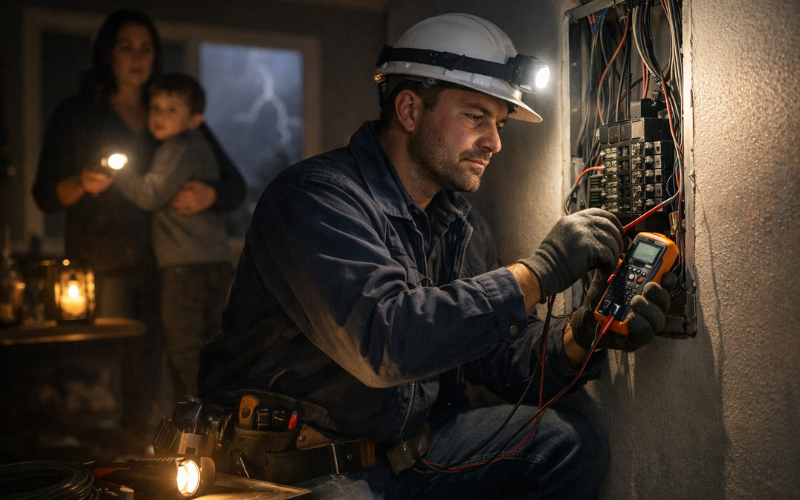
Introduction
A power outage at home can be stressful, inconvenient, and sometimes dangerous. Lights go out, appliances stop working, and daily routines come to a halt. For homeowners, the first question is often whether the issue is inside the house or caused by a wider electricity supply problem. Understanding this difference is important because it determines who you should contact first.
Some outages happen because of faults in the public electricity network, such as a damaged transformer or a grid failure affecting an entire area. Other outages are caused by problems within your property, such as faulty wiring, overloaded circuits, or a tripped breaker. In these cases, calling an electrician for a power outage is the safest and quickest solution.
Choosing the right professional matters. A qualified electrician helps restore power safely, prevents further damage, and can save you money by fixing the problem correctly the first time. Knowing when to call an electrician and when to contact your electricity provider can help you respond calmly and effectively.
The Cause of a Power Outage Before Calling an Electrician
Before you reach for the phone, it helps to identify what might be causing the outage. Power failures generally fall into two categories: utility-level issues and property-level problems.
Utility-level outages occur when the electricity provider’s system fails. This could happen due to storms, damaged cables, transformer issues, or maintenance work. When this happens, your entire street or neighborhood may lose power at the same time.
Property-level outages are limited to your home. They may be caused by overloaded circuits, loose connections, aging wiring, or malfunctioning appliances. If only your house is affected while others nearby still have electricity, the problem is likely internal.
There are some simple signs that the issue may be inside your home. If your main breaker has tripped, if certain rooms have no power while others do, or if an appliance stopped working just before the outage, these can point to a domestic electrical fault.
An electrician for a power outage is needed when the problem is clearly inside the property or when safety risks are present. If the cause is uncertain, a professional inspection ensures that hidden dangers such as overheating wires or damaged panels are not ignored.
Situations Where You Need an Electrician for a Power Outage
There are several situations where calling an electrician is not just helpful but necessary. One common issue is a breaker that trips repeatedly or refuses to reset. This often signals an overloaded circuit or a deeper wiring problem that should not be ignored.
Another serious warning sign is the presence of burning smells, sparks, or visible damage to wires. These indicate possible electrical hazards that could lead to fires or shocks. In such cases, switching off the main power supply and contacting an electrician immediately is the safest option.
Sometimes power loss happens only in certain rooms. This partial outage usually points to a local wiring fault or a problem with a specific circuit. An electrician can trace the source of the issue and restore power without risking further damage.
Appliances can also trigger outages. A faulty refrigerator, air conditioner, or water pump may cause circuits to overload or short out. If power goes off when a particular appliance is used, it is wise to disconnect it and seek professional help.
When to Contact the Electricity Provider Instead of an Electrician
If the entire neighborhood is without electricity, the problem is likely in the external supply system. This may be due to transformer faults, damaged lines, or scheduled maintenance work. Checking with neighbors can quickly confirm whether the outage is widespread.
Electricity providers usually have helplines or complaint services where customers can report outages. Once the issue is logged, repair teams investigate and restore the supply as soon as possible. Contacting the provider first in such cases avoids unnecessary electrician visits and costs.
If you are unsure whether the outage is local or widespread, a quick call to the utility company can help clarify the situation before arranging a private repair.
How to Choose a Reliable Emergency Electrician During a Power Outage
When the outage is inside your home, choosing the right electrician becomes important. Response time matters because electrical faults can disrupt daily life and may pose safety risks.
A dependable electrician should be available for emergency calls and able to reach your location quickly. Local professionals often provide faster service because they are familiar with the area and nearby routes.
Licensing and safety standards are also essential. A qualified electrician follows proper procedures, uses the correct tools, and ensures repairs meet safety guidelines. This reduces the chance of recurring faults and protects your home from electrical hazards.
Experience with urgent electrical issues is another important factor. Electricians who regularly handle outages can diagnose problems faster and suggest lasting solutions rather than temporary fixes.
Safety Steps to Take While Waiting for an Electrician
If you notice sparks, burning smells, or exposed wires, switching off the main breaker can reduce the risk of fire. Avoid touching electrical panels with wet hands or standing on damp surfaces.
Sensitive electronics should be unplugged to prevent damage from sudden power surges when electricity returns. This simple step can save costly appliances from failure.
For lighting, flashlights or battery-powered lamps are safer than candles, which can increase the risk of accidental fires. It is also best to avoid attempting DIY repairs unless you are trained, as electrical work can be dangerous without proper knowledge.
Preventing Future Power Outages Caused by Home Electrical Problems
Regular electrical inspections help identify loose connections, aging wiring, and overloaded circuits before they cause outages. Updating old electrical panels or wiring systems can also improve reliability and reduce risk.
Managing electrical load is another useful step. Running too many high-power appliances at the same time can strain circuits. Installing surge protection devices helps protect equipment and stabilizes voltage fluctuations.
Preventive maintenance may seem like an extra expense, but it often saves money by avoiding emergency repairs, appliance damage, and prolonged downtime.
Conclusion
Power outages can be frustrating, but understanding their cause makes it easier to respond calmly and correctly. Not every outage requires an electrician, but when the problem lies inside your home, professional help is essential for safety and long-term reliability.
A skilled electrician for a power outage can quickly identify faults, restore electricity safely, and prevent future issues. By staying alert to warning signs, following safety steps, and maintaining your electrical system regularly, you can reduce risks and handle outages with confidence.
FAQs
1. How do I know if I need an electrician for a power outage?
If only your home is affected, your breaker keeps tripping, or you notice burning smells or sparks, you likely need an electrician.
2. Should I reset the breaker during a power outage?
You can try once if it has tripped, but if it keeps switching off, stop and call an electrician to inspect the system.
3. Can a faulty appliance cause a power outage?
Yes, damaged or overloaded appliances can trip circuits and cut off power. Disconnecting them and calling an electrician is recommended.
4. Is it safe to fix wiring myself during an outage?
No. Electrical repairs can be dangerous without proper training. It is always safer to hire a qualified professional.
