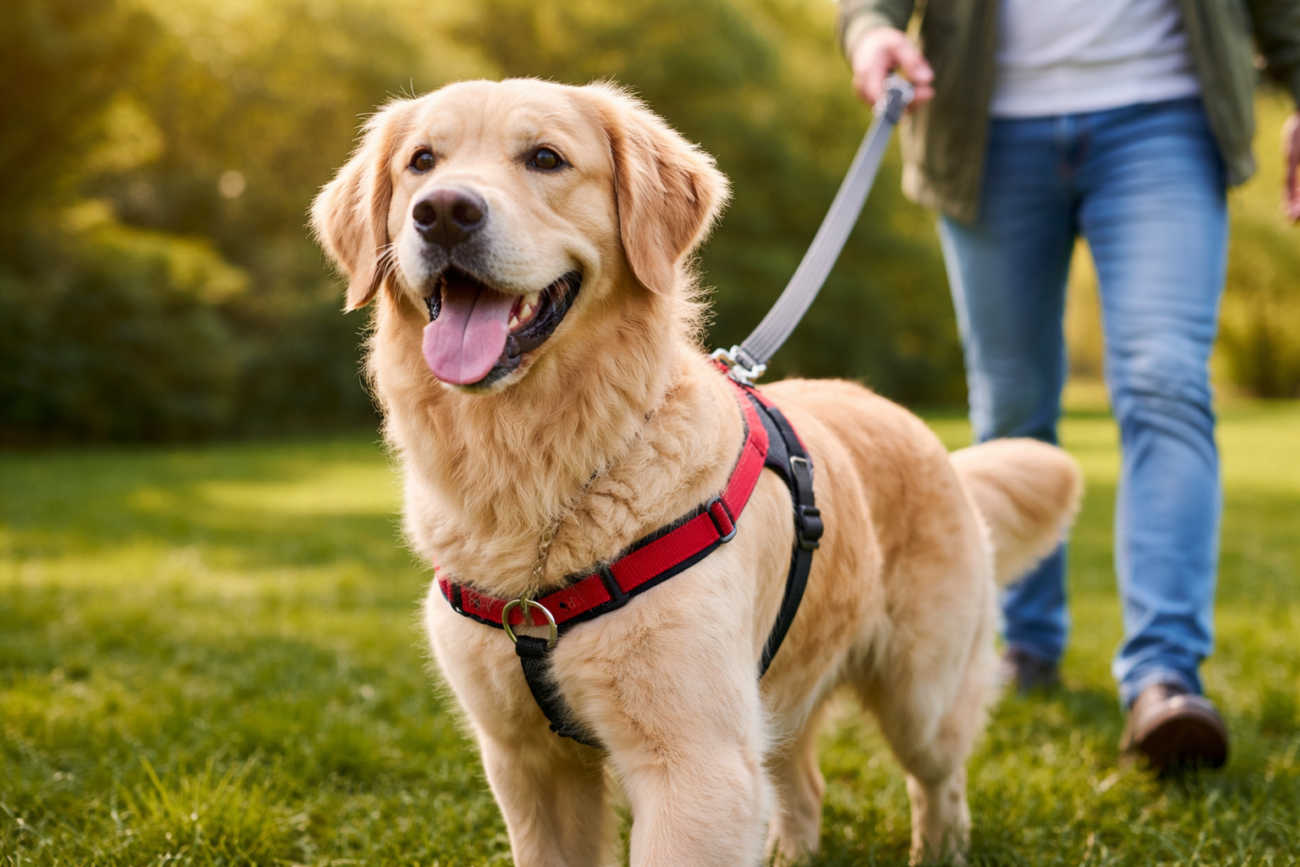
Every dog owner knows that feeling. You grab the leash, your dog loses their mind with excitement, and the moment you step outside, they’re off — nose down, legs pumping, pulling like they have somewhere very important to be. By the time you get home, your shoulder aches, your patience is gone, and the word “walk” already fills you with dread. If that sounds familiar, you’re not dealing with a bad dog. You’re dealing with a dog that simply hasn’t been given the right tool yet. The easy walk dog harness was built specifically for this moment — for the owners who are tired of being dragged and the dogs who don’t yet understand what a calm walk looks like. It doesn’t shock, choke, or punish. It simply redirects. And for millions of dog owners, that one small change has made all the difference.
The Problem With Regular Collars and Back-Clip Harnesses
Most dog owners start with what’s familiar — a collar and leash. It’s simple, affordable, and works fine for well-trained dogs. But for a dog that pulls, a collar can actually make things worse. When a dog lunges forward and the collar tightens around their throat, it creates pressure on the trachea and neck. Harnesses help disperse the pressure caused by a pulling leash, which can be better for your dog’s neck and help prevent choking.
Back-clip harnesses, while more comfortable than collars, have their own problem. When the leash attaches to the center of a dog’s back, it essentially gives them something to pull into — almost like a sled dog setup. When the leash attaches to a D-ring at the center of the chest, it redirects the dog sideways or back toward you rather than allowing forward movement, disrupting the pulling habit physically without any punishment. Back-clip designs simply don’t offer that kind of redirection, which is why so many dogs trained with them continue to pull without consequence.
How the Easy Walk Dog Harness Actually Works
The easy walk dog harness uses a front-clip design — meaning the leash attaches to a ring on the dog’s chest, not their back. When a dog pulls forward, the leash angle causes them to turn to the side and face back toward you. This interrupts the pulling motion in a gentle, consistent way that doesn’t cause pain or distress.
What makes the Easy Walk unique is its martingale loop on the chest strap. The beauty of the fabric loop in the Easy Walk harness design is how it cinches like a martingale collar, so a tug results in gentle pressure — and that control is something you can’t get when your leash is connected to the back of a harness. It also reduces twisting of the harness straps when the dog does pull, which is a common complaint with similar styles.
The result is a harness that communicates with your dog through physical feedback rather than force — and for most dogs, that’s enough to see an improvement very quickly.
Who Should Use an Easy Walk Harness — and Who Shouldn’t
The easy walk dog harness is a great fit for a wide range of dogs — medium to large breeds that pull on leash, dogs transitioning from collars to harnesses, and owners who want a simple, no-fuss training tool. It is the harness most frequently recommended by trainers and veterinarians, and it has earned that reputation over years of consistent real-world performance.
That said, it isn’t for everyone. Very small or toy breeds may find the chest strap design uncomfortable due to their narrow build. Dogs with deep chests or unusual proportions can be tricky to fit properly. And for extremely powerful breeds that put intense force through the leash, a heavier-duty harness may be more appropriate. Heavy-duty options like the Julius-K9 Powerharness or 2 Hounds Design Freedom are better for large, strong dogs that put a lot of force into the leash.
It’s also worth noting that the Easy Walk is better used as a training aid than as a permanent solution. Dogs wearing it should still be learning loose-leash walking skills alongside its use — not just relying on the harness forever.
Sizing Guide — Getting the Right Fit for Your Dog
Sizing is where a lot of owners go wrong, and it’s one of the most important factors in whether this harness works well or causes problems. The Easy Walk comes in sizes ranging from extra-small to extra-large, based primarily on chest girth measurements rather than weight.
To measure your dog, wrap a soft tape measure around the widest part of their chest, just behind the front legs. PetSafe provides a sizing chart on their website and packaging — follow it closely, but be aware that fit can vary. PetSafe recommends sizing up if your dog is between sizes, but in practice, some users find the smaller size gives a better fit across the chest. If in doubt, measure twice and compare against the chart before ordering.
A proper fit means the harness sits snugly but not tightly — you should be able to slide one to two fingers beneath each strap. Too loose and the harness will shift and lose effectiveness; too tight and it can cause chafing or restrict movement.
Step-by-Step: How to Put On an Easy Walk Harness Correctly
Start with the shoulder strap. Slip it over your dog’s head and adjust it so it sits comfortably above and behind the shoulders — not resting on the shoulders themselves. Next, bring the belly strap under your dog and snap it closed. PetSafe often makes this strap a different color to help you distinguish it from the rest of the harness. Then connect the horizontal chest strap. When everything is in place and viewed from the side, the harness should form a sideways “T” shape — not a “Y.” If it looks like a Y, the chest strap is sitting too low and needs to be adjusted upward.
After adjusting, keep the shoulder rings above the shoulder and tighten all around so you can still fit two fingers under the straps. Finally, attach your leash to the front ring on the chest strap — not the back, if a back ring is present.
Easy Walk Harness vs. Other No-Pull Options on the Market
In 2026, the no-pull harness market has grown considerably, with many strong alternatives competing for shelf space. So how does the Easy Walk hold up?
Testing on two high-energy dogs found that only two of seven harnesses actually worked to prevent pulling — the Auroth Tactical and the PetSafe Easy Walk. The Easy Walk’s biggest advantage remains its simplicity, affordability, and the immediate redirection effect of its martingale chest loop.
Compared to the Ruffwear Front Range, the Easy Walk is significantly cheaper and more focused on pull correction, though the Front Range offers more padding and durability for long-term everyday use. Against the 2 Hounds Design Freedom Harness — a close competitor — the Easy Walk is easier to put on but slightly less robust for very strong pullers.
CNN Underscored named it the best budget harness after hands-on testing, noting it offered an adjustable fit and supportive padding at a lower price point than premium alternatives. For most everyday dog owners, the value-to-performance ratio remains hard to beat.
What Dog Trainers and Vets Are Saying About It in 2026
Professional opinion on the Easy Walk has remained largely positive in 2026, though with some important nuance. Veterinarians commonly recommend the PetSafe Easy Walk Harness, designed by a veterinary behaviorist with a patented martingale loop that discourages pulling without choking.
Animal trainers, however, emphasize that the harness should be used as a tool within a broader training plan — not as a shortcut. As one trainer puts it, there is no magic collar or harness — you have to train your dog, and unfortunately, there’s no shortcut. The harness makes it easier to manage pulling, but it works best when combined with reward-based training to teach the dog what loose-leash walking actually feels like.
Trainer Matt Mason recommends introducing any new harness slowly and positively — taking it apart and introducing it strap by strap, using treats to help the dog become comfortable with the process. This is especially helpful for anxious dogs or those that resist being harnessed.
Real-World Performance — What to Expect in the First Few Weeks
One of the most common questions owners ask is: how quickly will I see results? The honest answer is that it varies — but most dogs show noticeable improvement within the first few walks.
One owner described how their six-month-old Husky mix had been pulling so hard they worried about throat damage — and after switching to the Easy Walk, walking became far less stressful for both of them. Stories like this are common, but they usually involve owners who also adjusted their walking behavior alongside the harness.
Expect the first week to be an adjustment period. Your dog will likely be confused by the new sensation at first and may slow down, spin, or resist slightly. By week two, most dogs begin to settle into the redirection pattern. By week three or four, combined with positive reinforcement, many owners report a noticeably calmer, more cooperative walk. Daily walks with the Easy Walk harness, combined with consistent training, produced great results in real-world testing — but patience and consistency are key.
Where to Buy and What to Watch Out For
The PetSafe Easy Walk harness is widely available through major retailers including Amazon, Chewy, Walmart, and PetSmart, as well as directly from the PetSafe website. Prices typically range from around $20 to $30 USD depending on the size and whether you opt for the standard or Deluxe padded version.
When shopping, stick to authorized retailers. Counterfeit or low-quality imitations do exist — especially on third-party marketplace listings — and they often lack the proper martingale mechanism that makes the genuine harness effective. Look for the PetSafe branding and confirm the seller is verified before purchasing.
The Deluxe version, which includes neoprene padded straps and reflective threading, is worth the small additional cost — particularly for dogs with sensitive skin or owners who walk in low-light conditions. If you’re between sizes, PetSafe’s sizing guide on their official site is the most reliable resource to consult before buying.
Conclusion
The easy walk dog harness isn’t a cure-all, but it’s one of the most reliable and widely recommended tools available to dog owners dealing with pulling. Its front-clip design, martingale chest loop, and lightweight build make it effective, comfortable, and accessible for most dogs and budgets. When fitted correctly and used alongside positive training, it can genuinely transform your daily walks from a struggle into something you and your dog both look forward to. Give it a fair trial, take the fitting seriously, and pair it with a little patience — the results tend to speak for themselves.
FAQs
Q1: Can I leave the Easy Walk harness on my dog all day?
No. The Easy Walk is designed for supervised walks only. Because it sits low on the body and is made of nylon, dogs can easily reach and chew through it when left alone. Always remove it after walks and use a separate collar with ID tags for everyday wear.
Q2: My dog is still pulling even with the Easy Walk harness. What am I doing wrong?
The most likely cause is an incorrect fit. If the chest strap sits too low or the harness is too loose, it won’t redirect your dog’s movement properly. Check that the harness forms a sideways “T” shape from the side, and make sure you can only fit one to two fingers beneath each strap. Combining the harness with reward-based training also makes a significant difference.
Q3: Is the Easy Walk harness safe for puppies?
It can be used on puppies, but opinions vary among trainers. Some recommend starting puppies on flat collars to build basic leash manners first, then transitioning to the harness if pulling becomes an issue. If you do use it on a puppy, make sure it fits snugly and monitor for any signs of discomfort or restricted movement.
Q4: What’s the difference between the standard Easy Walk and the Deluxe version?
The Deluxe version adds neoprene-padded straps and reflective threading to the original design. The padding reduces the risk of chafing for dogs with sensitive skin, and the reflective elements improve visibility during early morning or evening walks. The price difference is usually only a few dollars, making the Deluxe version worth considering for most owners.
Q5: Can the Easy Walk harness hurt my dog’s shoulders over time?
If fitted and used correctly, the risk is low. However, some vets and trainers note that the horizontal chest strap — the defining feature of the H-shaped harness design — can interfere with natural shoulder movement if worn for extended periods or during high-intensity exercise. To be safe, use it for walks and training sessions rather than all-day wear, and always ensure the chest strap sits above the shoulders, not across them.
