Introduction
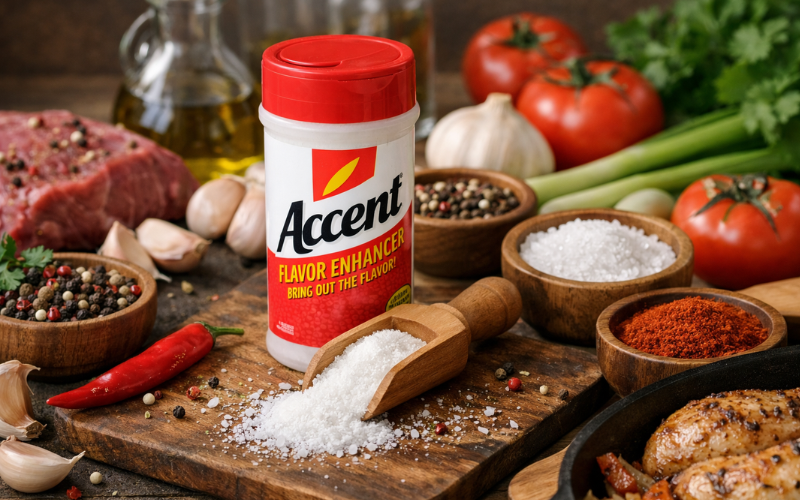
Accent seasoning is a popular flavor enhancer used in many kitchens around the world. It is known for improving the natural taste of food without changing its original flavor. Many home cooks and professional chefs use accent seasoning to make dishes taste richer, smoother, and more balanced. In this guide, you will learn what accent seasoning is, how it works, where it is used, and how to use it properly in everyday cooking.
What Is Accent Seasoning?
Accent seasoning is a food seasoning designed to enhance the natural flavors already present in a dish. It is often used in small amounts to improve overall taste rather than to add a strong flavor of its own. Because of this, it is sometimes called a flavor enhancer.
Accent seasoning fits well into modern cooking because many people want to improve taste without adding too much salt or heavy spices. It is commonly found in both home kitchens and food service environments. When used correctly, it can help make meals taste more complete and satisfying.
Main Ingredients and Composition
The main ingredient in most accent seasoning products is monosodium glutamate (MSG), a substance that naturally occurs in many foods such as tomatoes, cheese, and mushrooms. MSG is widely used as a flavor enhancer in cooking.
Accent seasoning usually contains only a few simple ingredients. It is designed to blend easily into foods and dissolve during cooking. Always check the product label to understand the exact ingredients, as formulations may vary by brand or country.
How Accent Seasoning Works in Food
Accent seasoning works by enhancing umami, which is often described as a savory or rich taste. Umami is one of the basic taste profiles, along with sweet, salty, sour, and bitter. By strengthening umami, accent seasoning can help food taste fuller and more balanced.
When added to dishes, it does not overpower the original flavors. Instead, it supports and highlights them. This is why it is often used in small quantities.
Flavor Enhancement vs. Flavor Masking
Flavor enhancement means improving the natural taste of food. Accent seasoning is designed for this purpose. It helps bring out the best qualities of ingredients.
Flavor masking, on the other hand, tries to hide unwanted tastes. Accent seasoning does not work this way. It is not meant to cover poor-quality ingredients or replace proper cooking techniques. Good ingredients and careful preparation remain important for the best results.
Common Uses of Accent Seasoning in Recipes
Accent seasoning is used in many types of recipes. It is especially helpful in dishes that benefit from a deeper, richer flavor.
In Soups and Stews
Soups and stews often contain vegetables, meats, and broths. Adding a small amount of accent seasoning can enhance the overall taste and make the broth feel more balanced. It works well in both clear soups and thick stews.
In Meats and Marinades
Accent seasoning can improve the flavor of beef, chicken, pork, and other meats. It is sometimes added to marinades to support the natural taste of the protein. Because it blends easily, it spreads evenly throughout the dish.
In Vegetables and Side Dishes
Vegetables such as green beans, carrots, and corn can taste more vibrant with a small amount of accent seasoning. It can also be used in rice, pasta, and potato dishes to improve overall flavor without adding extra spices.
Benefits of Using Accent Seasoning
Accent seasoning offers several practical benefits for home cooks and food professionals. When used responsibly, it can be a helpful addition to many recipes.
Enhancing Natural Flavors
One of the main benefits is flavor enhancement. Accent seasoning helps highlight the natural taste of ingredients. This can be especially useful when cooking simple meals with limited ingredients.
Improving Overall Taste Balance
In some dishes, flavors may feel flat or incomplete. Accent seasoning can help create better balance by supporting savory notes. This often results in a smoother and more satisfying taste.
Convenience in Cooking
Accent seasoning is easy to use. It dissolves quickly and does not require special preparation. This makes it a convenient option for busy kitchens and everyday meals.
How to Use Accent Seasoning Properly
Using accent seasoning correctly is important for achieving the best results. Because it is a flavor enhancer, only a small amount is usually needed.
Recommended Amounts
Most recipes call for a small sprinkle or measured amount. It is best to start with a light touch and adjust if necessary. Using too much may affect the overall balance of the dish.
Best Times to Add It During Cooking
Accent seasoning can be added during cooking so it blends well with other ingredients. In soups, stews, and sauces, it is often added while the food is simmering. This allows it to dissolve evenly and mix with the flavors.
Accent Seasoning in Different Cuisines
Accent seasoning is used in many cooking styles around the world. Its neutral profile makes it suitable for a wide range of dishes.
Everyday Home Cooking
Many families use accent seasoning in daily meals. It can be included in simple recipes such as stir-fries, casseroles, and grilled dishes. Because it enhances flavor without adding strong spices, it works well in basic home cooking.
Restaurant and Commercial Kitchens
Professional chefs may use accent seasoning to maintain consistent flavor in large batches of food. In restaurants and food production settings, balance and consistency are important, and flavor enhancers can help achieve this goal.
Possible Considerations and Usage Tips
While accent seasoning is widely used, it is important to use it thoughtfully and responsibly.
Understanding Personal Dietary Needs
People with specific dietary needs should review product labels carefully. Accent seasoning products may vary, so checking ingredient information is always recommended. If you have concerns about sodium or other dietary factors, consider how it fits into your overall eating plan.
Reading Product Labels Carefully
Not all seasoning products are identical. Some may include additional ingredients. Reading the label helps you understand exactly what you are using in your cooking. This supports informed and safe food preparation.
Conclusion
Accent seasoning is a simple but effective flavor enhancer that can improve many types of dishes. It works by supporting natural flavors and adding depth without overpowering food. From soups and meats to vegetables and everyday home meals, accent seasoning can be a useful tool in the kitchen when used properly.
FAQs
1. What is accent seasoning used for?
Accent seasoning is used to enhance the natural flavor of food. It helps improve taste without adding a strong or separate flavor.
2. Is accent seasoning safe for everyday cooking?
Accent seasoning is commonly used in many kitchens. As with any ingredient, it should be used in moderation and according to personal dietary needs.
3. How much accent seasoning should be used in recipes?
Only a small amount is usually needed. It is best to start with a light sprinkle and adjust based on taste.
4. Can accent seasoning be used in vegetarian dishes?
Yes, accent seasoning can be used in vegetarian meals. It works well with vegetables, grains, soups, and plant-based recipes.
