Introduction
The RTC medical abbreviation is commonly seen in medical records, prescriptions, and clinical notes. For many patients, it can be confusing because it is not always explained clearly. In simple terms, RTC is a short form used by healthcare professionals to save time and keep documentation efficient.
You might notice RTC written at the end of a doctor’s note or in discharge instructions. While it often has a straightforward meaning, it can represent different things depending on the situation. This is why understanding the context is important when reading any medical document.
What Does RTC Mean in Medical Terms?
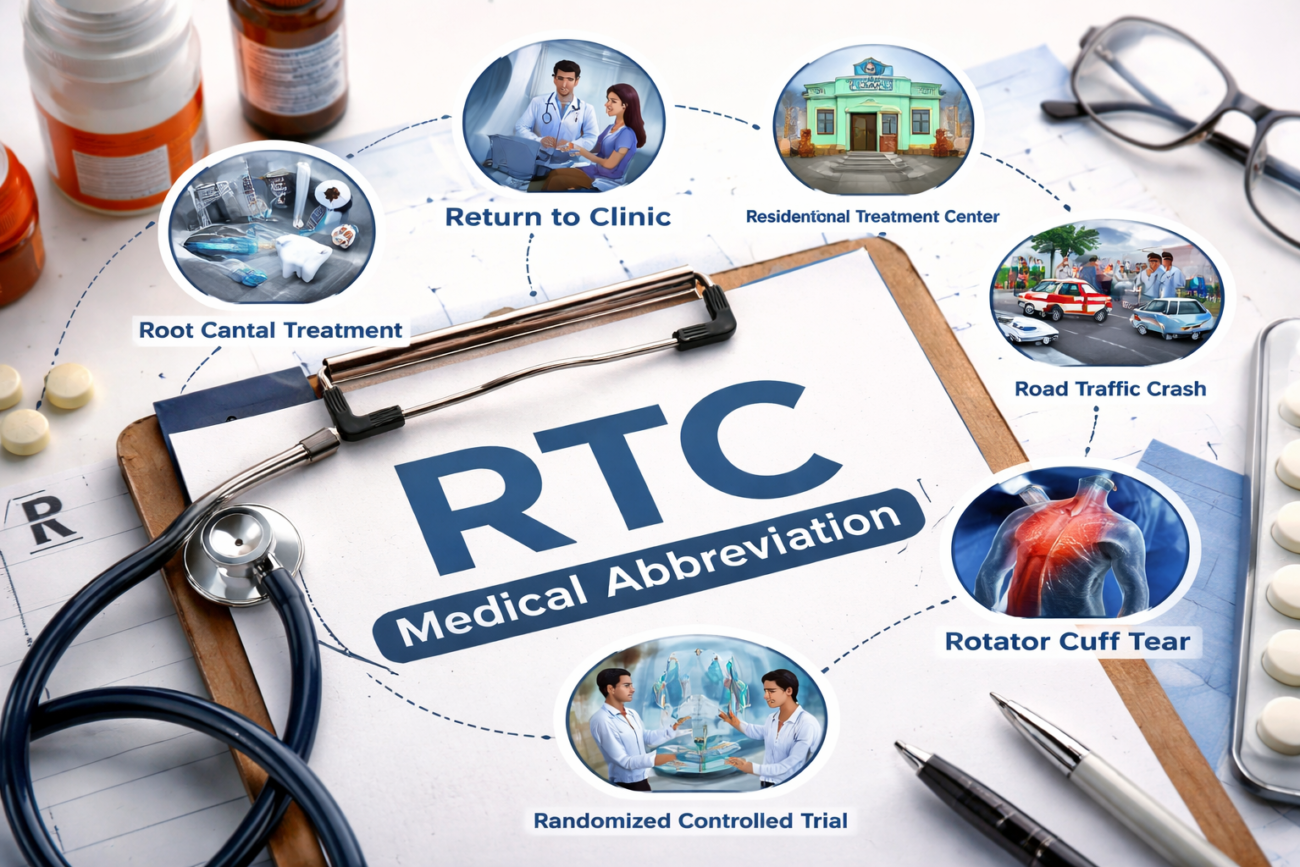
The RTC medical abbreviation is a shorthand used in healthcare to represent specific medical instructions or conditions. The most common meaning is “Return to Clinic,” but it can also stand for other terms depending on the medical field.
Healthcare professionals rely on abbreviations like RTC to make documentation quicker and more efficient. Doctors, nurses, and specialists often write notes under time pressure, and abbreviations help them communicate important information without writing long sentences.
However, while abbreviations are helpful for professionals, they can sometimes be unclear for patients. That’s why it’s important to understand what RTC means in your specific medical context.
RTC as “Return to Clinic” — The Most Common Usage
In most cases, the RTC medical abbreviation stands for “Return to Clinic.” This is a simple instruction given by a doctor, telling the patient to come back for a follow-up visit.
You might see phrases like “RTC in 2 weeks” or “RTC after test results.” These instructions help ensure that your treatment is progressing as expected and allow your doctor to monitor your condition.
This usage is especially important in ongoing care. For example, if you are being treated for an infection, chronic illness, or recovering from surgery, follow-up visits are necessary to check improvement or adjust treatment. RTC serves as a reminder that your care does not end with one appointment.
Other Common Meanings of RTC in Healthcare Settings
Although “Return to Clinic” is the most widely used meaning, the RTC medical abbreviation can also have other interpretations depending on where and how it is used.
In mental health or rehabilitation settings, RTC may refer to a Residential Treatment Center. This is a facility where patients stay for a period of time to receive structured care for mental health conditions, substance use, or behavioral issues.
In emergency medicine or trauma reports, RTC can mean Road Traffic Crash or Road Traffic Collision. In this case, it describes how an injury occurred. For example, a patient admitted after an accident might have “RTC” noted in their records to indicate the cause of injury.
These different meanings highlight how important context is. The same abbreviation can mean something completely different depending on the medical department or situation.
Specialized Medical Meanings of RTC You Should Know
In dentistry, RTC may stand for Root Canal Treatment, a procedure used to treat infected or damaged teeth. This is commonly seen in dental charts or treatment plans.
In medical research, RTC can refer to a Randomized Controlled Trial. This is a type of scientific study used to test the effectiveness of treatments or medications. It is considered one of the most reliable methods in clinical research.
In nephrology, RTC may represent Renal Tubular Acidosis, a condition where the kidneys fail to properly manage acid levels in the body. This is a more technical use and usually appears in specialist reports.
In orthopedics, RTC can also mean Rotator Cuff Tear, which is a shoulder injury affecting muscles and tendons. This meaning is often used in imaging reports or physical therapy notes.
Additionally, in medical technology, RTC may stand for Real-Time Clock, a component in devices such as pacemakers or insulin pumps that keeps accurate time.
These specialized meanings are less common in general patient notes but are still important to recognize when dealing with specific medical fields.
How to Identify the Correct Meaning of RTC in a Medical Report
Understanding the RTC medical abbreviation depends largely on context. The same term can mean different things based on where it appears and who is using it.
One of the first things to consider is the type of document. For example, if RTC is written in a discharge summary or prescription, it most likely means “Return to Clinic.” On the other hand, if it appears in a trauma report, it may refer to a road traffic accident.
The department also matters. In dental records, RTC is more likely related to root canal treatment, while in research papers, it could mean randomized controlled trial.
Patients can also look at surrounding words for clues. Phrases like “in 1 week” or “follow-up” strongly suggest the meaning is “Return to Clinic.”
If there is still confusion, the best approach is to ask your healthcare provider directly. Clear communication is always better than guessing.
Why Medical Abbreviations Like RTC Can Be Confusing
Medical abbreviations are designed to make communication faster for healthcare professionals, but they can be difficult for patients to understand. The RTC medical abbreviation is a good example of how one term can have multiple meanings.
Different specialties use the same abbreviation in different ways. A dentist, an emergency doctor, and a researcher might all use RTC, but each with a completely different meaning.
This can sometimes lead to misunderstandings, especially when patients read their own medical records. Misinterpreting an abbreviation could cause unnecessary worry or confusion.
Modern healthcare is moving toward clearer communication, and many providers now try to reduce the use of unclear abbreviations. Still, terms like RTC remain widely used, so understanding them is helpful.
When Should Patients Ask About RTC?
You should seek clarification if the abbreviation affects your treatment plan, follow-up schedule, or understanding of your condition. For example, if you are told to “RTC,” it is important to know when and why you need to return.
Asking questions helps build better communication with your healthcare provider. Doctors and nurses expect patients to ask for clarification, and doing so ensures that you fully understand your care.
Conclusion
The RTC medical abbreviation is a commonly used term in healthcare, but its meaning can vary depending on the context. In most cases, it stands for “Return to Clinic,” which is a simple instruction for follow-up care. However, it can also represent other terms such as Residential Treatment Center, Road Traffic Crash, or more specialized meanings in dentistry, research, and other fields.
The key to understanding RTC is paying attention to where and how it is used. Context, department, and surrounding information all play a role in determining its correct meaning.
FAQs
1. What is the most common meaning of RTC in medical terms?
The most common meaning of the RTC medical abbreviation is “Return to Clinic,” which tells a patient to come back for a follow-up visit.
2. Can RTC have different meanings in different medical fields?
Yes, RTC can mean different things depending on the context, such as Residential Treatment Center, Road Traffic Crash, or Root Canal Treatment.
3. How do I know what RTC means in my medical report?
You can understand the meaning by looking at the context, the type of document, and the medical department. If unsure, ask your doctor for clarification.
4. Is it important to understand medical abbreviations like RTC?
Yes, understanding abbreviations helps you better follow your treatment plan and communicate effectively with your healthcare provider.
