Introduction
The single leg RDL (Romanian deadlift) is a simple yet highly effective exercise that focuses on strength, balance, and control. Unlike many traditional movements, it trains one leg at a time, which helps your body move more naturally and efficiently. This makes it a valuable addition to almost any fitness routine, whether your goal is to build muscle, improve stability, or prevent injuries.
What makes the single leg RDL stand out is how it combines strength training with coordination. While your working leg builds power in the glutes and hamstrings, your core and smaller stabilizing muscles work hard to keep you balanced. This creates a full-body challenge without needing heavy weights.
The exercise is suitable for beginners, athletes, and anyone looking to improve movement quality. With consistent practice, you can expect better balance, stronger legs, and improved control in everyday activities and sports.
What Is the Single Leg RDL?
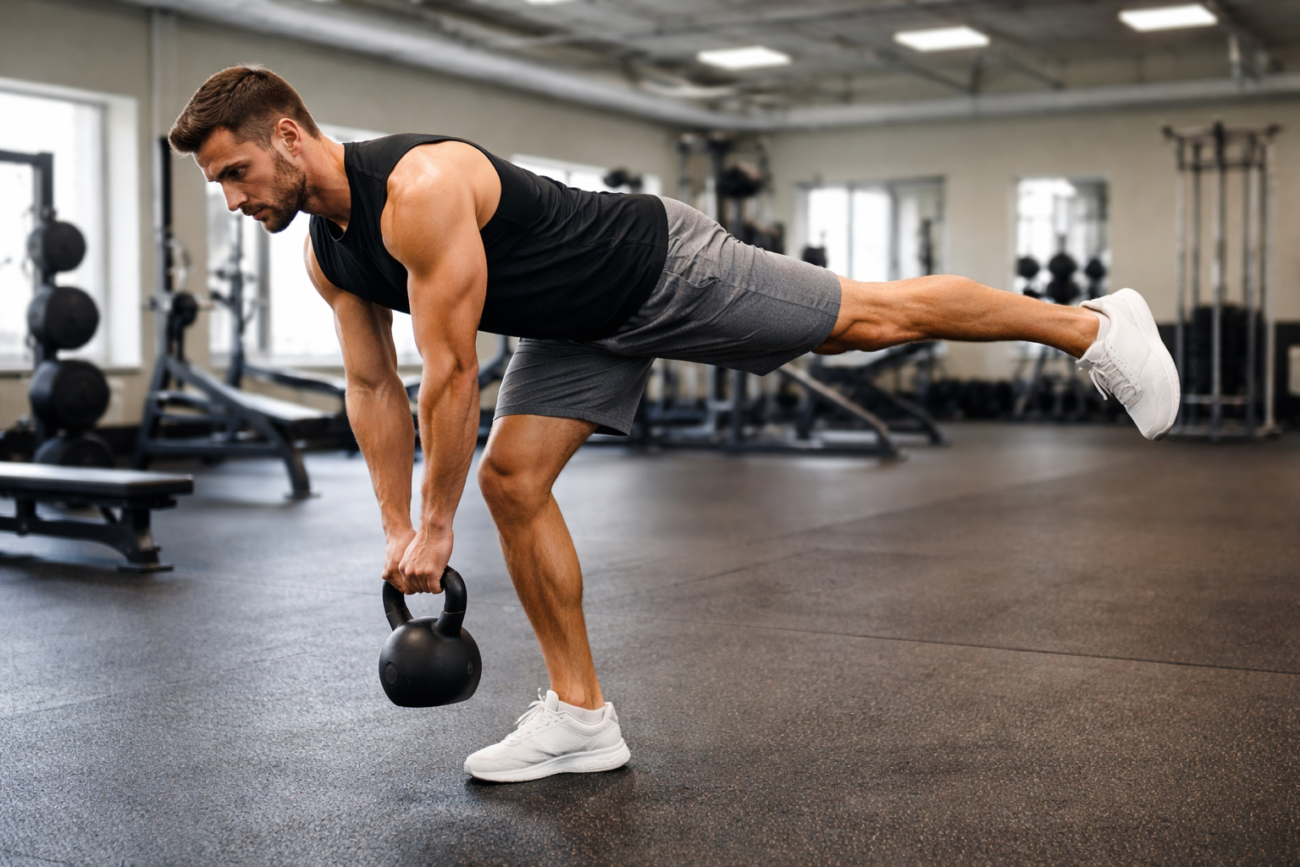
The single leg RDL is a lower-body exercise that involves hinging at the hips while standing on one leg. As you lower your torso forward, your opposite leg extends backward, creating a straight line from head to heel. The movement focuses on controlling your body while maintaining proper alignment.
Compared to a traditional Romanian deadlift, which uses both legs, the single leg RDL adds a balance challenge. This forces your body to stabilize itself, engaging more muscles and improving coordination. While the traditional version allows you to lift heavier weights, the single leg version emphasizes control and symmetry.
Training one leg at a time, also known as unilateral training, is important because it helps correct strength differences between sides. Many people unknowingly rely more on one leg during exercises. The single leg RDL helps address this by making each side work independently, leading to more balanced strength and better movement patterns.
Key Benefits of the Single Leg RDL
One of the main benefits of the single leg RDL is its ability to build strength in the glutes and hamstrings. These muscles are essential for everyday movements like walking, running, and lifting. Strengthening them can improve performance and reduce strain on other areas of the body.
Another major advantage is improved balance and coordination. Since you are standing on one leg, your body must constantly adjust to stay stable. Over time, this improves your control and reduces the risk of falls or injuries.
The exercise also supports core stability and posture. Your core works throughout the movement to keep your spine aligned. This can lead to better posture and reduced lower back discomfort.
In addition, the single leg RDL plays a key role in injury prevention. By strengthening stabilizing muscles and correcting imbalances, it helps protect joints such as the knees and hips. This is especially useful for athletes or anyone returning from injury.
Muscles Worked in the Single Leg RDL
The primary muscles used in the single leg RDL are the hamstrings and glutes. These muscles control the hip hinge and help you return to a standing position. They are responsible for generating most of the force in the movement.
Secondary muscles include the lower back, which helps maintain a neutral spine, and the core muscles, which stabilize your torso. The obliques also play a role in preventing your body from rotating.
Your calves and ankle stabilizers are heavily involved as well. Since you are balancing on one leg, these smaller muscles work continuously to keep you steady. This is one reason the single leg RDL is so effective for improving overall stability.
How to Do the Single Leg RDL with Proper Form
To begin, stand tall with your feet hip-width apart. Shift your weight onto one leg and keep a slight bend in that knee. This will be your working leg. Keep your chest up and your core engaged.
As you start the movement, hinge at your hips by pushing them backward. At the same time, allow your non-working leg to lift behind you. Your torso should move forward as your leg moves back, keeping your body in a straight line.
It is important to maintain proper alignment throughout the exercise. Keep your back flat and avoid rounding your spine. Your hips should stay level, and your shoulders should not twist. Focus on control rather than speed.
Lower your torso until you feel a stretch in your hamstrings or until your body is nearly parallel to the floor. Then, press through the heel of your standing leg and return to the starting position by squeezing your glute.
Breathing also plays a role in maintaining control. Inhale as you lower your body and exhale as you return to standing. This helps keep your core engaged and supports proper movement.
Common Mistakes to Avoid
One of the most common mistakes in the single leg RDL is rounding the back. This usually happens when you try to reach too far down instead of focusing on the hip hinge. Keeping your spine neutral is essential for both safety and effectiveness.
Another mistake is opening the hips. This occurs when your lifted leg rotates outward, causing your body to lose alignment. Keeping your hips square to the ground ensures that the correct muscles are being targeted.
Locking the knee of the standing leg is also a problem. A slight bend in the knee helps maintain tension in the glutes and reduces strain on the joint.
Losing balance is natural, especially for beginners, but rushing through the movement often makes it worse. Slowing down and focusing on control can greatly improve your stability over time.
Single Leg RDL Variations and Progressions
For beginners, starting with a supported version can be helpful. Using a wall or placing the back foot lightly on the ground can improve balance while you learn the movement.
As you become more comfortable, you can add different loading styles. Holding a weight in one hand or both hands changes how your body stabilizes itself. This adds variety and increases the challenge.
Progressions can include increasing weight, slowing down the movement, or adding pauses. These methods help build both strength and control without needing complicated equipment.
There are also equipment-based variations, such as using dumbbells, kettlebells, or a barbell. Each option provides a slightly different feel and can help you continue progressing over time.
Tips to Improve Balance and Control
Improving balance during the single leg RDL takes practice and attention to detail. One helpful technique is to focus your gaze on a fixed point in front of you. This can make it easier to stay stable.
Engaging your core is equally important. Think of tightening your midsection gently before starting the movement. This helps keep your body aligned and prevents unnecessary movement.
Small adjustments can also make a big difference. Moving slowly, maintaining tension, and keeping your movements controlled will help you build confidence and stability. Over time, your balance will naturally improve.
Programming the Single Leg RDL in Your Routine
The single leg RDL can be included in both lower-body and full-body workouts. It works well as a main exercise or as an accessory movement after heavier lifts.
Your sets and repetitions will depend on your goal. For building strength, using moderate to heavy weights with fewer repetitions is effective. For balance and control, lighter weights and higher repetitions work better.
Performing the exercise two to three times per week is usually enough to see progress. Consistency is more important than intensity, especially when focusing on technique.
Who Should Do the Single Leg RDL?
The single leg RDL is suitable for a wide range of people. Athletes can use it to improve performance, especially in sports that require balance and coordination.
It is also useful for general fitness enthusiasts who want to build strength and move better in everyday life. The exercise supports functional movement, which makes daily tasks easier.
For those recovering from injury, the single leg RDL can help rebuild strength and stability when performed correctly. However, it is important to start with a lighter version and progress gradually.
Both beginners and advanced lifters can benefit from this exercise. Beginners can focus on learning the movement, while advanced individuals can challenge themselves with heavier weights or more complex variations.
Conclusion
The single leg RDL is more than just a lower-body exercise. It combines strength, balance, and control into one simple movement. By training one leg at a time, it helps correct imbalances, improve coordination, and build a strong foundation for overall fitness.
With proper form and consistent practice, the single leg RDL can become a key part of your routine. Whether your goal is to build muscle, prevent injuries, or move more efficiently, this exercise offers lasting benefits.
FAQs
1. Is the single leg RDL good for beginners?
Yes, beginners can perform the single leg RDL by starting with bodyweight or using support for balance.
2. How heavy should I go on single leg RDLs?
Start with light to moderate weight and focus on proper form before increasing the load.
3. Can the single leg RDL help with back pain?
It can help improve posture and strengthen supporting muscles, but proper form is essential to avoid strain.
4. How long does it take to improve balance with single leg RDLs?
Most people notice better balance within a few weeks of consistent practice.
