Introduction
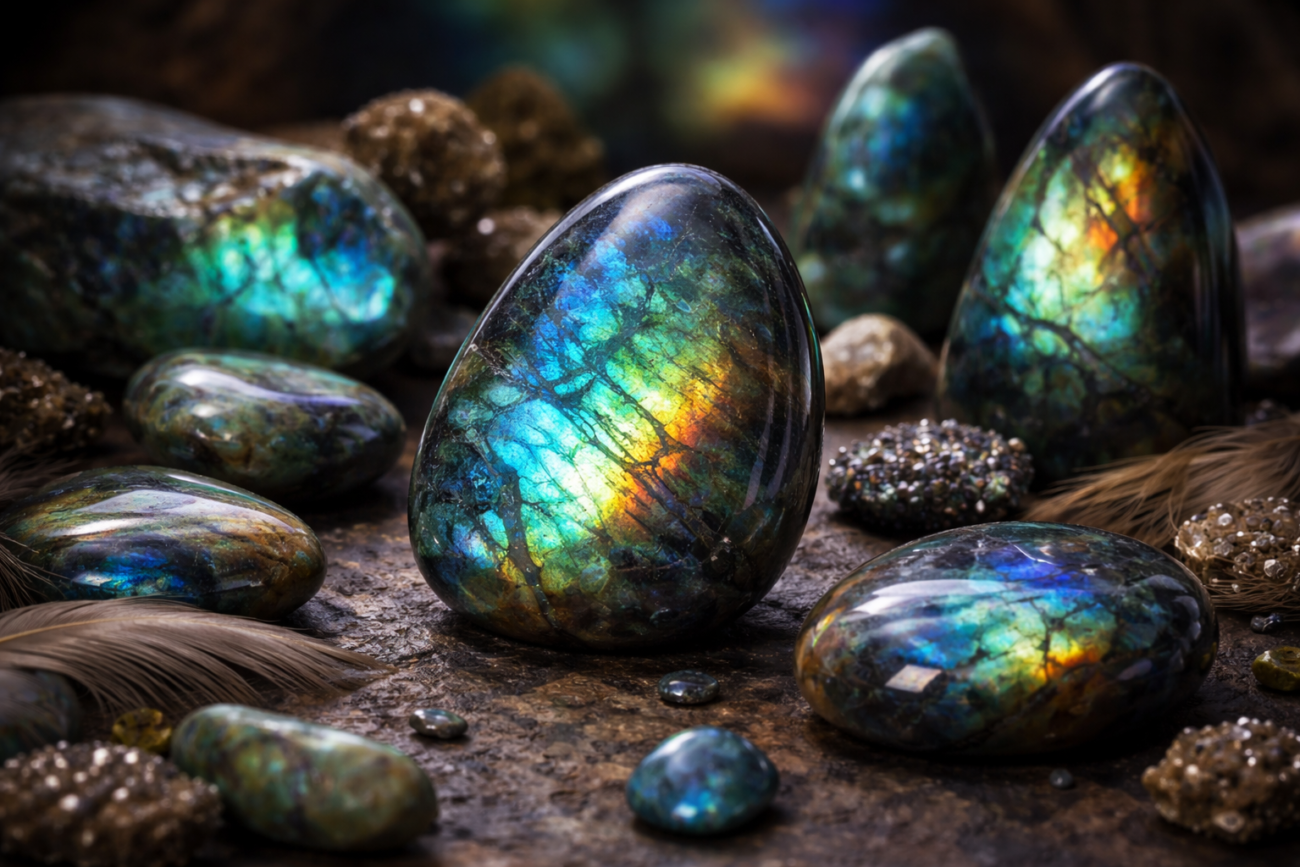
Labradorite is one of the most fascinating gemstones found in nature. Known for its glowing flashes of color, this mineral often appears to hold light within its surface. When the stone is moved under light, shades of blue, green, gold, and sometimes violet seem to dance across it. This beautiful effect is called labradorescence, and it is what makes labradorite so distinctive among gemstones.
Although labradorite may look mysterious, it is actually a naturally occurring mineral from the feldspar family. It is commonly used in jewelry, decorative objects, and spiritual practices. Many people are drawn to it not only because of its beauty but also because of the meanings and beliefs associated with it.
Today, labradorite is appreciated around the world by gemstone collectors, jewelry designers, and crystal enthusiasts. From its geological formation deep within the earth to its cultural symbolism and modern uses, this gemstone continues to attract attention. Understanding labradorite helps reveal why it remains one of the most admired stones in the natural world.
What Is Labradorite? Understanding the Basics of This Unique Gemstone
Labradorite is a mineral that belongs to the plagioclase feldspar group, which is part of the larger silicate mineral family. It is formed deep within igneous rocks as molten magma slowly cools beneath the Earth’s surface. Over time, natural geological processes bring the mineral closer to the surface where it can be discovered and mined.
The stone was first identified in 1770 on the Labrador Peninsula in Canada, which is how it received its name. Since then, deposits of labradorite have been found in several other regions of the world. Despite its somewhat dark appearance at first glance, the stone becomes vibrant when light strikes it at certain angles.
In its natural form, labradorite usually has a base color that ranges from dark gray to greenish-black. Hidden within this darker background are layers that reflect light, producing the brilliant flashes that make the stone famous. These flashes can vary from deep blue and green to warm gold and copper tones.
The Science Behind Labradorite’s Iridescent Colors (Labradorescence)
The magical appearance of labradorite is not caused by pigments or dyes. Instead, it is created by a unique optical phenomenon called labradorescence. This effect occurs because of the stone’s internal structure.
Inside the mineral, there are extremely thin layers formed during the cooling of molten rock. These layers have slightly different compositions, which causes light to interact with them in unusual ways. When light enters the stone, it is scattered and reflected between these layers before returning to the surface.
As a result, different wavelengths of light become visible depending on the angle at which the stone is viewed. This is why labradorite can appear dull at one angle but suddenly burst into color when tilted.
The colors most often seen in labradorite include bright blue, green, and gold, although some rare stones display orange, purple, or even pink flashes. The shifting effect can resemble the shimmering colors of the northern lights, which adds to the gemstone’s mystical reputation.
Physical and Geological Properties of Labradorite
Labradorite is valued not only for its beauty but also for its relatively strong physical properties. On the Mohs hardness scale, it typically measures between 6 and 6.5, which means it is durable enough for everyday jewelry but still requires some care to avoid scratches.
Geologically, the mineral forms in igneous rocks such as basalt and gabbro. These rocks originate from volcanic activity or magma that cools beneath the Earth’s crust. Over millions of years, natural processes expose these rocks, allowing labradorite crystals to be discovered and mined.
The crystal structure of labradorite plays a major role in its appearance. Its layered internal structure is responsible for the light reflection that produces its signature colors. Without these microscopic layers, the gemstone would simply appear as an ordinary dark feldspar mineral.
Because of its moderate hardness and attractive visual effect, labradorite is commonly cut into polished shapes that highlight its internal flashes.
Where Labradorite Is Found Around the World
Although labradorite was first discovered in Canada, it is now known to occur in several regions around the globe. Each location can produce stones with slightly different colors and qualities.
Canada remains one of the historic sources of labradorite, particularly in the region where the mineral was first identified. Another major source is Madagascar, which produces large quantities of high-quality labradorite used in jewelry and decorative carvings.
Finland is also well known for a rare variety of the stone that displays especially vivid colors. In addition, labradorite deposits can be found in countries such as Russia, Mexico, Norway, and the United States.
The availability of labradorite in multiple regions has helped make the gemstone more accessible while still maintaining its reputation as a visually striking mineral.
Spectrolite and Other Notable Varieties of Labradorite
Among the different types of labradorite, spectrolite is considered one of the most remarkable varieties. This rare form was discovered in Finland during the twentieth century and is known for displaying a full spectrum of colors.
While standard labradorite often shows mainly blue and green flashes, spectrolite can display bright reds, oranges, purples, and yellows in addition to those colors. The intensity and range of its color flashes make it highly valued by collectors and jewelry designers.
Other varieties of labradorite may differ slightly in appearance depending on where they are mined. Some stones emphasize cooler blue tones, while others display warmer golden flashes. These variations add to the diversity and appeal of the gemstone.
Labradorite in Jewelry: Why This Stone Is So Popular
Labradorite has become a favorite material in the jewelry world because of its dramatic color flashes and unique appearance. When polished and cut correctly, the gemstone can reveal stunning patterns of light that make each piece of jewelry look distinctive.
Jewelry makers often shape labradorite into cabochons, which are smooth, rounded stones without facets. This cutting style allows the labradorescence effect to be seen clearly across the surface of the gem.
The stone is commonly used in rings, pendants, earrings, and bracelets. Designers appreciate that each piece of labradorite has its own pattern of colors, which means no two stones look exactly the same.
Because of its moderate hardness, labradorite jewelry is durable enough for regular wear but still benefits from careful handling to keep it looking its best.
Symbolism, Spiritual Meaning, and Cultural Beliefs Around Labradorite
Throughout history, many cultures have associated gemstones with symbolic meanings. Labradorite is often linked with ideas of transformation, protection, and inner awareness.
Some legends from northern regions describe labradorite as a stone that contains the captured light of the aurora borealis. According to folklore, the colors of the northern lights were once trapped in stone until a warrior struck the rock and released them into the sky.
Today, people who are interested in gemstone symbolism sometimes view labradorite as a stone connected to creativity and personal growth. While these beliefs are cultural and spiritual rather than scientific, they contribute to the gemstone’s ongoing popularity.
Labradorite in Modern Crystal Healing and Metaphysical Practices
In modern crystal communities, labradorite is often described as a stone associated with intuition and spiritual awareness. Some practitioners believe it helps support mental clarity and encourages personal insight.
Labradorite is sometimes linked with the third eye and crown chakras, which are thought to represent intuition and higher consciousness in certain spiritual traditions. Because of this association, the stone is commonly used in meditation practices or kept as a personal talisman.
It is important to note that these practices are based on spiritual traditions rather than scientific evidence. Nevertheless, many people enjoy using labradorite as part of their mindfulness or meditation routines because of its calming appearance.
How to Identify Genuine Labradorite
Identifying genuine labradorite usually involves observing its unique color display. The most important feature is the presence of labradorescence, which appears as shifting flashes of color when the stone is moved under light.
Authentic labradorite typically has a darker base color with bright metallic flashes that appear in specific areas rather than across the entire surface. If a stone shows uniform color without any change in light reflection, it may not be genuine.
The gemstone also has a slightly translucent or opaque appearance rather than being fully transparent. Examining the stone under natural light can often reveal whether it displays the characteristic shimmer that defines labradorite.
Caring for Labradorite: Cleaning, Storage, and Maintenance
Proper care helps maintain the beauty of labradorite jewelry and decorative pieces. Because the stone has moderate hardness, it should be protected from contact with harder gemstones or rough surfaces that could scratch it.
Cleaning labradorite is usually simple. Warm water, mild soap, and a soft cloth are often enough to remove dirt and oils. Harsh chemicals or ultrasonic cleaners should be avoided because they may damage the stone.
When storing labradorite, it is best to keep it in a soft pouch or a separate jewelry compartment. This prevents accidental scratches from harder materials such as diamonds or sapphires.
Labradorite vs Similar Gemstones: How It Differs from Other Iridescent Stones
Several gemstones display shimmering or iridescent effects, but labradorite stands out because of the distinct way its colors appear. The flashes in labradorite often form large patches of color rather than tiny sparkles.
For example, moonstone can show a soft glowing effect called adularescence, which appears as a gentle blue sheen across the surface. Opal displays colorful flashes as well, but the colors appear as small shifting patterns rather than the broad flashes seen in labradorite.
These differences help gemologists and collectors distinguish labradorite from other stones that might appear similar at first glance.
Why Labradorite Continues to Fascinate Gem Lovers and Collectors
The lasting appeal of labradorite comes from the combination of science, beauty, and cultural meaning that surrounds it. Few gemstones display such dramatic shifts of color while maintaining a natural and earthy appearance.
Collectors appreciate that every piece of labradorite is unique. The patterns of light within each stone are shaped by natural geological processes that cannot be exactly repeated.
At the same time, the gemstone remains accessible and widely available, making it possible for both collectors and casual jewelry lovers to enjoy its beauty.
Conclusion
Labradorite is a gemstone that combines natural science with remarkable visual beauty. From its discovery in Canada to its presence in jewelry and spiritual traditions around the world, the stone has captured attention for centuries.
Its signature effect, known as labradorescence, gives the gemstone an almost magical appearance that resembles flashes of the northern lights. This unique feature, along with its geological history and cultural symbolism, helps explain why labradorite continues to fascinate people today.
Whether admired as a natural mineral, worn as jewelry, or appreciated for its symbolic meaning, labradorite remains one of the most captivating gemstones found in nature.
FAQs
1. What makes labradorite different from other gemstones?
Labradorite is unique because of labradorescence, an optical effect that produces flashes of blue, green, gold, and other colors when light hits the stone at certain angles.
2. Is labradorite a durable stone for jewelry?
Yes, labradorite has a hardness of about 6 to 6.5 on the Mohs scale, making it suitable for jewelry, although it should still be handled with care to avoid scratches.
3. Where is labradorite commonly found?
Major sources of labradorite include Canada, Madagascar, Finland, Russia, Mexico, and Norway.
4. What is spectrolite?
Spectrolite is a rare variety of labradorite found mainly in Finland. It is known for displaying a wider range of bright colors than typical labradorite.
