Introduction
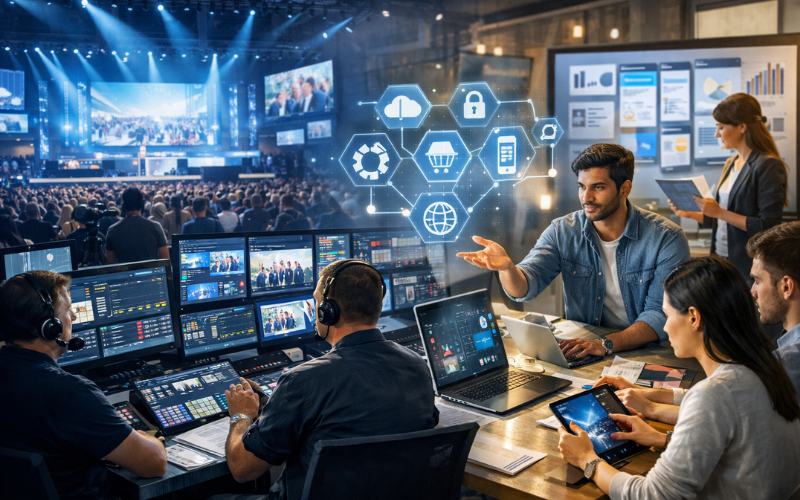
The term sinkom is increasingly appearing in conversations about event technology and digital innovation. At its core, sinkom primarily refers to a professional technical support provider that delivers advanced solutions for live, virtual, and hybrid events. At the same time, the word is also used more broadly to describe concepts related to digital integration, workflow efficiency, and smart system management.
In the event industry, sinkom is associated with high-level technical services such as simultaneous interpretation, live streaming, and teleconferencing support. In the digital world, sinkom represents ideas around synchronization, system unification, and smarter infrastructure management. This dual identity is one reason why the keyword “sinkom” is gaining attention in both business and technology discussions.
As companies continue to host global events and adopt digital transformation strategies, the need for integrated systems and reliable technical support has grown. Sinkom sits at the center of these changes. In this article, we will explore what sinkom means, how it operates in the event technology industry, and how it connects to broader digital efficiency and smart innovation concepts.
The Core Identity of Sinkom in the Event Technology Industry
Sinkom is widely recognized as a professional technical event support provider. The company focuses on delivering complete technical solutions for conferences, corporate meetings, exhibitions, and large-scale productions. Its role is to ensure that events run smoothly from a technical perspective, whether they are held in person, online, or in a hybrid format.
In terms of geographic presence, sinkom operates across the United Arab Emirates and the Russian Federation, while also supporting projects in other international locations. This global reach allows sinkom to serve multinational organizations and high-profile clients that require consistent quality across borders.
In today’s event industry, technical execution is just as important as planning and content. Modern corporate gatherings rely on stable streaming systems, clear audio communication, and reliable interpretation tools. Sinkom positions itself as a trusted technical partner that manages these complex requirements behind the scenes, allowing event organizers to focus on their audience and objectives.
Sinkom’s Technical Event Support Services
One of the main services associated with sinkom is simultaneous interpretation support. For international conferences, language barriers can limit communication. Sinkom provides interpretation systems that allow participants to listen to real-time translations through headsets or digital channels. This ensures smooth communication among global audiences.
Live streaming and hybrid event production are also central to sinkom’s services. As more events combine physical attendance with online participation, reliable streaming technology has become essential. Sinkom supports the full process, from camera setup and audio management to streaming platform integration, helping events reach viewers anywhere in the world.
Teleconferencing and communication infrastructure form another important part of sinkom’s technical offering. Large events often require secure and stable communication systems for speakers, moderators, and remote participants. By setting up and managing these systems, sinkom ensures uninterrupted connectivity.
Equipment rental and on-site technical staffing complete the service package. Professional audio systems, lighting setups, microphones, and control units are provided as needed. Skilled technicians manage the equipment during the event, reducing risks and solving technical issues quickly.
How Sinkom Supports Hybrid and Global Events
Hybrid events have become a standard format in recent years. These events combine in-person participation with online access, creating new technical challenges. Sinkom plays a key role in integrating these two environments into one seamless experience.
Offline and online systems must work together without delay. Audio feeds, video streams, interpretation channels, and presentation materials need to be synchronized in real time. Sinkom’s approach focuses on smooth coordination so that remote viewers feel just as involved as those attending in person.
Global events also require careful technical planning. When participants join from different time zones and countries, stable connections and reliable platforms are essential. Sinkom supports multinational audiences by ensuring consistent quality across communication channels. Reliability is critical, as even small technical failures can disrupt an entire event. Real-time communication tools, backup systems, and experienced technicians help maintain a professional standard throughout.
Sinkom as a Digital Efficiency Concept
Beyond its identity as an event technology provider, sinkom is also used as a broader concept in digital and technological discussions. In this context, sinkom represents the idea of integration and synchronization across systems.
Modern organizations often use multiple software tools and platforms. Without proper coordination, these systems can become disconnected and inefficient. The sinkom concept highlights the importance of bringing different tools into a unified framework, where data flows smoothly and processes align.
As digital transformation continues across industries, businesses are looking for smarter ways to manage operations. Sinkom, as a conceptual framework, reflects the growing need for connected systems that reduce duplication, improve communication, and support faster decision-making.
Smart Integration and Centralized System Management
One area where the sinkom concept is frequently applied is smart integration. This refers to bringing various smart devices and systems into a single, centralized interface. Instead of managing lighting, security, and other connected tools separately, a unified dashboard allows full control from one place.
In modern offices, event venues, and public spaces, connected systems are becoming more common. Smart lighting adjusts automatically, security cameras operate through digital platforms, and access controls are monitored remotely. The sinkom approach encourages centralized management to simplify these processes.
The benefit of centralized dashboards is clarity. When information is organized in one system, monitoring becomes easier and response times improve. This integrated structure supports better infrastructure management and helps organizations operate more efficiently.
Workflow Optimization and Business Process Alignment
Another important aspect of sinkom as a digital concept is workflow optimization. Many companies struggle with scattered applications and disconnected data sources. This often leads to delays and confusion.
Sinkom represents the idea of streamlining these systems into one coordinated ecosystem. When applications communicate with each other, teams can collaborate more effectively. Tasks move smoothly from one stage to the next, and important information is accessible in real time.
Improved synchronization reduces operational friction. Employees spend less time switching between tools and more time focusing on meaningful work. As businesses aim for higher productivity and better collaboration, the sinkom approach to alignment becomes increasingly valuable.
Urban Innovation and Smart Infrastructure Ideas Linked to Sinkom
The term sinkom is also connected to emerging urban innovation ideas. As cities grow, managing infrastructure efficiently becomes more challenging. Digital coordination can help solve issues related to traffic, parking, and space utilization.
One example is the concept of transforming underused areas into smart parking hubs. By integrating sensors, digital payment systems, and real-time monitoring, cities can optimize available space and reduce congestion. The sinkom philosophy supports this kind of connected, data-driven approach.
In broader city planning, smart infrastructure relies on coordinated systems. Transportation networks, lighting systems, and security services can be linked through centralized platforms. This digital coordination improves service delivery and supports sustainable urban growth.
Sinkom in Software Development and Modular Framework Thinking
In software development, sinkom is often associated with synchronization and modular design. Development teams work with multiple tools and environments, and alignment is essential for smooth collaboration.
A modular framework allows different parts of a system to function independently while still connecting to a central structure. This design supports scalability and flexibility. The sinkom mindset encourages clear communication between modules, helping teams adapt quickly to changes.
When development environments are properly synchronized, productivity improves. Teams can track progress, manage updates, and reduce errors more effectively. Integrated workflows reduce complexity and support long-term growth.
Why the Meaning of Sinkom Continues to Evolve
The meaning of sinkom continues to expand beyond its original association with event technology. While it remains strongly linked to professional technical event support, it has also become a symbol of integration and digital coordination.
Today, communication systems, infrastructure management, and software development are increasingly connected. The intersection of these areas creates new opportunities for innovation. Sinkom reflects this shift toward unified, intelligent systems that work together seamlessly.
Emerging technologies such as cloud platforms, smart devices, and automation tools are shaping how organizations operate. As these technologies develop, the broader interpretation of sinkom is likely to grow, reinforcing its connection to synchronization, efficiency, and digital transformation.
Conclusion
Sinkom is more than a single concept. On one level, it represents a professional technical event support provider with international operations, delivering services such as simultaneous interpretation, live streaming, and teleconferencing. On another level, sinkom reflects a broader digital philosophy centered on integration, synchronization, and efficiency.
In the modern world, events are increasingly global, businesses are more digital, and cities are becoming smarter. The need for reliable technical infrastructure and connected systems continues to rise. Sinkom stands at this intersection, bridging event technology with evolving digital innovation frameworks.
Understanding sinkom helps clarify how communication, infrastructure, and technology are coming together in new ways. Whether viewed as an event technology specialist or as a concept for digital efficiency, sinkom represents the growing importance of seamless integration in today’s connected environment.
FAQs
1. What does sinkom primarily refer to?
Sinkom primarily refers to a professional technical support provider for events, offering services such as interpretation systems, live streaming, and teleconferencing. It is also used more broadly to describe concepts related to digital integration and synchronization.
2. Where does sinkom operate?
Sinkom operates mainly in the United Arab Emirates and the Russian Federation, while also supporting international projects in other regions.
3. How is sinkom connected to digital transformation?
As a broader concept, sinkom represents the idea of integrating multiple systems and workflows into a unified structure. This supports digital transformation by improving efficiency and coordination.
4. Is sinkom only related to event technology?
No, while sinkom is strongly associated with event technical support, it is also linked to ideas in smart infrastructure, workflow optimization, and software development frameworks.
