Introduction
Many drivers search for the term brake bearing noise when they hear an unusual sound coming from their wheels. In everyday language, people often use this phrase to describe any grinding, humming, or squealing noise near the brakes. In reality, the sound may come from either the brake system or the wheel bearing, which sits behind the brake assembly and allows the wheel to rotate smoothly.
Because both parts are located in the same area, it can be difficult to tell them apart without paying attention to when and how the noise occurs. A worn brake pad, stuck caliper, or debris caught in the rotor can make noise only when you press the brake pedal. A failing wheel bearing, however, often makes a continuous sound that changes with speed or when you turn the steering wheel.
Identifying the source of brake bearing noise early is important. Fixing the right component at the right time can prevent expensive repairs later and, more importantly, keep your vehicle safe to drive. Ignoring the sound may lead to reduced braking performance or, in severe cases, wheel failure.
What Drivers Usually Mean by “Brake Bearing Noise”
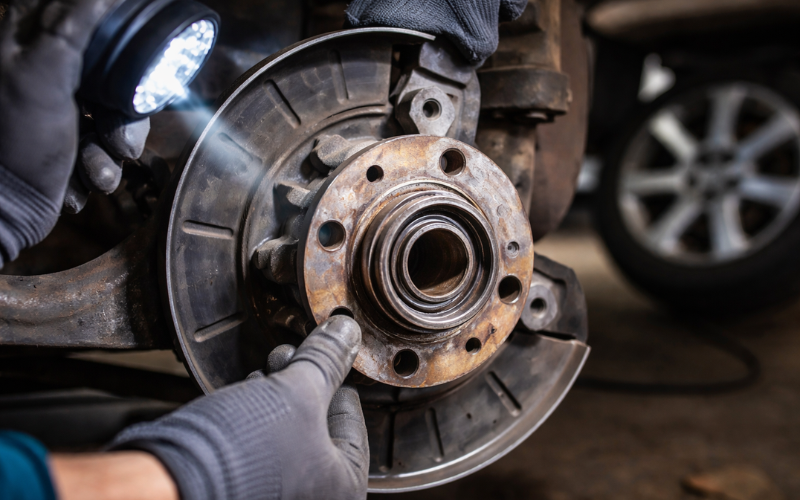
When drivers mention brake bearing noise, they are usually referring to any sound that seems to come from the wheel area. The term itself is slightly misleading because brakes and bearings are different parts with different roles. The brake system slows the vehicle using friction, while the wheel bearing supports the wheel and allows it to spin smoothly.
The confusion happens because both parts sit close together. If a noise comes from the front or rear wheel, it can be hard to tell which component is responsible without careful observation. Brake-related sounds tend to occur during braking, while bearing noises usually continue even when the brakes are not being used. Understanding this simple difference is often the first step in diagnosing the problem.
How Wheel Bearing Noise Actually Sounds on the Road
A failing wheel bearing usually produces a steady sound that changes as the vehicle moves. Drivers often describe it as a humming, droning, or rumbling noise that grows louder with speed. At lower speeds it may sound like tire noise, but as the vehicle accelerates, the sound becomes more noticeable and sometimes deeper in tone.
In more advanced stages, the noise may turn into a grinding or growling sound. Some drivers also notice a rhythmic or cyclic noise that speeds up as the wheel rotates faster. Because the bearing supports the vehicle’s weight, the sound often changes when the load shifts. For example, when turning left, the noise may become louder if the failing bearing is on the right side of the car. This behavior is a key clue that the issue is related to the wheel bearing rather than the brakes.
How Brake Noise Differs From Bearing Noise
Brake noise typically appears only when the brake pedal is pressed. A high-pitched squeal often signals worn brake pads, while a harsh grinding sound may indicate that the pads have worn down to metal. Some brake noises happen when the vehicle first moves after sitting overnight, especially in humid conditions, and then disappear after a few stops.
The reason braking pressure affects the sound is simple. When you press the pedal, the pads clamp onto the rotor, creating friction. If something is worn, misaligned, or contaminated, that friction produces noise. Once you release the brake, the sound usually fades or stops entirely. This clear connection between braking action and noise helps distinguish brake issues from wheel bearing problems.
Simple Ways to Tell Which One Is Causing the Noise
One of the easiest ways to narrow down the cause of brake bearing noise is to observe when it occurs. If the sound grows louder as you accelerate and continues even when you are not braking, the wheel bearing is more likely to be the source. If the noise only happens when you press the brake pedal, the problem probably lies within the brake system.
Another clue comes from steering. When you gently shift the car’s weight by turning slightly left or right, a failing bearing may become louder or quieter. Brake noises, on the other hand, usually remain unchanged during steering unless the brakes are being applied.
Drivers can also perform a simple visual check if it is safe to do so. Looking through the wheel spokes may reveal worn pads or debris caught near the rotor. If the vehicle is lifted securely, a loose or wobbly wheel can indicate bearing wear. Even without tools, these observations can help determine whether the noise is brake-related or bearing-related.
Common Causes of Wheel Bearing Failure
Wheel bearings are sealed units filled with grease, designed to last many years. However, they can fail due to contamination, impact, or natural wear. Water, dirt, or road salt can break down the grease inside the bearing, leading to metal-on-metal contact. Once lubrication is lost, the bearing begins to wear quickly and produce noise.
Hard impacts also play a role. Striking a deep pothole, curb, or rough road surface can damage the bearing instantly or weaken it over time. In regions with uneven roads or heavy traffic, bearings may fail earlier than expected.
Like most moving parts, bearings eventually wear out with age. After tens of thousands of miles, the internal components may loosen or degrade. While modern bearings are built to last, no mechanical part lasts forever, especially under constant load and rotation.
Why Ignoring Brake or Bearing Noise Can Be Dangerous
Ignoring brake bearing noise is risky because both possible causes affect vehicle safety. If the issue is brake-related, worn pads or damaged components can reduce stopping power. This increases braking distance and raises the chance of an accident, particularly in emergency situations.
If the problem comes from the wheel bearing, the risk may be even greater. As the bearing wears down, it can overheat, seize, or loosen. In severe cases, the wheel may wobble or detach from the vehicle. While such failures are rare, they are serious enough that any persistent noise should be checked promptly.
Problems that start as minor sounds often become expensive repairs if left untreated. Replacing a bearing or brake pad early is usually far cheaper than repairing additional damage caused by neglect.
When to Inspect, Repair, or Replace the Faulty Part
Drivers should take brake bearing noise seriously if it grows louder, changes suddenly, or is accompanied by vibration or pulling while driving. A constant humming sound that increases with speed, or a grinding noise during braking, both signal that inspection is needed soon.
In general, brake pads may require replacement more frequently than wheel bearings, as they are designed to wear over time. Bearings, however, should be replaced if any looseness, vibration, or continuous noise appears. Professional inspection can confirm the issue and ensure the correct part is repaired.
Addressing the problem early not only restores quiet driving but also helps maintain the vehicle’s handling and safety. A small repair now can prevent larger issues later.
Conclusion
The term brake bearing noise often reflects confusion between two different vehicle components that share the same location. While both can produce sounds from the wheel area, the timing and behavior of the noise usually reveal the true cause. Brake noises tend to appear during braking, while wheel bearing sounds are often constant and change with speed or steering.
Recognizing these differences allows drivers to respond quickly, avoid unnecessary repairs, and keep their vehicles safe. Any unusual noise should be investigated sooner rather than later, as early action is the simplest way to prevent costly damage and ensure reliable performance on the road.
FAQs
1. Can a wheel bearing make noise when braking?
Yes, a damaged bearing may become louder during braking because the vehicle’s weight shifts forward, placing extra load on the wheel. However, the noise usually continues even when you are not braking.
2. Is it safe to drive with brake bearing noise?
It depends on the cause. Minor brake squeal may not be urgent, but grinding or constant humming should be checked quickly, as both brake and bearing problems can worsen and affect safety.
3. How long do wheel bearings usually last?
Most wheel bearings last many years, often over 80,000 miles, but rough roads, moisture, and impacts can shorten their lifespan.
4. Can tire noise be mistaken for brake bearing noise?
Yes, worn or uneven tires can produce humming sounds similar to bearing noise. Rotating the tires or checking their condition can help rule this out.
