Introduction
A toilet may look simple from the outside, but inside the tank it relies on several parts working together to function properly. One of the most important components is the fill valve toilet mechanism, which controls how the tank refills after every flush. Without it, the toilet would not be able to restore the water level needed for the next use.
The fill valve plays a key role in both flushing performance and water efficiency. When it works correctly, your toilet refills quietly, shuts off at the right level, and uses only the amount of water needed. When it doesn’t, you may notice problems such as a constantly running toilet, slow refilling, or weak flushing power. Understanding how this small device works can help you maintain your toilet and avoid wasted water and higher bills.
What a Toilet Fill Valve Does Inside the Tank
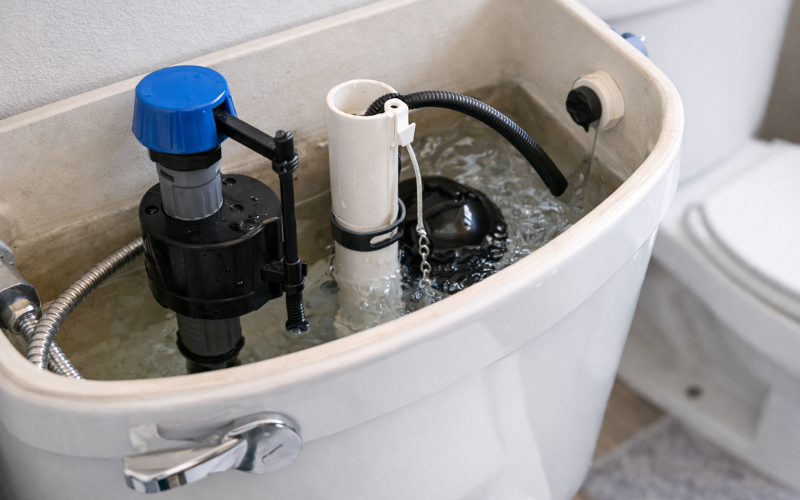
Inside the tank, the fill valve is responsible for refilling water after each flush. As the tank empties, the valve opens to allow fresh water to flow in from the supply line. It continues to fill both the tank and, through a small tube, the toilet bowl until the proper water level is reached.
The fill valve also regulates when the water should stop flowing. It does this by monitoring the water level using a float mechanism. When the float rises to a set height, the valve closes and stops the flow. This prevents overflow and keeps the water level consistent.
Proper adjustment of the fill valve directly affects flush strength. If the water level is too low, the flush may be weak. If it is too high, water can spill into the overflow tube and run continuously. A correctly adjusted fill valve toilet system ensures the right balance between performance and efficiency.
How a Fill Valve Toilet Mechanism Works Step by Step
When you flush a toilet, the flush valve opens and releases water from the tank into the bowl. As the tank empties, the float connected to the fill valve drops. This drop signals the valve to open and allow fresh water to enter the tank.
As water begins to refill the tank, the float slowly rises along with the water level. The fill valve continues to supply water until the float reaches its preset height. At that point, the valve closes and shuts off the supply.
Most modern fill valves also include an overflow protection feature. If the water level rises too high, excess water flows into the overflow tube instead of spilling out of the tank. This safety design prevents flooding and helps maintain proper tank pressure.
Common Types of Toilet Fill Valves Used Today
Float cup valves are the most common in newer toilets. They use a small cylindrical cup that slides up and down the valve shaft as the water level changes. These valves are compact, reliable, and easy to adjust, which makes them popular for both homeowners and plumbers.
Float ball valves, also known as ballcock valves, are found mostly in older toilets. They use a large floating ball attached to a metal or plastic arm. As the water level rises, the ball lifts the arm and shuts off the valve. While effective, these valves are bulkier and less common in modern installations.
Diaphragm-style valves use a flexible rubber seal to regulate water flow. They are often quieter than older designs and can provide better control over water pressure. Some versions are made of plastic, while others use brass components for durability.
Floatless pressure-sensing valves are a newer design. Instead of using a float, they detect water pressure at the bottom of the tank. These valves are compact and can be useful in tanks with limited space, although they are less common than float-based models.
Signs Your Toilet Fill Valve Needs Replacement
A faulty fill valve often shows clear warning signs. One of the most common is a toilet that runs constantly. If water continues flowing into the overflow tube, the valve may no longer shut off completely.
Another sign is a slow refill after flushing. This can happen when mineral deposits or internal wear restrict water flow. Over time, this problem can become worse and affect toilet performance.
Unusual noises can also indicate trouble. Hissing, buzzing, or vibrating sounds often come from worn internal parts or loose components inside the valve. These sounds are not only annoying but can signal that the valve is near the end of its lifespan.
Water level issues are another clue. If the tank fills too high or too low, it can affect flush strength and efficiency. When adjustments no longer solve the problem, replacing the fill valve toilet mechanism is usually the best solution.
How to Choose the Right Fill Valve for Your Toilet
Choosing the correct fill valve is important for long-term performance. Many modern valves are universal and fit most standard toilets, which makes them a convenient option for homeowners. However, some toilets may require model-specific parts, so it’s always wise to check compatibility.
Height is another key factor. The valve must be adjustable enough to fit the height of your tank. If it is too tall or too short, it may not function correctly.
Noise level can also influence your decision. Some valves are designed to operate more quietly, which can be helpful in homes where bathroom noise is noticeable at night.
Water-saving features are becoming more common in newer valves. Some models allow you to adjust both the tank and bowl refill levels separately, helping reduce unnecessary water use while maintaining a strong flush.
Adjusting a Toilet Fill Valve for Proper Water Level
Adjusting the fill valve is often the first step when a toilet shows performance issues. The correct water level ensures a strong flush while preventing overflow or wasted water.
The adjustment typically involves setting the float to the right height. When properly set, the tank fills to a level just below the overflow tube. This ensures enough water for flushing without excess.
Balancing tank refill and bowl refill is also important. Many modern valves include a small adjustment dial or clip that controls how much water is sent to the bowl versus the tank.
Adjustment can solve many minor issues, such as weak flushing or slight running sounds. However, if the valve still fails to shut off properly after adjustment, replacement may be necessary.
Replacement vs. Repair: Knowing When to Swap the Fill Valve
In some cases, cleaning or adjusting the fill valve can restore proper function. Mineral buildup from hard water can sometimes block internal parts, and a simple rinse may fix the issue.
However, internal wear is common over time. Rubber seals can stiffen, plastic parts can crack, and springs can weaken. When these problems appear, replacement is usually more reliable than repeated repairs.
Most modern fill valves last several years, depending on water quality and usage. If your valve is older or showing repeated issues, installing a new one is often the simplest and most cost-effective solution.
Conclusion
The fill valve toilet system may be hidden inside the tank, but it plays a major role in how your toilet performs every day. It controls how the tank refills, maintains the correct water level, and ensures efficient flushing with minimal waste.
By understanding how the fill valve works, recognizing early warning signs, and choosing the right replacement when needed, homeowners can keep their toilets running smoothly and avoid unnecessary water loss. Regular checks and simple adjustments can go a long way in maintaining this small but essential component.
FAQs
1. How long does a toilet fill valve usually last?
Most fill valves last between five and ten years, depending on water quality and how often the toilet is used.
2. Can a faulty fill valve increase my water bill?
Yes. A running or leaking fill valve can waste a significant amount of water, which may lead to higher utility costs.
3. Is it difficult to replace a toilet fill valve yourself?
In many cases, replacing a fill valve is a simple DIY task that requires only basic tools and about 20–30 minutes.
4. How do I know if my fill valve just needs adjustment?
If the toilet refills but stops slightly above or below the correct level, adjustment may fix it. If it keeps running or makes noise, replacement is often the better option.
