Introduction
If you’ve ever looked at an invitation or a meeting calendar and wondered which suit is “correct,” you’re not alone. The choice between a dinner suit vs business suit is mostly about the setting, the time of day, and the message you want your outfit to send. This guide explains the difference in plain English, so you can dress with confidence without overthinking it.
What Is a Dinner Suit and Where Is It Typically Worn?
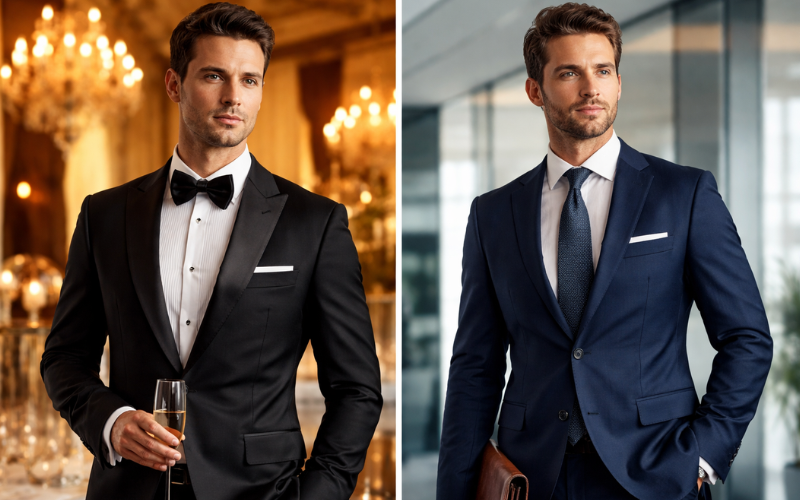
A dinner suit is a very formal outfit worn mainly in the evening. In many places, “dinner suit” is another way to say “tuxedo,” and it’s closely tied to dress codes like black tie. The purpose of a dinner suit is to look polished and special for events that are more celebratory than everyday, such as formal dinners, weddings, and gala-style occasions.
What makes a dinner suit feel different is the overall “evening formal” look. It’s designed to stand out in a refined way, especially under indoor lighting at night, and it usually follows tradition more than personal trends. If the event feels like a big moment—photos, speeches, a formal venue, a clear dress code—a dinner suit is often the safest and most appropriate choice.
Key Features That Make a Dinner Suit Distinct
The easiest way to recognize a dinner suit is by its signature details. Many dinner suits have satin lapels, which add a subtle shine and make the jacket look more formal right away. The trousers are often tuxedo-style, meaning they may include a satin stripe down the side and are meant to be worn cleanly without a belt in many classic setups. A dinner suit is also commonly paired with formal accessories, like a bow tie, a cummerbund or waistcoat, and sometimes patent leather shoes, all of which push the outfit into true eveningwear territory.
What Is a Business Suit and How Is It Different?
A business suit is the classic suit most people think of for work. It’s designed for professional settings where you want to look capable, reliable, and put-together—but not flashy. The business suit is all about being appropriate for the daytime and for places where you’re expected to look neat rather than “event-ready.”
In a dinner suit vs business suit comparison, the business suit is typically more flexible. You can wear it in offices, meetings, interviews, presentations, and even semi-formal events depending on how you style it. It’s also the suit most people build their wardrobe around because it works in more situations.
Standard Characteristics of a Business Suit
A business suit usually uses matte fabrics that don’t shine. Common materials include wool blends and other smooth fabrics made for comfort and daily wear. Shirts and ties are part of the normal look, and you’ll see many combinations depending on company culture—some workplaces prefer traditional ties, while others are more relaxed. Business suits also come in office-friendly colors like navy, charcoal, and grey, with subtle patterns sometimes appearing in more style-forward environments. The goal is to look professional, not ceremonial.
Dinner Suit vs Business Suit: The Core Differences at a Glance
A quick side-by-side view makes the dinner suit vs business suit choice much easier. The main differences come down to formality level, styling details, accessories, and when you wear them.
| Feature | Dinner Suit | Business Suit |
| Formality | Very formal, often linked to black tie | Professional and formal, but less ceremonial |
| Timing | Mostly evening events | Mostly daytime and work settings |
| Fabric look | Often includes satin details and a dressier finish | Usually matte and practical for daily wear |
| Styling | Traditional, classic eveningwear rules | Flexible, depends on workplace and personal style |
| Accessories | Bow tie, formal shirt options, cummerbund/waistcoat | Necktie optional depending on setting, simpler accessories |
| Shoes | Often dressier (sometimes glossy) | Classic leather dress shoes (usually matte) |
If you’re unsure, think of it this way: a dinner suit is for occasions where the event itself is the main focus, while a business suit is for settings where your role, work, or professional impression is the focus.
When Should You Wear a Dinner Suit Instead of a Business Suit?
You should wear a dinner suit when the event calls for a high level of formality—especially if the invitation mentions black tie, formal dinner, gala, or a very upscale venue. Weddings with a formal dress code, charity dinners, award nights, and evening celebrations in luxury settings often expect a dinner suit look. In these spaces, the outfit isn’t just clothing—it’s part of the event’s atmosphere.
This is where many people feel the risk of choosing wrong. A business suit can look “fine,” but at a truly formal evening event, it may still come across as underdressed. The cut and details of a business suit are made for the workplace, so it can feel too plain next to dinner suits, especially in photos. Even if no one says anything, you may feel slightly out of place, which is exactly what most people want to avoid.
If the event is clearly formal and happening in the evening, the dinner suit is usually the better and safer choice. It shows you understood the tone and respected the occasion.
When a Business Suit Is the Right Choice
A business suit is the right choice for professional settings where you want to look sharp but not “event formal.” Corporate meetings are a classic example, especially when you’re meeting clients, speaking in front of a group, or attending a formal office setting. Job interviews also strongly favor a business suit because it signals seriousness and good judgment without trying to steal attention. Professional networking events are another area where a business suit fits well, since those gatherings are still about career and connection rather than ceremony.
In a dinner suit vs business suit decision for work, the dinner suit is usually the wrong direction. A dinner suit can look too dressed up, too shiny, or too “special occasion,” which can feel awkward in an office or business environment. It might even suggest you didn’t understand the purpose of the event. A business suit, on the other hand, is built for that world—clean lines, calm colors, and a look that supports your presence instead of competing with it.
Can You Substitute One for the Other?
Sometimes you can, but it depends on how strict the dress code is and how formal the event feels in real life. If an evening event is labeled “formal” in a vague way, and you don’t see the words “black tie,” a dark, well-fitted business suit might work—especially if you dress it up with a crisp shirt, a more formal tie, and polished shoes. In that case, you’re not truly wearing a dinner suit, but you’re meeting the moment with a refined version of professional attire.
Going the other way is harder. Wearing a dinner suit to a business event usually feels too dramatic. The satin details and traditional accessories can make the outfit look like you’re heading to a wedding or a gala, not a meeting. Even if the outfit is beautiful, the setting may not match it.
The biggest risk when substituting is getting the “social meaning” wrong. Clothing communicates, and dress codes often carry unspoken expectations. If you’re not sure, try to confirm the vibe by checking the invitation wording, looking at the venue style, or asking the host or organizer. A quick question can save you from feeling uncomfortable later.
A practical rule is this: if the event is clearly black tie or clearly formal eveningwear, don’t substitute—wear the dinner suit. If the event is business-focused or daytime, stick to the business suit. If it’s a grey area, a dark business suit styled in a more formal way is usually the safest middle ground.
Fabric, Styling, and Accessories Compared
Fabric is one of the biggest differences people notice in the dinner suit vs business suit comparison. Business suits usually use fabrics made for repeated wear and comfort across many hours. They look smooth and professional under daylight and office lighting. Dinner suits are designed to look elevated at night, and the satin elements are a major reason they read as “formal” even from a distance.
Styling also changes the whole feel. A business suit is often worn with a standard dress shirt and a tie, though modern offices sometimes skip the tie. The look is meant to be clean and flexible. A dinner suit is more traditional. The shirt is usually more formal in feel, and the accessories are part of the expected look rather than optional extras. With a dinner suit, small details—like the tie style and waist covering—often matter more because they complete the outfit.
Footwear is another subtle but important difference. Business suits pair well with classic leather dress shoes that look refined but practical. Dinner suits usually look best with shoes that match the formality—very clean, very polished, and often more “evening” in appearance. The goal is harmony: you want the shoe to match the seriousness of the outfit.
Accessories are where the dinner suit becomes unmistakable. A business suit can be finished with a simple tie, a pocket square if you like, and a watch. A dinner suit often calls for more specific choices that fit the formal tradition, such as a bow tie and carefully selected formal pieces that don’t look casual. You don’t need to overdo it, but you do want everything to feel intentional and consistent.
Final Thoughts
Choosing between a dinner suit vs business suit becomes easy once you focus on context. If the event is formal, in the evening, and clearly dress-code driven, a dinner suit is the right tool for the job. If the setting is professional, daytime, or business-focused, a business suit will almost always be the better and safer fit. When in doubt, look for clues in the invitation and venue, and aim to match the tone of the occasion. The best suit is the one that makes you feel confident while also respecting the setting you’re walking into.
FAQs
1. What is the main difference between a dinner suit and a business suit?
The main difference is the level of formality and where you wear them. A dinner suit is for formal evening events and often includes satin details and traditional accessories. A business suit is for professional settings and is more flexible for daytime and work occasions.
2. Can I wear a dinner suit to a business event?
In most cases, it’s not recommended. A dinner suit can look too formal and “special occasion” for business settings. A business suit is usually the right choice for meetings, interviews, and corporate events because it fits the professional tone.
3. Is a tuxedo the same as a dinner suit?
In many regions, yes. “Dinner suit” is commonly used to refer to a tuxedo, especially in British English and in countries influenced by that style language. Both are typically linked to black-tie dressing.
4. Which suit is more versatile for most men?
For most men, a business suit is more versatile because it can be worn in many professional and semi-formal situations. A dinner suit is more specific and is mainly used for formal evening events.
