Introduction
A tortellinatrice is a specialized pasta-making machine designed to shape and fill tortellini with speed and consistency. It plays an important role in modern pasta production, helping both small workshops and large factories produce uniform, high-quality stuffed pasta. People search for tortellinatrice today because handmade tortellini are time-consuming, and this machine offers a practical balance between tradition and efficiency.
Understanding What a Tortellinatrice Is and Its Core Purpose
A tortellinatrice is a machine created specifically to form tortellini, one of the most well-known stuffed pasta shapes. Its main purpose is to automate the process of shaping, filling, and sealing tortellini while keeping their traditional appearance intact. Instead of relying fully on manual labor, pasta makers use a tortellinatrice to produce consistent results with less physical effort and less waste.
At its core, the tortellinatrice ensures that each piece of pasta has the same size, shape, and filling quantity. This uniformity is important not only for appearance but also for cooking consistency. When tortellini are evenly made, they cook at the same rate and deliver a reliable eating experience.
How a Tortellinatrice Fits Into the Pasta Production Process
In a typical pasta production line, the tortellinatrice sits after the dough preparation stage. Once the pasta dough is mixed, rested, and rolled to the correct thickness, it is fed into the machine. At the same time, the prepared filling is loaded into a separate chamber.
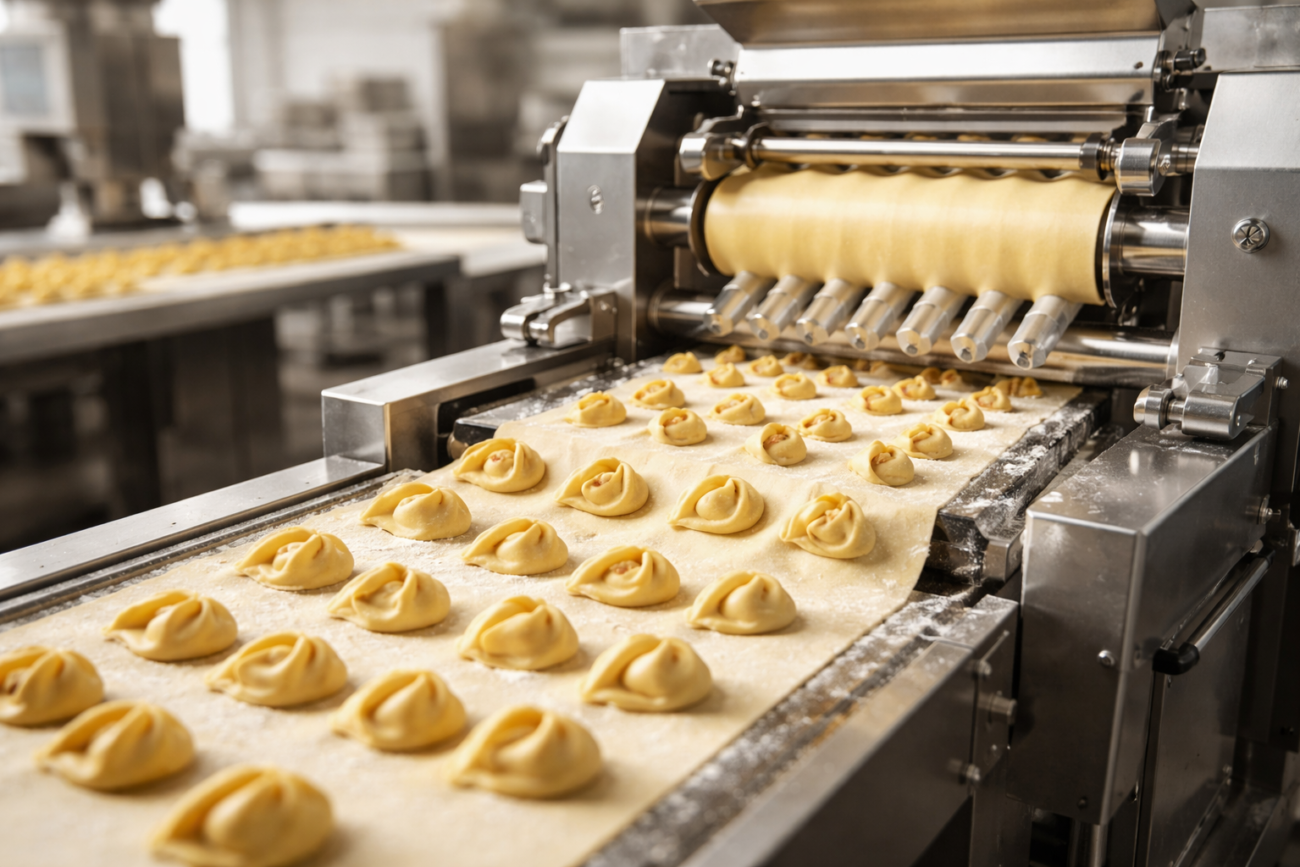
The tortellinatrice brings these two elements together. It places the filling onto the dough, folds the pasta precisely, and seals each piece into the familiar tortellini shape. After this step, the finished pasta is ready for further processing, such as light drying, packaging, or immediate cooking. This smooth integration makes the tortellinatrice a central component of modern stuffed pasta production.
Manual vs Semi-Automatic vs Fully Automatic Tortellinatrice Machines
Different types of tortellinatrice machines exist to meet various production needs. Manual versions rely more heavily on human control and are often used by artisanal pasta makers who want small batches and hands-on involvement. These machines still improve consistency compared to fully handmade methods but move at a slower pace.
Semi-automatic tortellinatrice machines offer a middle ground. They automate the shaping and filling process while still allowing operators to control feeding speed and adjustments. These models are popular with small to medium pasta businesses because they increase output without requiring a fully industrial setup.
Fully automatic tortellinatrice machines are designed for large-scale production. They handle dough feeding, filling distribution, shaping, and cutting with minimal human intervention. These machines focus on speed, precision, and continuous operation, making them suitable for factories that supply supermarkets or food service companies.
Key Components and Working Mechanism of a Tortellinatrice
The working mechanism of a tortellinatrice is built around precision and timing. The machine includes a dough feeding system that guides the pasta sheet smoothly into the shaping area. At the same time, the filling system delivers a controlled amount of stuffing at regular intervals.
As the dough and filling meet, shaping molds fold the pasta into the classic tortellini form. Cutting and sealing elements then separate each piece while ensuring the edges are properly closed. This process repeats continuously, producing a steady flow of finished tortellini with minimal variation.
Dough Feeding, Filling Distribution, and Folding Precision
One of the most important aspects of a tortellinatrice is how accurately it handles dough and filling. The dough must be flexible but strong enough to fold without tearing. The filling must be evenly distributed so that each tortellino contains the same amount.
Folding precision is what gives tortellini their distinctive shape. A well-calibrated tortellinatrice ensures that the folds are tight and clean, preventing filling leakage during cooking. This precision directly affects both visual quality and final taste.
Types of Products Commonly Made With a Tortellinatrice
While the tortellinatrice is best known for producing classic tortellini, it can also be adapted to create similar stuffed pasta shapes. Depending on the molds and settings, some machines can produce variations in size or slightly different folded forms. This flexibility allows pasta makers to offer product variety while still relying on the same core equipment.
Traditional meat-filled tortellini remain the most common product, but cheese, vegetable, and mixed fillings are also widely produced using a tortellinatrice.
Factors That Influence Tortellinatrice Performance and Output Quality
The performance of a tortellinatrice depends on several interconnected factors. Machine calibration, ingredient quality, and operator knowledge all play a role. Even the best machine will struggle if the dough is too dry, too soft, or unevenly rolled.
Environmental conditions such as temperature and humidity can also affect performance. Stable conditions help maintain dough elasticity and filling texture, allowing the tortellinatrice to operate smoothly and produce consistent results throughout the day.
Dough Consistency and Filling Texture Considerations
Dough consistency is critical when using a tortellinatrice. The dough must be smooth, elastic, and evenly hydrated. If it is too stiff, folding becomes difficult. If it is too soft, the pasta may lose its shape.
Filling texture is equally important. Fillings should be fine and uniform so they flow smoothly through the machine without clogging. Large chunks or excessive moisture can disrupt filling distribution and reduce sealing quality. Proper preparation of both dough and filling allows the tortellinatrice to perform at its best.
Choosing the Right Tortellinatrice for Different Production Needs
Selecting the right tortellinatrice depends on production volume, available space, and desired level of automation. Small pasta shops may benefit from compact or semi-automatic models that offer flexibility and control. Larger operations often require fully automatic machines capable of running for extended periods.
Budget considerations also matter, but long-term efficiency, maintenance needs, and output quality should guide the decision. A well-matched tortellinatrice becomes a reliable partner in daily production rather than a limitation.
Maintenance, Cleaning, and Long-Term Use of a Tortellinatrice
Regular maintenance is essential to keep a tortellinatrice operating smoothly. Cleaning should be done daily to prevent dough and filling residue from building up. Proper lubrication and routine inspections help reduce wear and extend the machine’s lifespan.
Long-term use depends on consistent care and correct operation. When maintained properly, a tortellinatrice can deliver years of reliable service while maintaining product quality and safety standards.
Conclusion
A tortellinatrice plays a vital role in modern pasta production by combining tradition with efficiency. It allows pasta makers to produce high-quality tortellini with consistent shape, filling, and taste. By understanding how a tortellinatrice works, what influences its performance, and how to maintain it properly, producers can make informed decisions and achieve reliable results. Whether used in small workshops or large factories, the tortellinatrice remains an essential tool for anyone focused on quality stuffed pasta production.
FAQs
1. What does a tortellinatrice do in pasta manufacturing?
A tortellinatrice shapes, fills, and seals tortellini in a consistent and efficient way, reducing manual labor while preserving traditional pasta quality.
2. Is a tortellinatrice suitable for small-scale production?
Yes, many models are designed for small or medium production levels and are commonly used by artisanal pasta makers and small businesses.
3. What types of fillings can be used with a tortellinatrice?
Meat, cheese, vegetable, and mixed fillings can all be used, as long as the texture is suitable for smooth and even distribution.
4. How often does a tortellinatrice need maintenance?
Basic cleaning should be done daily, while deeper maintenance depends on usage but is usually scheduled regularly to ensure reliable performance.
