Introduction
Noticing redness on the bottom of your feet can be surprising, especially if it shows up suddenly or keeps coming back. For many people, red soles are harmless and linked to everyday habits. In some cases, though, they can point to something happening inside the body that deserves attention. Understanding why are the bottom of my feet red can help you decide when it’s normal and when it may be time to look deeper.
Understanding Redness on the Bottom of the Feet
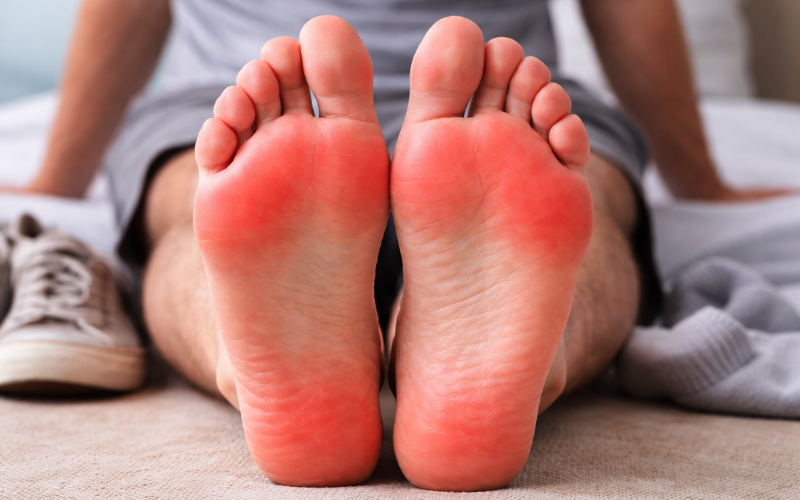
Redness on the soles of the feet usually happens when more blood flows to the skin. The skin on the bottom of the feet is thick and designed to handle pressure, so changes there can look more noticeable than on other parts of the body. The color may range from light pink to deep red and can affect the whole sole or only certain areas, such as the heels or the balls of the feet.
For some people, the redness appears evenly and fades after rest. For others, it may look patchy or stay for hours or days. The texture of the skin often stays the same, but sometimes redness comes with dryness, warmth, or a mild swelling. Paying attention to how the redness looks and feels is an important first step in understanding what’s causing it.
Common Everyday Reasons Your Soles May Look Red
In many situations, red soles are linked to simple daily factors rather than health problems. Standing for long hours, walking a lot, or wearing tight shoes can all increase pressure on the feet. This pressure pushes more blood to the area, making the soles appear red once shoes come off.
Heat is another common reason. Hot weather, warm floors, heated socks, or long hot showers can all cause the blood vessels in the feet to expand. When this happens, the skin looks red and may feel warm to the touch. This type of redness usually fades once the feet cool down.
Some soaps, lotions, or cleaning products can also irritate the skin on the soles. Even if there is no itching or pain, mild irritation can still show up as redness. In these cases, avoiding the trigger often solves the problem.
Temporary redness vs. recurring redness
Temporary redness usually appears after activity, heat, or pressure and fades within a short time. It does not come with pain, burning, or changes in skin texture. Recurring redness, on the other hand, tends to return often or stay for long periods. When redness keeps coming back without a clear reason, it may be a sign that something more than daily habits is involved.
Medical Conditions Linked to Red Soles
When everyday causes don’t explain the redness, health-related factors may play a role. Several medical conditions are known to affect the skin, nerves, or blood flow in the feet. These conditions don’t always cause severe symptoms at first, which is why red soles are sometimes the earliest sign.
Skin-related conditions affecting the soles
Certain skin conditions can make the bottom of the feet appear red, dry, or irritated. Fungal infections can cause redness along with peeling or cracking skin. Allergic reactions may also show up as redness, especially if the feet are exposed to materials or products that trigger sensitivity.
Inflammatory skin conditions can lead to ongoing redness and thickened skin. These conditions may flare up from time to time and often improve with proper care once identified.
Circulation and nerve-related causes
Blood flow problems can also explain why the bottom of your feet are red. When circulation is affected, the body may respond by sending more blood to the area, changing the color of the skin. Some nerve-related conditions cause abnormal signals that affect blood vessels, leading to redness, warmth, or burning sensations.
In some cases, redness may appear along with tingling, numbness, or sensitivity to heat. These signs suggest that nerves or blood vessels may be involved rather than just the skin.
When Red Feet Come With Pain, Burning, or Itching
Redness that comes with discomfort often deserves closer attention. A burning feeling in the soles, especially at night, can be linked to nerve irritation or circulation changes. Itching may point toward skin irritation or an allergic response.
Pain that appears along with red soles should not be ignored, particularly if it affects daily activities like walking or standing. While mild discomfort can still come from simple causes, ongoing or worsening symptoms suggest that the body is reacting to something more serious.
Red Feet After Standing, Walking, or Heat Exposure
Many people notice red soles after a long day on their feet. Standing or walking for extended periods increases pressure and heat in the feet, which naturally boosts blood flow. This reaction is the body’s way of protecting tissues under stress.
Heat exposure works in a similar way. Warm temperatures cause blood vessels to open wider, allowing more blood to reach the skin. For most people, this response is harmless and temporary. Once the feet are elevated or cooled, the redness fades. If it doesn’t, or if it starts happening even without activity or heat, it may be worth looking into other causes.
Signs That Red Soles Shouldn’t Be Ignored
While red soles are often harmless, certain signs suggest the need for medical advice. Redness that lasts for days, spreads, or keeps returning without a clear trigger may point to an underlying issue. Changes in skin texture, such as cracking, thickening, or open sores, also deserve attention.
If redness affects both feet equally and is linked to other body symptoms, it may be part of a larger health pattern. Paying attention to the full picture helps determine whether the issue is local or systemic.
Symptoms that suggest medical evaluation is needed
Red soles should be checked by a doctor if they come with severe pain, burning, numbness, swelling, or changes in skin color that do not improve. Fever, unexplained weight changes, or fatigue along with red feet can also be signs that the body needs professional evaluation.
How Doctors Usually Evaluate Redness on the Bottom of the Feet
When you see a healthcare provider about red soles, they usually start by asking about your symptoms, daily habits, and medical history. They may look closely at the skin, check temperature differences, and examine how blood flows to the feet.
In some cases, simple tests help rule out infections, circulation issues, or nerve problems. The goal is to identify the root cause rather than just treat the redness itself. Understanding what’s behind the redness allows for better, more targeted care.
Final Thoughts
Seeing red on the bottom of your feet can be confusing, but it’s often explained by everyday factors like heat, activity, or pressure. Understanding why are the bottom of my feet red helps you separate normal body responses from signs that may need attention. When redness is temporary and painless, it is usually nothing to worry about. If it becomes persistent, uncomfortable, or comes with other symptoms, listening to your body and seeking medical advice is the smartest next step.
FAQs
1. Why are the bottom of my feet red but not painful?
Red soles without pain are often linked to heat, pressure, or mild circulation changes. If the redness fades with rest and cooling, it is usually harmless.
2. Why are the bottom of my feet red and burning at night?
Nighttime burning with redness may be related to nerve sensitivity or blood flow changes. This pattern often feels worse when the body is at rest and should be discussed with a doctor if it continues.
3. Can stress or anxiety cause red soles?
Stress and anxiety can affect blood flow and body temperature. In some people, this response shows up as redness in the hands or feet, including the soles.
4. Why are the bottom of my feet red after walking?
Walking increases pressure and heat in the feet, which boosts blood flow. This is a common and usually harmless reason for red soles after activity.
